Longevity
Why does your skin change during stressful times? Managing your skin through busy weeks
In short
Stress can show on your skin, but much of what you see comes less from stress itself than from the routine that falls apart alongside it. Shorter sleep, skipped meals, more caffeine, and a neglected evening routine can show up as dullness, dryness, sensitivity, and tired-looking under-eyes. During these weeks, simplifying your routine and holding on to the basics works better than adding products. Signs such as ongoing anxiety, sudden hair shedding, or persistent acne call for a conversation with a doctor.
A demanding stretch at work, a move, exam season, a family member's illness, or simply responsibilities piling on top of each other. After weeks like these, you may look in the mirror and see that your skin has taken its share too: your face looks paler, your moisturizer no longer feels like enough, and a few bumps have appeared along your jaw. This article looks at the ways stress can show on the skin, how much of that comes from everyday habits, and how to support your skin through busy periods without putting more strain on it.
Does stress really show on your skin?
When the body faces a demanding situation, it releases stress hormones such as cortisol. In the short term, this response is natural and helps the body adapt. When it goes on for weeks, though, the skin's balance can be affected in some people: the barrier may be strained more easily, oil balance may shift, and skin may react faster to products it used to tolerate without trouble. Stress is also linked to flare-ups of some skin conditions, such as eczema or rosacea; assessing those conditions is a doctor's job.
How much stress affects the skin varies a great deal from person to person. Some people get through an equally intense period without noticing anything on their skin, while others see changes in the first week. So rather than offering a single description of how stress affects skin, it's more useful to learn which signals your own skin sends.
What signals does skin send during busy periods?
The table below brings together changes people often notice during busy weeks and the factors that may contribute to them. It's not a diagnostic tool, just a framework to help you read what you see in the mirror.
| Signal | How you notice it | Possible contributing factors | First step |
|---|---|---|---|
| Dullness | A pale, grayish face that has lost its glow | Short sleep, moisture loss, rushed cleansing | Keeping up with evening cleansing and moisturizer |
| Dryness and tightness | Skin that pulls after cleansing, flaky patches | Too little water, radiator heat, hot showers, skipped moisturizer | A gentle cleanser and a barrier-supporting cream |
| Increased sensitivity | Stinging when you apply products, redness that appears easily | A strained barrier, layered active ingredients | Pausing actives for a while |
| A sense that breakouts are flaring | More bumps along the chin and jawline | Hormonal fluctuations, lack of sleep, touching your face | Not squeezing, not changing your routine |
| Tired under-eyes | Darker look, morning puffiness, tired eyes | Lack of sleep, salty and late meals, alcohol | Getting your bedtime back on track, a cold compress |
Is it stress itself that strains the skin, or changing habits?
Usually both. During a busy period, daily routines change along with stress hormones, and the skin can be affected by each of those changes. These are the habits that come up most often when we talk with clients who visit our center after an intense stretch:
- Shorter sleep: Night is when skin recovers. Short, broken sleep can show up as a pale face in the morning and a tired look around the eyes.
- Skipping meals and snacking on the go: An irregular eating pattern makes it easier to reach for sugary and processed snacks. The nutrients your skin needs take a back seat in the meantime.
- More coffee, less water: When the day starts and ends with coffee, water slips your mind. Add the dry air of a heated office, and skin tightens more quickly.
- Skipping your evening routine: Sleeping in makeup, leaving sunscreen on your face, or just wiping it off with a tissue can contribute to clogged pores and a rougher surface.
- Touching your face and squeezing pimples: Hands drifting to the face in tense moments is very common. Every bump you squeeze raises the chance of a mark.
- Switching products in a panic: When skin acts up, adding new serums, masks, and acids to the shelf can wear out a barrier that's already strained.
There's a hopeful side to this list. You can't always change the source of your stress, but you can bring some of these habits back in line with small steps. One of the most effective things you can do for your skin during a busy period is to notice early which parts of your routine are slipping alongside the stress.
How do you simplify your skin care routine during a busy period?
In stressful weeks, routines tend to swing to one of two extremes: they're dropped entirely, or they're stepped up to “fix” things. Skin, however, usually responds better to what sits between the two: a simple routine you don't skip. The steps below are enough of a framework for a busy period.
- Protect your evening cleanse: A first step that removes makeup and sunscreen, followed by a gentle cleanser that doesn't leave your skin tight. You can shorten the rest of your routine, but not this step.
- Keep your moisturizer steady: Stick with a moisturizer your skin knows and tolerates well, morning and evening. A busy period isn't the time to try new products.
- Don't drop sunscreen: Even on days spent at a desk, make it the last step of your morning.
- Go easier on actives: If your skin stings or reddens easily, pause retinol, acids, and exfoliating products for a while; once it calms down, bring them back one at a time and less often.
- Touch your face less: Leave pimples alone instead of squeezing them, and make keeping your hands away from your face a daily reminder.
What can you do about tired under-eyes and morning puffiness?
The skin around the eyes is the thinnest on the face, and it's one of the first places fatigue shows. Sleepless nights, salty meals eaten late, and alcohol can all increase morning puffiness. Keeping your bedtime as consistent as you can, eating dinner earlier, and a few minutes with a cold compress in the morning are the easiest steps to manage during this time. We explained the link between sleep and how your face looks in the morning in detail in our article on sleep, puffiness, and skin.
It's also worth knowing that some under-eye darkness can be structural or inherited. That kind of darkness may not fully fade even with good sleep. If puffiness continues after the busy period has passed, affects only one side, or keeps getting worse, have a doctor look at it.
How should you handle breakouts that increase during stressful times?
Many people notice more bumps during busy weeks. Hormonal fluctuations, short sleep, touching the face often, and a slipping routine can all play a part. Two reflexes are worth resisting during this time: squeezing the bumps and loading your skin with drying products. Both can make skin more sensitive and raise the chance of marks. We covered the possible causes of adult breakouts in our article on adult acne.
A few bumps here and there often fade along with the busy period. But if breakouts are painful, deep, and persistent, leave marks, or have lasted for months, this is not a skin care matter; you should see a dermatologist.
How can facials at our center help during this time?
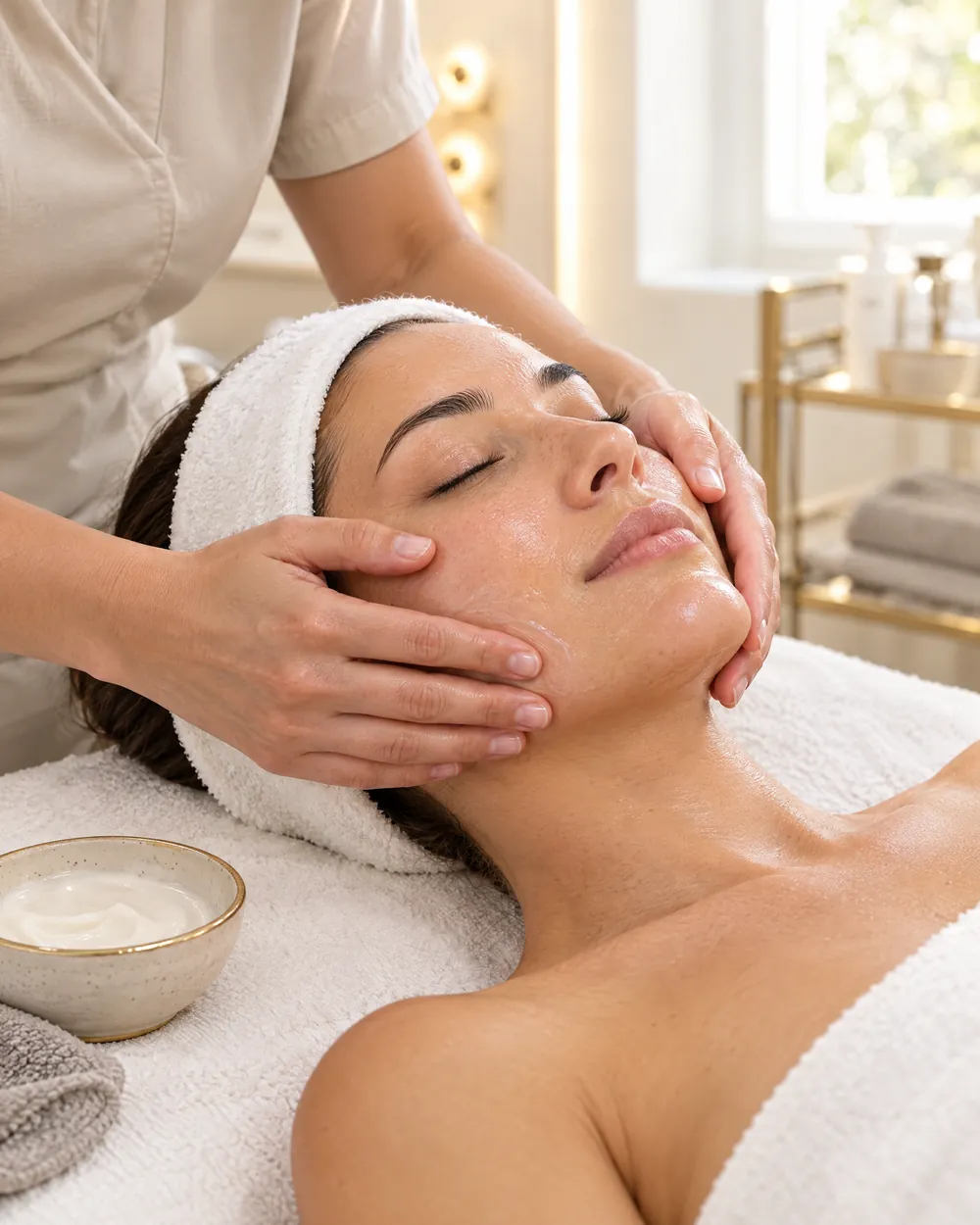
It's worth being honest here: no facial removes the source of stress. A professional facial plays a more modest role during this time; it can help lighten the load on your skin and support cleansing and hydration. For many of our clients, the hour of their appointment is also a break away from their phone and their calendar. We decide together which facial suits you after a skin analysis.
| Your skin's condition at the time | A facial that may help | Realistic expectation |
|---|---|---|
| Tight, dehydrated, dries out easily | Moisture Facial (about 45–60 min) | Skin that feels more comfortable and plump; your home routine keeps the effect going |
| Hasn't had a facial in a long time, needs to unwind | Classic Facial (about 60 min) | Cleansing, a facial massage, and a rested look |
| Dull and rough, has lost its glow | Oxygeneo Facial (about 40–50 min) | A livelier, smoother surface; texture changes need regular sessions |
| Matte, with clogged pores | Hydrafacial (about 45–60 min) | A cleaner, brighter look; on its own it isn't a program |
| Stinging, reddening, reacting to every product | Simplify first, then a gentle protocol | No intensive steps until the skin has calmed down |
If your skin has become sensitive, we prefer to postpone steps that involve steam, extractions, or exfoliation for a while and start with a gentler protocol. If you have an important presentation, event, or photo shoot coming up, don't leave a facial you're trying for the first time until the last day; give yourself at least a few weeks to see how your skin responds.
How does a longevity approach look at stressful periods?
In a longevity approach, the goal isn't to make your skin look flawless every week; it's to protect its balance and its ability to recover over the years. Busy periods are an unavoidable part of that journey. What matters is that short-term ups and downs don't turn into lasting habits. A few weeks of shorter sleep may not leave a mark on your skin, but months of sleeplessness, abandoned sunscreen, and constantly changing products can show up in the long-term picture.
That's why it makes sense to shrink the goal during a busy period: hold on to the core three of cleansing, moisture, and sun protection, adjust your facial schedule instead of canceling it, and reassess your skin once the period is over. As long as these three steps stay in place, skin recovers much more easily when calmer days arrive. You'll find the full set of long-term habits in our article on longevity skin care.
In busy weeks, your skin doesn't need more products; it needs less care that you don't skip.
What are common misconceptions about stress and skin?
- “Every change in my skin is from stress.” Stress can be an important factor, but seasons, hormonal phases, products, and your health can create the same picture. Blaming every change on stress can lead you to miss another cause.
- “If my skin acts up, I need to step up my routine.” Strained skin usually responds better to fewer products.
- “One facial will erase the effects of stress.” A facial supports your skin and can be a good break; on its own, it doesn't make up for stress or the routine that slips alongside it.
- “Making time for your skin during a busy period is a luxury.” A two-minute evening cleanse and a moisturizer can be enough to ease the load a busy period puts on your skin.
- “Once the stress passes, my skin will sort itself out, so there's nothing to do.” It often does recover; but if habits that strain the barrier have settled in during that time, recovery can take longer.
When should you talk to a doctor?
Sometimes skin sends signals not just about itself but about your overall well-being. If any of the following apply, we recommend talking to a doctor or the relevant specialist before planning a facial:
- Anxiety, restlessness, loss of interest, or low mood has lasted for weeks and is affecting your sleep and daily life. In that case, talking to a doctor or a mental health professional comes before any step you take for your skin.
- You've noticed sudden, marked hair shedding or a patchy thinning area.
- Breakouts are painful, deep, and persistent, leave marks, or haven't cleared for months.
- Redness, flaking, or itching has lasted for weeks, or you have a condition such as eczema or rosacea and think it's flaring.
- Changes in your skin come with physical symptoms such as marked fatigue, unexplained weight change, or heart palpitations.
At our center in Nişantaşı, when clients come to us after a busy period, we start with a brief skin analysis and talk through the products you use and your routine over the past few weeks. We build your care plan around how your skin looks that day. Vega Beauty is a beauty and care center; if we notice anything that calls for medical evaluation, we'll refer you to a doctor.
Frequently asked questions
Does stress really affect the skin?
It can in some people. Long-lasting stress may contribute to skin looking duller, drier, or more sensitive. Part of that effect also comes from the sleep, eating, and skin care habits that change along with stress. How much it shows varies from person to person.
Is it normal to break out during stressful times?
More bumps during busy periods are common; hormonal fluctuations, short sleep, and touching your face can all play a part. It's important not to squeeze and not to change your routine. For breakouts that are painful, deep, leave marks, or have lasted for months, you should see a dermatologist.
Which products should I pause during a busy period?
If your skin stings or reddens easily, pausing retinol, acids, and exfoliating products for a while often gives it relief. Continue with a gentle cleanser, a moisturizer you know, and sunscreen. Once your skin calms down, you can bring actives back one at a time.
Which facial is most suitable during a stressful period?
It depends on your skin's condition at the time. A Moisture Facial may suit tight, dehydrated skin; a Classic Facial may suit skin that needs to unwind and hasn't had a facial in a while; and an Oxygeneo Facial may suit dull, rough skin. We decide together after a skin analysis, and with sensitized skin we start with a gentler protocol.
Does a facial reduce stress?
A facial doesn't remove the source of stress. It can, however, help lighten the load on your skin, and for many people it works as a break they set aside for themselves. If anxiety or sleeplessness lasts a long time, you should talk to a doctor or a mental health professional.
Will my skin go back to normal once the stress passes?
Usually, as the busy period ends and your routine settles, your skin finds its balance again. Holding on to the basics of cleansing, moisture, and sun protection during that time makes recovery easier. If the changes continue, it's worth having your skin reassessed or talking to a doctor.
Published: · Vega Beauty editorial team. This article is general information and does not replace a medical diagnosis or advice; whether a service suits you is assessed at your consultation.