Longevity
Why does skin change during menopause? Dryness, thinning, and a new care routine
In short
During menopause and perimenopause, the transition leading up to it, falling estrogen levels can change how your skin holds moisture, stays firm, and recovers. Many women notice drier, thinner, more reactive skin at this stage, and even products they have used without trouble for years may start to feel like too much. This is not an ending. It is a stage when care starts speaking a different language: gentle cleansing, barrier-supporting moisture, and daily sun protection take priority over harsh cleansers and frequent peels. The goal is not to try to look young but to manage changing skin well.
From their forties on, many women notice their skin behaving differently. The cream they have used for years no longer feels like enough, a cleanser starts to sting, and a new redness appears on the cheeks. These changes usually don't mean your skin has “gone bad.” They mean its needs have changed. In our center's Longevity & Wellbeing approach, we see this stage not as a loss but as a threshold where care is recalibrated.
What can change in your skin during menopause?
Skin often becomes drier, thinner, and more sensitive at this stage, and these changes are largely linked to falling estrogen levels. They don't appear with the same intensity in every woman. The ones described most often are:
- Dryness and tightness: Moisture retention and oil balance can decline, so even combination or oily skin may start to feel dry.
- Thinning and loss of firmness: Collagen loss is generally reported to speed up in the first years after menopause, and the jawline and neck may look looser.
- Sensitivity: Products you have used without trouble may start to cause burning, stinging, or redness.
- Visible pigmentation: Sun marks built up over the years can become more noticeable.
- Slower recovery: Minor irritation and acne marks may take longer to fade.
- Periodic breakouts: Some people get breakouts that come with hormonal swings, especially along the jawline.
What is the difference between perimenopause and menopause?
Perimenopause is the transition, often lasting several years, when menstrual cycles become irregular and hormone levels fluctuate. Menopause means periods have stopped for good, and it is usually defined as going one full year without a period.
Here is what the difference means for your skin. In perimenopause, hormones don't fall in a straight line, so skin can behave inconsistently: dryness one month, breakouts the next. After menopause the picture settles, and dryness and thinning become more pronounced. Working out which stage you are in is your doctor's area. For us, what matters in your care is how your skin is behaving today.
How do hot flashes and night sweats show up on the skin?
A hot flash feels like sudden heat, flushing, and sweating across the face and neck. When hot flashes happen often, skin can become quicker to redden and react. Skin that dries fast after sweating can also feel tighter.
The main effect of night sweats comes through sleep: after a broken night, skin looks paler and the eye area looks more tired. We cover this connection in detail in our blog post on sleep, puffiness, and skin. Hot drinks, alcohol, spicy food, and warm rooms can trigger a flushed feeling in some people, so noticing your own triggers is the first step.
Why can a routine that worked for years start to strain your skin?
Because that routine was built for the skin you used to have. A foaming cleanser chosen for oily skin and frequently used acids can strain the barrier once skin has thinned and holds less moisture. In most cases you don't need to rebuild the routine from scratch. Softening a few steps is enough.
| Routine step | Earlier habit | At this stage |
|---|---|---|
| Cleansing | A rich-lathering cleanser that leaves skin feeling tight | A gentle cream or milk cleanser with lukewarm water |
| Moisturizing | A light gel moisturizer | A richer cream with barrier-supporting ingredients such as ceramides |
| Peels and acids | Several times a week on a fixed schedule | Less often, based on your skin's tolerance; take a break if it reacts |
| Sun protection | In summer or on vacation | Every day, every season |
| Care area | Face only | Neck, décolleté, and backs of the hands included |
| New products | Starting several actives at once | Adding actives one at a time, a few weeks apart |
How can you simplify your morning and evening routine at this stage?
A simple routine does three jobs: it cleanses gently, restores and holds moisture, and protects from the sun. We work with you to adjust product textures and how often you use actives, based on your skin analysis.
- In the morning, wash your face with lukewarm water or a very gentle cleanser.
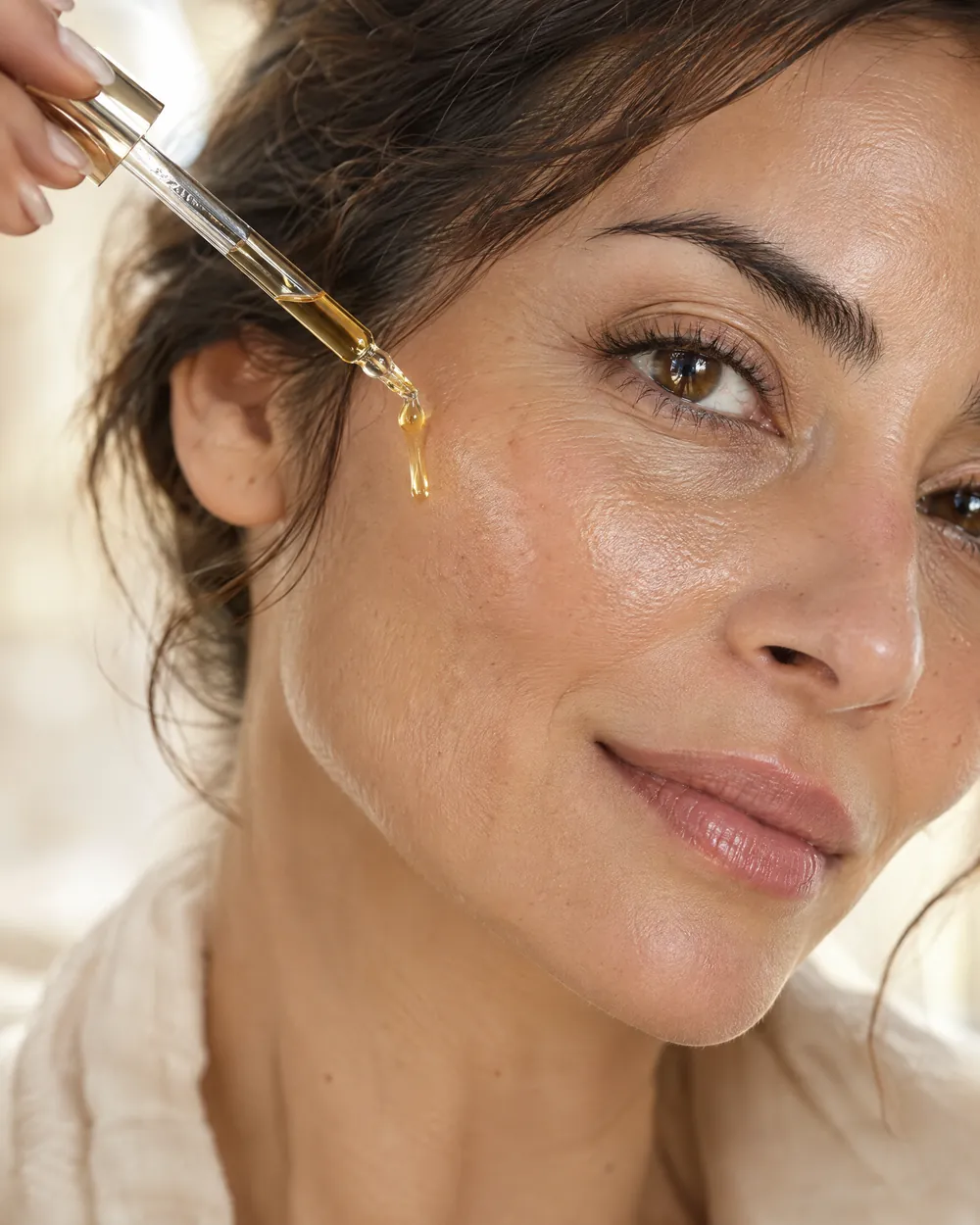
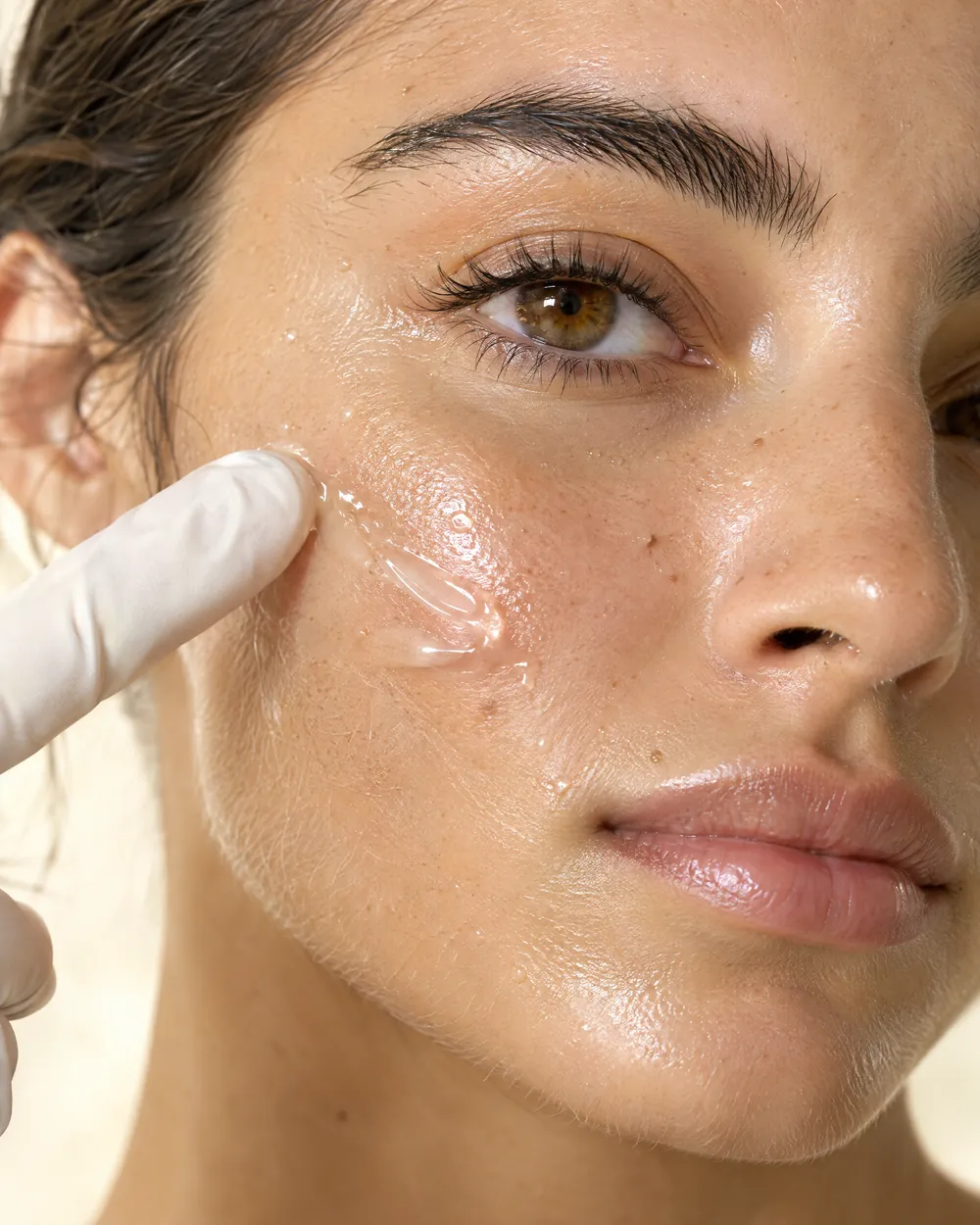
- While your skin is still slightly damp, apply a hydrating serum such as hyaluronic acid, then a barrier-supporting moisturizer.
- Apply broad-spectrum sunscreen, including on your neck, décolleté, and the backs of your hands.
- In the evening, remove makeup and sunscreen with a cream cleanser, without rubbing.
- If you use an active such as retinol, limit it to a few evenings a week, and use it less often if you notice dryness or redness.
- Choose a richer cream at night, and keep a separate product for your lips and hands.
What stands out in professional care at this stage?
At this stage, professional care is less about pushing the skin with intensive procedures and more about supporting moisture, comfort, and radiance. The choice depends on what your skin analysis shows:
- Moisture Facial: Supports the barrier with humectants such as hyaluronic acid and a soothing mask. When dryness is the main concern, it is usually the first option to consider, and it is generally scheduled every 3–4 weeks.
- Anti-Aging Facial: Combines antioxidant and moisturizing ingredients, lifting massage, and device-assisted steps, and can be scheduled every 3–4 weeks. It supports a feeling of firmness, but it does not remove deep wrinkles and is no substitute for medical aesthetics.
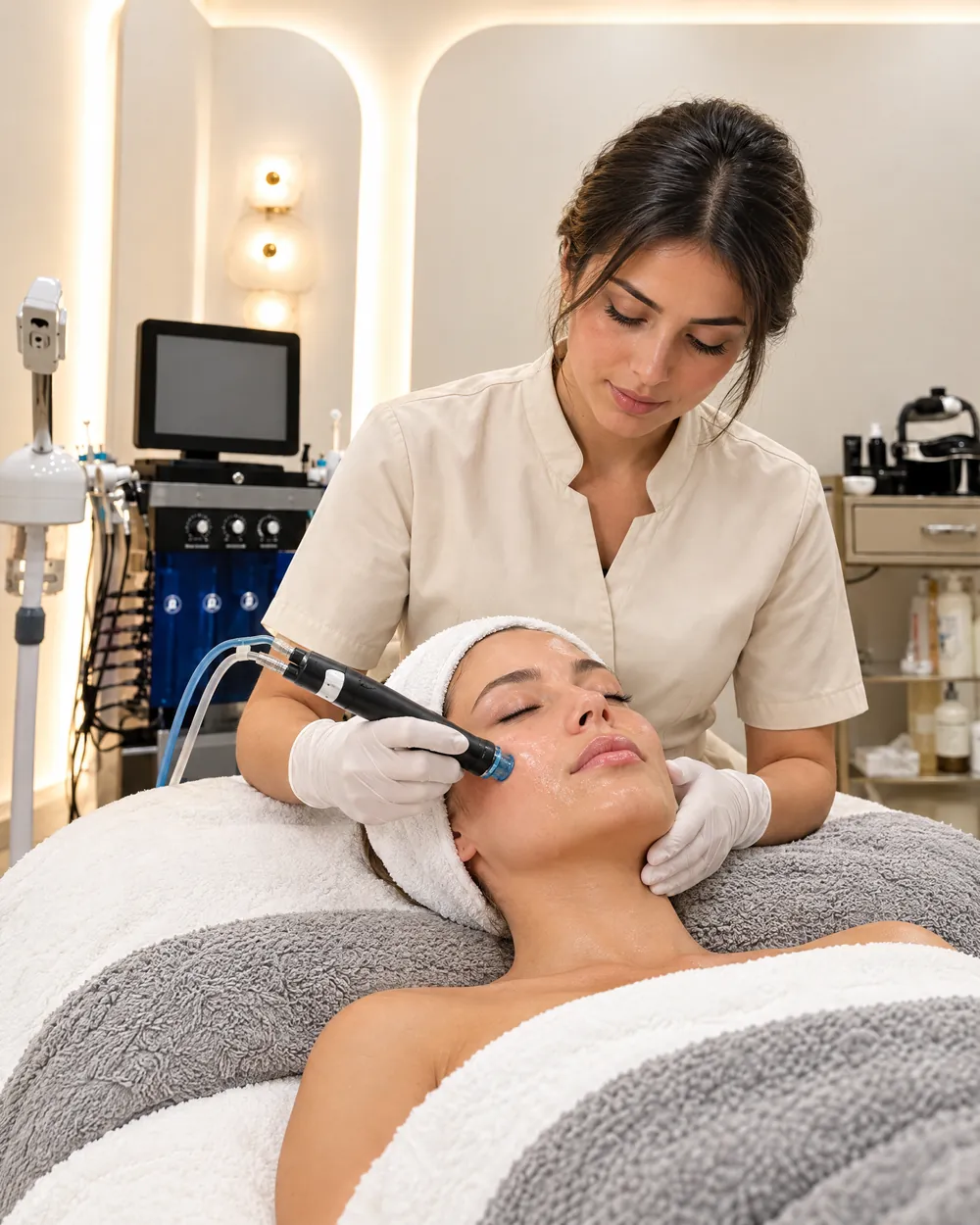
- Hydrafacial: Combines vacuum-assisted cleansing with moisturizing and antioxidant serums, and it generally leaves no redness.
- Oxygeneo Facial: Uses a gentle peel, an oxygenating effect, and infusion to support radiance in dull-looking skin.
The steam and extraction steps of a Classic Facial, on the other hand, can be hard on sensitized, redness-prone skin, so in that case we choose a gentler protocol. Before an Anti-Aging Facial or Hydrafacial, retinol and acid products should be paused for 3–5 days.
Why can facial hair change at this stage?
As hormonal balance shifts, some women find that hair on the chin and upper lip becomes thicker and darker. If hair increases sharply in a short time, you need a doctor's evaluation before any care plan; laser does not remove a hormonal cause.
Laser hair removal may be an option for dark, thick hair. At our center it is done with Soprano Ice Platinum, which has a cooled handpiece. But because the laser targets dark pigment in the root, it cannot target hair that has turned white or gray or is very light. This limit comes from how lasers work, not from the device. We don't recommend sessions for this hair, and we say so clearly at the initial consultation. We explain the process in detail in our blog post on facial laser hair removal.
What changes might you notice in your body and hair?
Some women notice fat distribution shifting toward the abdomen even when their weight hasn't changed much. Body contouring programs can support muscle tone and a feeling of firmness, but they are not a weight-loss method.
Hair strands may become finer, and volume may look reduced. Hair Strengthening Care, a series of 6–8 serum and massage sessions scheduled 1–2 weeks apart, can support the scalp. With heavy or sudden shedding, see a dermatologist first; hair care is no substitute for a medical evaluation.
What does it mean to think about menopause from a longevity perspective?
From a longevity perspective, menopause is when the foundation is laid for your skin's next decade. A long stretch of life comes after this transition, so the goal is not a short-term look but skin that stays comfortable and protected for years. At this stage, habits matter as much as products:
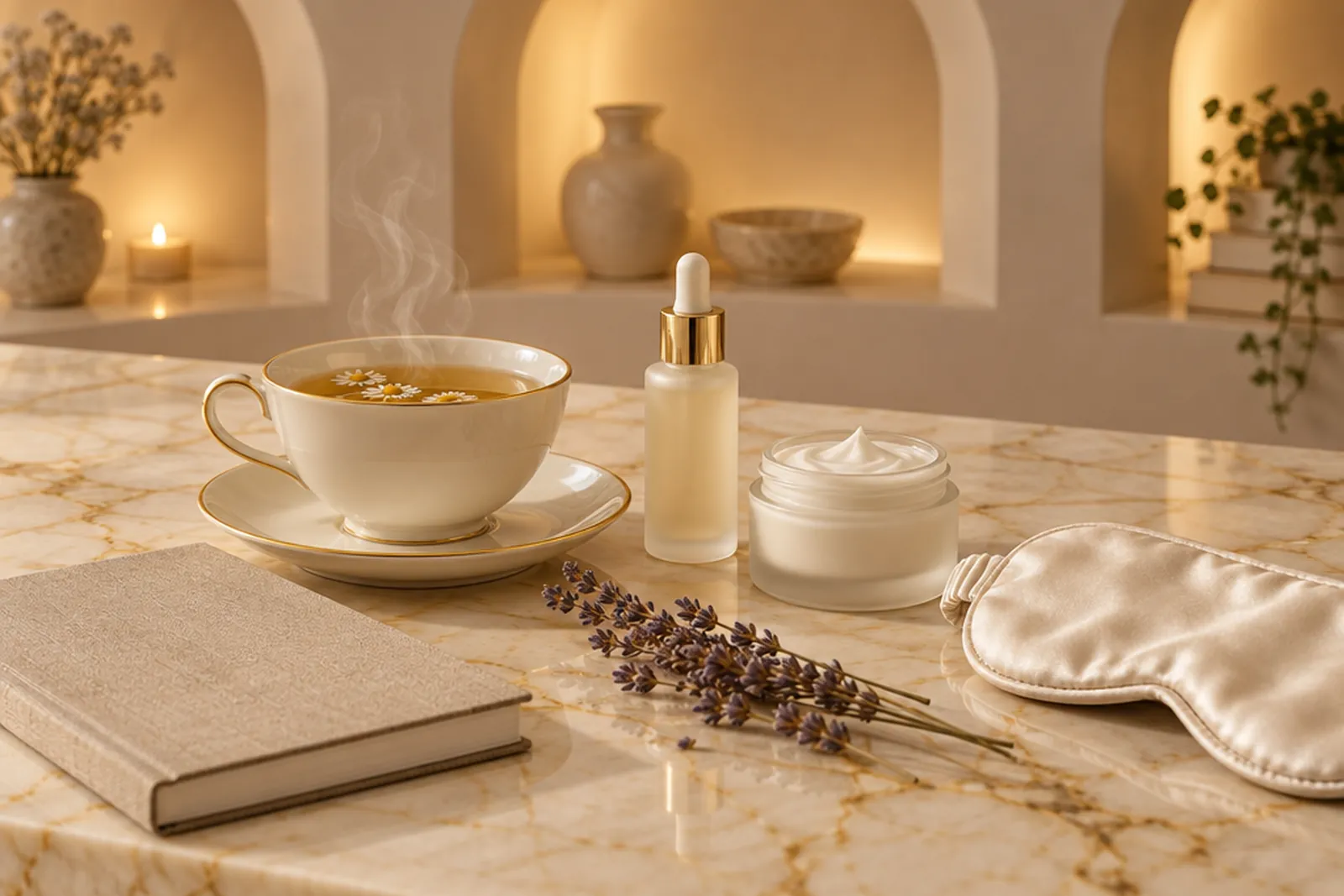
- Sleep: A cool room and regular bedtimes can help protect sleep that hot flashes interrupt.
- Movement: Walking and muscle-strengthening exercise support muscle mass and circulation.
- Protein and balanced eating: Aim for a protein source and colorful vegetables at each meal. If you are considering supplements, talk to your doctor.
- Avoiding smoking: Smoking can add to the loss of firmness that is already speeding up at this stage.
- Sun: Daily sunscreen helps reduce how noticeable pigmentation becomes on thinner skin.
Menopause is not the end of your skin. It is a stage when care starts speaking a different language.
What are the common myths about menopause and skin?
- “Skin care doesn't help after menopause.” Skin still responds to care at this stage. What changes is the goal: moisture, comfort, and barrier support.
- “A richer cream is always better.” Very heavy textures can burden pores in some skin and increase the tendency toward periodic breakouts. What counts is the balance of ingredients.
- “You can fix dryness just by drinking water.” Drinking water matters, but dryness at this stage is linked to a change in the skin's capacity to hold moisture, and it needs barrier support. We explain the difference in our blog post on dehydrated versus dry skin.
- “You can't get laser hair removal at this stage.” Menopause alone is not a barrier. For dark hair, sessions can be planned based on the evaluation at your consultation. White or very light hair, however, cannot be targeted with laser.
When should you talk to a doctor?
Evaluating options such as hormone replacement for hot flashes and the other symptoms of this stage is your doctor's area. If you notice any of the following, we recommend talking to a doctor before starting a care plan:
- Gynecological symptoms such as irregular or unexpected bleeding.
- Hair growth on the chin, upper lip, or body that becomes noticeable in a short time.
- Heavy or sudden hair shedding.
- A mole that changes shape, color, or size, or that itches or bleeds.
- Itching, redness, or flaking that lasts for weeks.
- Dryness and cracking severe enough to affect daily life.
If you use hormone replacement or take any medication regularly, mention it at your consultation. Some medications can change your skin's sensitivity and how it reacts to the sun.
At our center in Nişantaşı, care during this stage starts with a consultation and skin analysis. We look together at your skin's current condition and your daily life, then simplify your routine to match. Vega Beauty is a beauty and care center. If we see a sign that calls for a hormonal or medical evaluation, we refer you to a dermatologist or the appropriate doctor.
Frequently asked questions
Is it normal to get breakouts during perimenopause?
Some people get breakouts that come with hormonal swings, concentrated especially along the jawline. Going after them with drying products at this stage can lower moisture levels that are already reduced. Balancing your skin with gentle cleansing and light-textured moisture is more suitable. For stubborn, painful, or scarring breakouts, we recommend seeing a dermatologist.
Do I need to stop using retinol?
Usually not, but if your skin has become thinner and more sensitive, your old frequency may be too much. Using it less often, balancing it with a moisturizer, and taking a short break when dryness or redness starts is a balanced approach. We will also remind you in your plan to pause it for a few days before professional facials.
Is Hydrafacial suitable for my newly sensitive skin?
Hydrafacial cleanses without squeezing pores, finishes with moisturizing serums, and generally leaves no redness, so it is often considered for sensitized skin. Still, whether it suits you depends on your skin's condition that day and the findings of your analysis. A session takes about 45–60 minutes and can be scheduled every 3–6 weeks, depending on your needs.
I use hormone replacement. Does that affect my care and laser plan?
It can. Hormone replacement and some medications can change your skin's sensitivity, how it reacts to the sun, and your hair structure. That's why we ask you to share the name of your medication and how long you have been taking it at your consultation. If needed, we also get your doctor's opinion and shape your care and laser schedule with you.
Does dryness ease with time after menopause?
It varies from person to person. Dryness that fluctuates during the transition can become more predictable after menopause, but the change in your skin's capacity to hold moisture generally continues. That's why a barrier-supporting routine should be seen as a long-term habit, not something for one stage. We update textures and frequency with you as the seasons change.
Published: · Vega Beauty editorial team. This article is general information and does not replace a medical diagnosis or advice; whether a service suits you is assessed at your consultation.