Skin Care
Active ingredients and skincare routine order: retinol, vitamin C, niacinamide, AHA/BHA, and hyaluronic acid
In short
Active ingredients are layered from the lightest texture to the richest: cleanser, toner or hyaluronic acid, serum, moisturizer, and, in the morning, sunscreen. Vitamin C and niacinamide lead in the morning; retinol, AHA, or BHA come in the evening. Retinol and acids are not used on the same night, retinol starts at 1–2 nights a week, and new ingredients go in one at a time. If your skin gets irritated, stop the actives and let the barrier recover with a simple routine.
The list of active ingredients you see in skincare aisles and on social media is long, but the shared problem is usually not the ingredient itself. It is the order and the frequency. The right ingredient, used in the wrong order or on the wrong night, can come back as redness, peeling, and a burning feeling. In this article we explain what each ingredient does, how to sequence them, which pairings call for caution, and how to space them around professional facials. We covered when to start retinol in our anti-aging article; here the focus is on which ingredient goes with which, and in what order.
What do the five common active ingredients do?
Each active has a different main job on the skin, and knowing that job makes both choosing and ordering easier. The table below gives a general framework; the right choice for your skin becomes clear with a skin analysis.
| Ingredient | General function | When it is usually used |
|---|---|---|
| Retinol | Supports skin renewal; chosen for the look of fine lines and rough texture | Evening; not used in the morning because it can increase sun sensitivity |
| Vitamin C | Provides antioxidant support; used for dullness and uneven tone | Morning, under sunscreen |
| Niacinamide | Supports the barrier; helps balance the look of pores and oiliness | Morning or evening; fits easily into most routines |
| AHA | Removes dead cells from the surface; adds smoothness and radiance | Evening, on a limited number of nights per week |
| BHA | Oil-soluble; gets into pores and targets blackheads and sebum buildup | Evening, on a limited number of nights per week |
| Hyaluronic acid | Binds water to the skin's surface for hydration support | Morning and evening, on damp skin |
In what general order are products layered?
The general rule is to move from light, watery textures to rich, oily ones, because a thin serum can only reach the skin beneath a thick cream if it goes on first. Morning and evening routines follow the same logic:
- Cleanser: Gentle in the morning; in the evening, double cleanse if needed, depending on how much makeup and sunscreen you have to remove.
- Toner or essence: Prepares the skin. Hyaluronic acid goes onto damp skin at this step or right after it.
- Active serum: Vitamin C and/or niacinamide in the morning; retinol, AHA, or BHA in the evening, and only one of them on any given night.
- Eye area and targeted products: If needed, after the serum and before the moisturizer.
- Moisturizer: The step after the actives that seals the barrier and holds hydration in.
- Sunscreen: In the morning only, as the very last step of the routine.
How do you build a morning routine?
The morning routine's job is to protect your skin from environmental stress through the day, so vitamin C, niacinamide, hydration, and sunscreen take the lead. Retinol and strong acid steps stay out of the morning. Sunscreen is the final step you cannot skip; we explain how to choose one in detail in our sunscreen article. The basic morning flow looks like this:
- A gentle cleanser, or just water if your skin is dry.
- A toner or serum with hyaluronic acid, on slightly damp skin.
- Vitamin C serum; if your skin is sensitive, you can start every other day.
- Niacinamide, as a separate product or inside your moisturizer.
- Moisturizer, then an adequate amount of sunscreen, reapplied during the day when you are outdoors.
How do you build an evening routine?
The evening routine's job is to clear away the day's buildup and support the skin's overnight repair cycle, which is why renewing actives belong to the evening. The order is cleanser, toner or hyaluronic acid, active step, and moisturizer. The active step changes each night: one night retinol, one night AHA or BHA, one night just hydration and niacinamide. This pattern of active nights and rest nights is the simplest way to reduce irritation, because it gives the barrier time to recover.
| Routine | Order | Common mistake |
|---|---|---|
| Morning | Cleanser, hyaluronic acid, vitamin C, niacinamide, moisturizer, sunscreen | Skipping sunscreen or applying too thin a layer |
| Evening (active night) | Cleanser, hyaluronic acid, retinol or AHA/BHA, moisturizer | Using more than one renewing active on the same night |
| Evening (rest night) | Cleanser, hyaluronic acid, niacinamide, moisturizer | Adding an active so the skin is not left “empty” |
Which actives should not be used together on the same evening?
Retinol and AHA or BHA are not used on the same night. Both renew the skin and tax the barrier, so together they markedly raise the risk of redness, burning, and peeling. The pairings that call for care can be summed up like this:
- Retinol + AHA or BHA: Not on the same night; keep them on separate nights.
- AHA + BHA: Pick a single acid rather than layering both on the same night.
- Retinol + vitamin C: Not a problem for most people, but both can cause sensitivity. Placing vitamin C in the morning and retinol in the evening largely solves this on its own.
- Vitamin C + AHA: Can sting when used at the same time; sensitive skin is more comfortable with them in separate routines.
- Niacinamide with other actives: Generally compatible, and may help soften the sensitivity other actives cause.
- Hyaluronic acid: Compatible with almost every active, and works better on damp skin.
How many nights a week should you start retinol?
Start retinol at 1–2 nights a week with a low-strength product, so your skin has time to adjust. If 3–4 weeks pass without redness or peeling, slowly increase the frequency. The schedule below is a general example and varies from person to person:
| Period | Retinol frequency | Notes |
|---|---|---|
| Weeks 1–2 | 1 night a week | A pea-sized amount; a thin layer together with or before moisturizer |
| Weeks 3–4 | 2 nights a week (at least one night in between) | Continue if there is no irritation; if there is, stay at the previous stage |
| Weeks 5–8 | 2–3 nights a week | The earliest point to move to every other night |
| After that | Whatever frequency your skin tolerates | Nightly use is not required; choose what you can sustain |
If you are pregnant, planning a pregnancy, or breastfeeding, be sure to talk to your doctor before using ingredients such as retinol. When you start any new active, the rule stays the same: one product, one change, a few weeks of observation.
A routine works when it stays consistent and simple, not when it gets crowded. Add a new active only once you know the last one.
What are the common myths about active ingredients?
- “The more actives, the better the results.” Actives do not speed things up by piling on. Too many disrupt the barrier and slow skin renewal. A few actives, used in the right order and consistently, progress more evenly.
- “Burning and peeling show the product is working.” These are signs the barrier is under strain. A comfortable adjustment period is normal, but burning and visible peeling are a warning, not a goal.
- “Vitamin C replaces sunscreen.” It does not. Its antioxidant support makes sense alongside sunscreen, not in place of it.
- “Oily skin doesn't need hydration.” Skin can be oily and still lack hydration. Hyaluronic acid and a light moisturizer belong in oily skin routines too.
What should you do if your skin gets irritated?
When skin gets irritated, the first step is to stop all actives and cut your routine back to cleanser, moisturizer, and morning sunscreen. You can follow this order to recover:
- Stop retinol, AHA, BHA, and vitamin C completely for at least a week, and skip peels and exfoliating mitts.
- Use a gentle cleanser and a simple, fragrance-free moisturizer. Hyaluronic acid can stay if it causes no discomfort.
- Wear sunscreen every day; irritated skin is more vulnerable to the sun.
- Once your skin feels comfortable again, add actives back one at a time and at a lower frequency.
To tell whether your skin is sensitive or simply stressed, see our article on sensitive skin versus stressed skin.
How should you space professional facials and at-home actives?
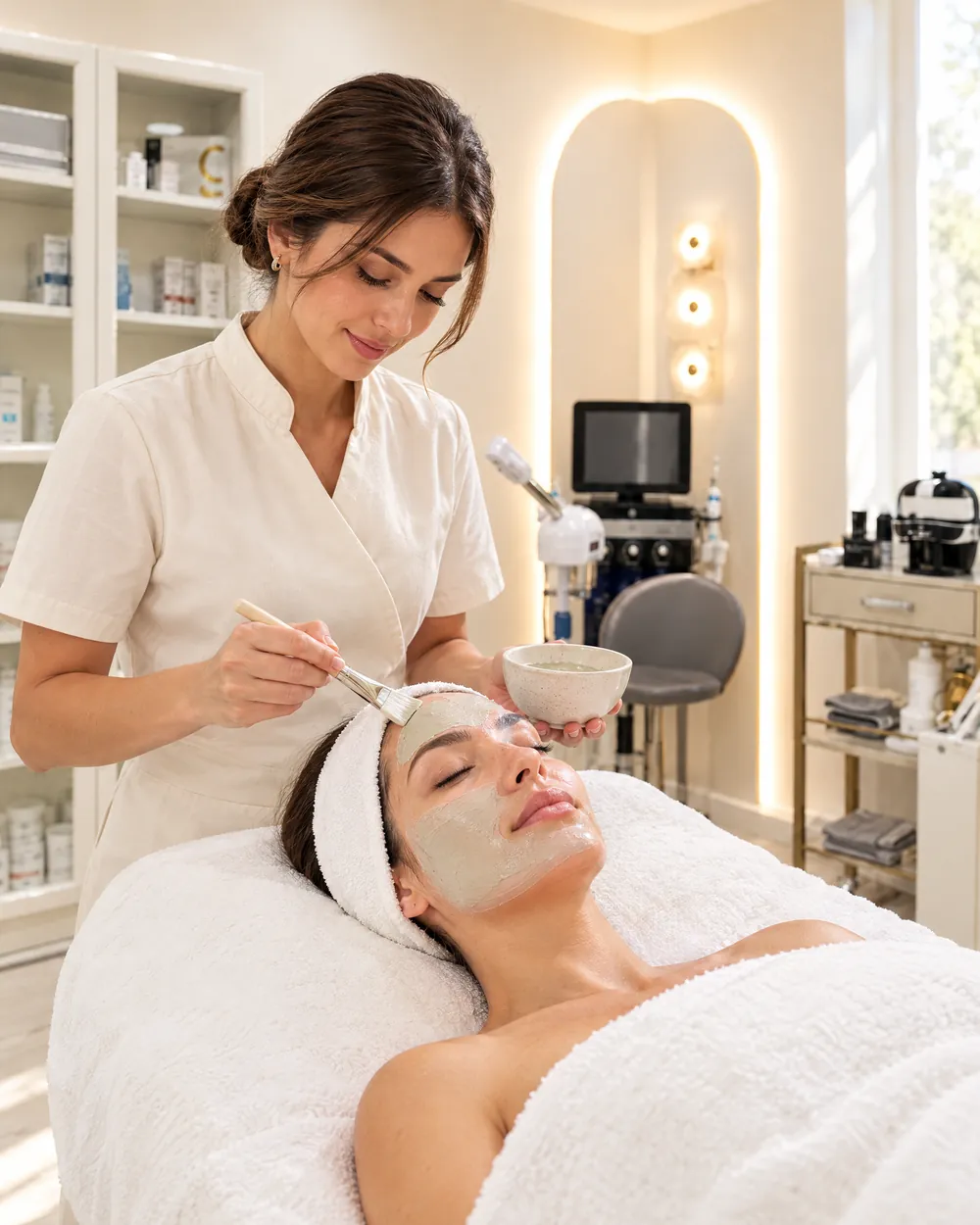
Renewing actives at home are paused before and after a professional facial, because the two together can put more strain on the skin than it needs. The general advice on our Professional Facial page is to pause retinol, acids, and exfoliating products about 3 days before the facial. After the facial, avoid exfoliating products and mitts for the first 24 hours; when to restart depends on how your skin looks at that point.
| Facial | General frequency | How it relates to at-home actives |
|---|---|---|
| Hydrafacial | Every 3–6 weeks, as needed | Avoid heavy makeup, saunas, and exfoliating products for the first 24 hours |
| Oxygeneo Facial | Every 3–4 weeks | No peels or exfoliating mitts for the first 24 hours |
| Professional Facial | Once a month | Pause retinol, acids, and exfoliating products about 3 days before the facial |
Telling your specialist which actives you use before a facial lets the session be adjusted to your skin. We do not perform facials on sunburned, peeling, or irritated skin; we wait for it to recover first. If you are undecided between Hydrafacial and Oxygeneo, our Hydrafacial vs. Oxygeneo comparison can point you in the right direction.
When should you talk to a doctor?
If any of the following applies to you, we suggest talking to your doctor before starting active ingredients or planning a professional facial.
- Pregnancy, planning a pregnancy, or breastfeeding: talk to your doctor before using ingredients such as retinol.
- Active eczema, rosacea, psoriasis, or another known skin condition.
- A medication you take regularly or a doctor's recommendation for your skin: check before adding a new active alongside it.
- Severe redness, swelling, blistering, oozing, or irritation that lasts longer than a week.
- A mole that changes in shape, color, or size, or a skin spot that does not go away: this is not a skincare matter, so see a doctor without delay.
- Sudden swelling of the face, lips, or eye area, or shortness of breath after using a product: this needs emergency evaluation.
At our center in Nişantaşı, every facial starts with an initial consultation and skin analysis. We look together at how your skin is that day, the actives you use at home, and what you expect, then set a suitable interval for Hydrafacial, an Oxygeneo Facial, or a Professional Facial. Vega Beauty is a beauty and care center. If we see a sign during the consultation that calls for medical evaluation, we refer you to a doctor rather than start the facial.
Frequently asked questions
Can retinol and vitamin C be used in the same routine?
Yes, although for most people it is more comfortable to use them at separate times of day rather than together. Vitamin C goes in the morning, under sunscreen, and retinol in the evening. If your skin tolerates both well, this arrangement causes no problems. If you get burning or redness, reduce the retinol frequency first.
Which actives can niacinamide be used with?
Niacinamide can generally join a routine with retinol, vitamin C, AHA, BHA, and hyaluronic acid. Because it supports the barrier, it may help soften the sensitivity other actives cause. Even so, add new products one at a time and watch how your skin responds for a few weeks.
What is the difference between AHA and BHA, and which should I choose?
AHA is water-soluble and works on dead cells at the surface; it is chosen for smoothness and radiance. BHA is oil-soluble, so it gets into pores and targets blackheads and sebum buildup. AHA is more often considered for dry, dull skin, and BHA for oily skin with visible pores. We can assess your skin type together at your consultation.
Does hyaluronic acid hydrate dry skin on its own?
No. Hyaluronic acid binds water to the skin's surface, but without moisturizer on top, some of that water can evaporate. That is why it goes on slightly damp skin and is then sealed with a moisturizer.
Are there times I should pause active ingredients?
Yes. Pause renewing actives when your skin is irritated or sunburned, and right before and after a professional facial. During pregnancy and breastfeeding, talk to your doctor about ingredients such as retinol.
Published: · Vega Beauty editorial team. This article is general information and does not replace a medical diagnosis or advice; whether a service suits you is assessed at your consultation.