Skin Care
How often should you get a facial? The right interval for Classic Facials, Hydrafacial, and Oxygeneo
In short
Most facials done at a center are spaced 3–6 weeks apart: Oxygeneo and the Anti-Aging Facial every 3–4 weeks, the Professional Facial once a month, the Classic Facial every 4–6 weeks, and Hydrafacial every 3–6 weeks depending on your needs. These intervals line up with the skin's renewal cycle of about four weeks. Getting a facial every week adds no benefit and can strain your skin. The right interval for you depends on your skin type, the season, your goals, and how your skin responded to the last session, which is why the schedule is built on a skin analysis.
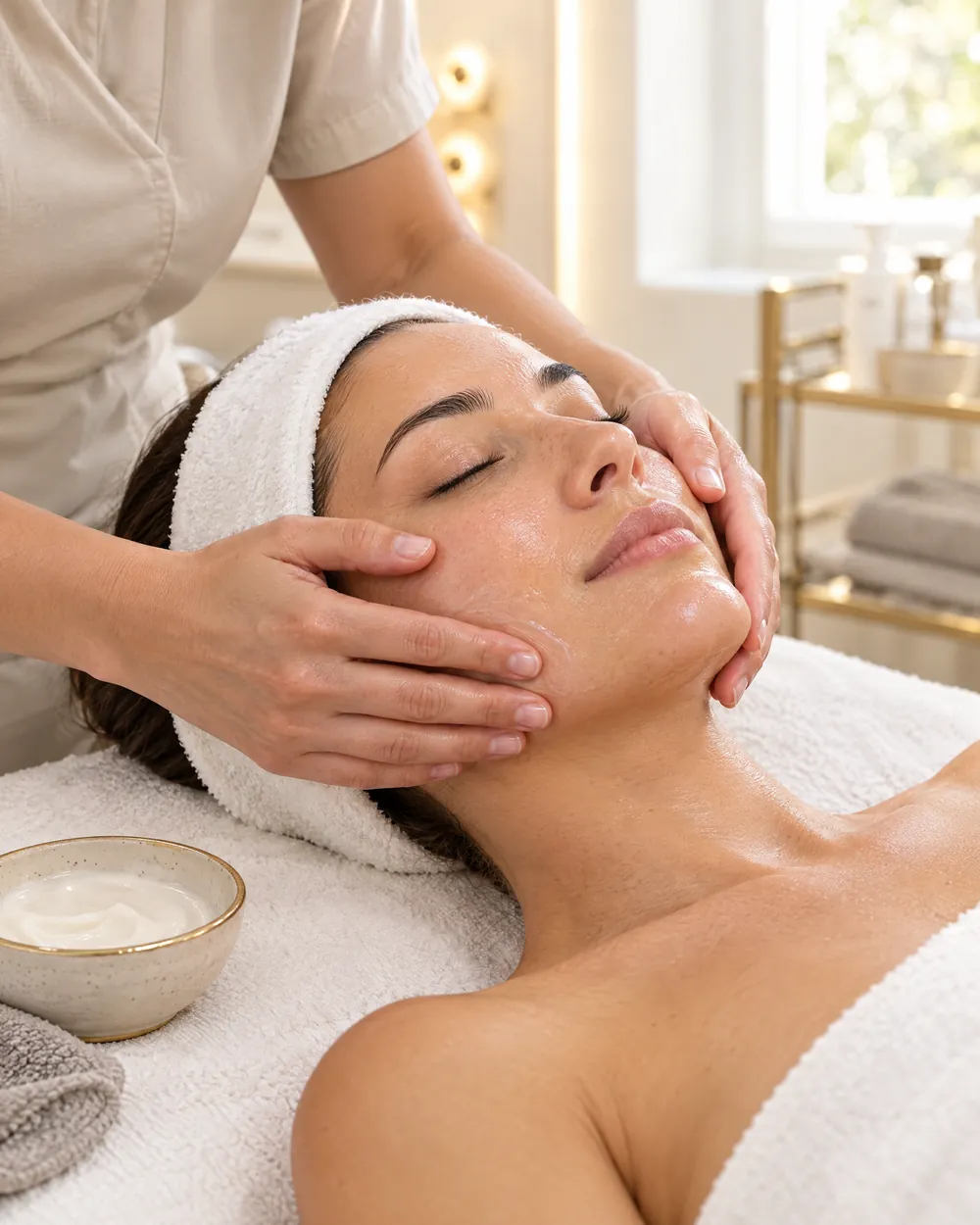
After a facial, one of the questions we hear most often from clients is: “When should I come back?” Some want to come every two weeks to hold on to that fresh feeling, while others book only when a special day is coming up. Both are understandable, but neither really matches the skin's own rhythm. This article explains what sets the frequency of facials at a center, how the interval shifts with skin type, age, season, and goals, and why “the more often, the better” is misleading.
Why does the skin's renewal cycle set how often you get a facial?
The top layer of your skin renews itself constantly. New cells formed in the lower layers gradually move up toward the surface, while older cells on the surface are shed. In adult skin this cycle takes about four weeks, and it slows down with age. A facial works with the surface your skin has on that day: it removes dead cells, clears buildup from the pores, and adds moisture and serum support.
That's why it makes sense to book the next facial after the skin has formed a new surface. If the interval is too short, exfoliation and extractions are applied to a surface that hasn't recovered yet. If it's too long, buildup collects on the surface again, pores look more visible, and the results of your facials never become consistent. The right interval is the balance between those two extremes.
How far apart are facials at our center scheduled?
The table below gives the general framework for the facials at our center. The intervals are a starting point; your own schedule is settled after the skin analysis in your consultation.
| Facial | Duration | Typical interval | Works well for |
|---|---|---|---|
| Classic Facial | About 60 min | Every 4–6 weeks | Regular cleansing, blackheads, a relaxing break |
| Professional Facial | About 60–75 min | Once a month | Regular care built around your skin analysis |
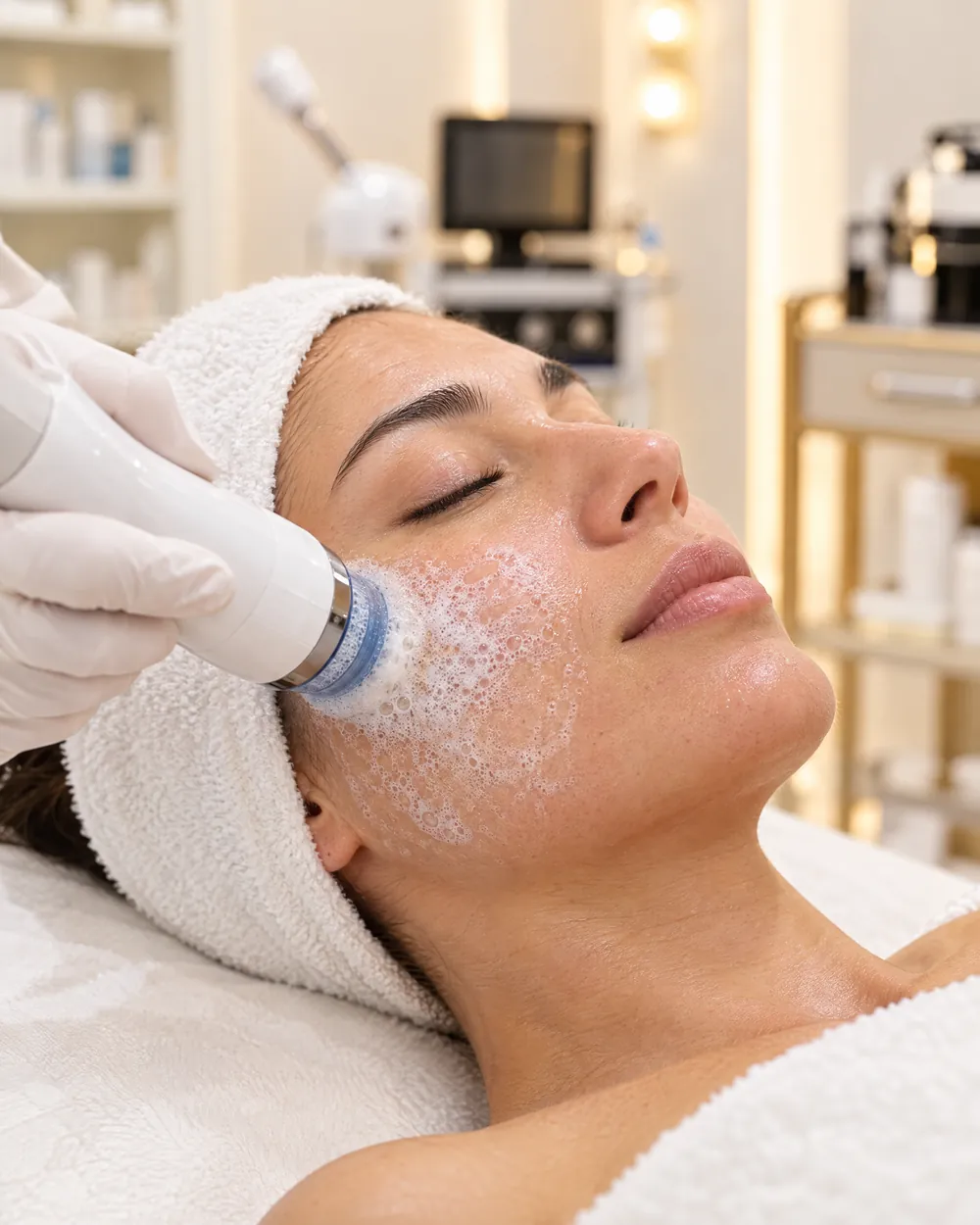
| Hydrafacial | About 45–60 min | Every 3–6 weeks, depending on your needs | Visible pores and moisture |
| Oxygeneo Facial | About 40–50 min | Every 3–4 weeks | Dullness and the look of rough texture |
| Anti-Aging Facial | About 60–75 min | Every 3–4 weeks | Firmness, glow, and the look of fine lines |
| Moisture Facial | About 45–60 min | Every 3–4 weeks in winter and between seasons | Tightness, dryness, a dehydrated look |
You don't need to book all of these in the same period. For many of our clients, two or three facials are alternated over the year. In a plan like that, think of the interval not for each facial separately but as the time between any two facials. Having an Oxygeneo Facial and a Classic Facial in the same week isn't two separate sessions for your skin; it's one heavier load.
What's the difference between a starting phase and a maintenance phase?
If you have a clear goal, such as dullness that has lingered for a long time, enlarged-looking pores, or moisture loss that built up over the winter, the first months follow a more regular rhythm. During this phase, several sessions are scheduled 3–4 weeks apart. For Oxygeneo, that usually means a program of 4–6 sessions spaced 3–4 weeks apart. Once the look you're aiming for has been supported, you move into a maintenance phase: sessions once a month or at the change of seasons.
- Consultation and skin analysis: We look at your moisture and oil balance, pore structure, sensitivity, the products you use, and what you expect.
- Starting phase: If there's a specific goal, several sessions are scheduled 3–4 weeks apart.
- Check-in: Together we review how your skin is responding to the sessions and whether your home routine fits the picture.
- Maintenance phase: Sessions once a month or at the change of seasons help preserve the balance you've reached.
- Replanning: When the season changes or a new need comes up, the type of facial and the interval are updated.
If you don't have a specific goal, you may not need a starting phase at all. For someone who simply wants to keep their skin clean and balanced, starting directly with a maintenance rhythm is often enough.
How do skin type, age, season, and goals change the frequency?
The same facial may be scheduled at different intervals for two different people. The table below gives a general picture of which factor pulls the frequency in which direction.
| Factor | Situation | Effect on frequency |
|---|---|---|
| Skin type | Oily, visible pores, prone to blackheads | Extractions are needed more regularly, so the interval is usually kept toward the shorter end of the suggested range |
| Skin type | Dry or dehydrated | Moisture-focused facials come first; exfoliation and extractions are planned more sparingly |
| Skin type | Sensitive, prone to redness | The protocol is made gentler; no new facial is done until the skin has fully calmed, and the interval is lengthened if needed |
| Age | Your 20s | Regular cleansing is enough for most people; your late 20s are a good time to start preventive anti-aging care |
| Age | Later years | As renewal slows, a planned rhythm focused on moisture and firmness becomes more important |
| Season | Winter | For the dryness and dullness that radiators and cold air bring, the Moisture Facial or Oxygeneo comes to the fore |
| Season | Late summer | For pores made more visible by sun and sweat, Hydrafacial can focus on extractions |
| Goal | A special day | A facial your skin already knows goes a few days before; a facial you're trying for the first time goes at least 3–4 weeks before |
These factors often show up together. In winter, combination skin may have visible pores in the T-zone and tightness on the cheeks. In a case like that, we don't set the frequency by one factor alone but by what your skin needs most during that period. You can find a more detailed countdown for special occasions in our article “Skin care before New Year's and special events: how far ahead to book each service.”
Does getting a facial every week give better results?
It feels good to see your skin clean, plump, and glowing after a facial, and it's natural to want that feeling every week. But most facials at a center include exfoliation, extractions, or device-assisted steps. After these steps, the skin needs time to recover and form a new surface. Facials done back to back without that time can strain the skin's protective barrier.
Strained skin can end up looking duller, more sensitive, and quicker to redden, which is the opposite of what you were hoping for. In other words, too much care often brings back the very look you wanted the facials to address. If you notice a few of the signs below, let's review your facial interval and your home routine together:
- Pinkness or redness after a facial lasts longer than it used to.
- A cleanser or moisturizer you used without trouble has started to sting or burn.
- Your skin looks tight and shiny at the same time.
- There's fine flaking on the surface, and makeup sits unevenly.
- Small bumps show up again after every facial.
We explained how to tell whether this comes from sensitivity or from strain in our article “If your skin reacts to every product: sensitive or sensitized?” During a period like this, taking a short break from facials and simplifying your home routine for a few weeks can help your skin find its balance again.
In skin care, consistency matters more than frequency.
How does your home routine affect how often you need a facial?
The facials at our center set the rhythm; your home routine carries their results through the days in between. Someone who uses a drying cleanser or skips sunscreen feels the freshness of a facial fade within a few days and concludes, “I need to come more often.” In that case, the answer is usually not a shorter interval but a better home routine. These points are enough to bring your facials and your home routine into line:
- For 3–5 days before a facial, depending on the type of facial, pause products with retinol, acids, or exfoliants.
- For the first 24 hours after a facial, don't exfoliate or use an exfoliating mitt at home.
- In the week you have a facial, don't add a strong exfoliant or mask at home; think of the load on your skin as a whole.
- Make a gentle cleanser, a moisturizer that suits your skin, and sunscreen every morning your core routine between sessions.
- Write down the names of the products you use at home; during the analysis we can see together which product is affecting your interval.
Why should a skin analysis decide how often you get a facial?
Even for two people of the same age with the same skin type, the right interval can differ. Habits such as sleep, time spent in the sun, active ingredients used at home, smoking, and stress change how the skin responds to care. Those differences can't be read from a general table.
In the skin analysis, we look not only at how your skin is that day but also at how it has changed since your last facial. If the moisture and oil balance has held, pores look calm, and the skin feels comfortable, the interval can be lengthened. If buildup returns quickly or dryness increases, the interval and the type of facial are reconsidered. The schedule isn't set once and left alone; it's updated at each visit based on your skin.
What are the common misconceptions about how often to get a facial?
- “The more often I get facials, the cleaner my skin stays.” Skin that isn't given time to recover can look more sensitive and duller. A regular interval does more than a frequent one.
- “Once I start, my skin will get worse if I stop.” Taking a break doesn't damage your skin. But the look that regular facials support gradually returns to how it was before your facials as the break gets longer.
- “You only need a facial when there's a problem.” A regular rhythm helps keep skin balanced before buildup and dryness become noticeable.
- “You should take a break from facials in summer.” Facials can be done in summer too. After facials that include exfoliation, simply pay extra attention to sun protection.
- “Getting a facial for the first time the day before a special event is the right way to go.” A facial your skin doesn't know can leave temporary redness or bumps. It's safer to book your first facial at least 3–4 weeks before the special day.
When should you see a doctor?
Before setting up your facial schedule, we recommend seeing a dermatologist if any of the following apply to you:
- You've had inflamed, painful breakouts that leave marks for a long time.
- Redness, burning, or itching on your face hasn't gone away for weeks, even after pausing facials.
- You notice spreading redness, swelling, or an itchy rash after a facial.
- You're using a prescription cream or medication recommended by a doctor; ask your doctor whether to pause it before a facial.
- You've seen a mole or spot that is changing in shape, color, or size.
At our center in Nişantaşı, we build your facial schedule at the first visit based on a skin analysis and update it at each visit according to how your skin responds. Vega Beauty is a beauty and care center; if the analysis shows something that calls for a medical evaluation, we'll refer you to a doctor instead of starting a facial.
Frequently asked questions
How many times a month should you get a facial?
For most people, a facial at a center once a month or every 3–6 weeks is a sensible framework. Weekly facials generally aren't recommended; the skin needs time to recover and form a new surface after a session.
How often should you get a Hydrafacial?
Hydrafacial is usually scheduled every 3–6 weeks, depending on your skin's needs. For oily and combination skin with visible pores and blackheads, the interval can be kept toward the shorter end of that range.
How many Oxygeneo sessions do you need, and how far apart?
For a noticeable, lasting effect, a program of 4–6 sessions spaced 3–4 weeks apart is usually suggested. After that, you can continue with sessions once a month or at the change of seasons.
Is it harmful to get a facial every week?
Getting facials that include exfoliation, extractions, or device-assisted steps every week can strain your skin's barrier. Redness that lasts longer, products that start to sting, and flaking can be signs of this. In that case, the interval should be lengthened and the home routine simplified.
What happens if I take a break from facials?
A break won't harm your skin. But the clean, balanced look that regular facials support gradually returns to how it was before as the break gets longer. When you come back, we rebuild the schedule around how your skin is at that point.
Can I get a Classic Facial and an Oxygeneo Facial in the same month?
Yes; for many of our clients, facials are alternated. What matters is leaving enough time between the two for your skin to recover. Think of the interval not for each facial separately but as the time between any two facials; we set up the schedule together at your consultation.
Published: · Vega Beauty editorial team. This article is general information and does not replace a medical diagnosis or advice; whether a service suits you is assessed at your consultation.