Hair & Scalp
Is seasonal hair loss normal? When to worry
In short
Yes, seasonal hair loss is normal for most people, and it is especially noticeable in fall. Because hairs enter a resting phase and shed as part of their natural cycle, you may notice more strands for a few weeks, and this usually eases within 6–8 weeks. Sudden, heavy, patchy, or months-long hair loss is a reason to see a dermatologist.
Seeing more hair on your comb, on your pillow, and in the shower drain in September and October makes many people nervous. Most of the time, this is simply the seasonal side of hair's natural life cycle. But not all shedding is seasonal. In this guide we take a detailed look at the hair cycle, the normal range of shedding, worrying signs, and care steps that support the scalp.
What is seasonal hair loss?
Seasonal hair loss is a temporary increase in shedding at certain times of year, most often in fall. In the summer months, hair follicles can stay in the growth phase for longer. Some of those hairs enter the resting phase toward the end of summer and fall out a few months later. That is why the cycle that builds over summer shows up as more visible shedding in fall.
This shedding is mostly spread evenly across the head, doesn't create a bare patch in any one area, and eases on its own within a few weeks. Because new strands keep growing in to replace the ones you lose, hair density doesn't noticeably change for most people.
How does the hair cycle work? The anagen, catagen, and telogen phases
Every hair goes through its own independent cycle, which has three main phases. Because the hairs on your scalp aren't all in the same phase at once, they shed continuously in small numbers rather than all together.
| Phase | What happens? | Typical length | Approximate share of hairs |
|---|---|---|---|
| Anagen (growth) | The follicle actively makes new cells and the hair grows | Usually 2–6 years | The majority (about 85–90%) |
| Catagen (transition) | Growth stops, and the follicle shrinks and prepares to rest | About 2–3 weeks | A very small share |
| Telogen (rest and shedding) | The hair doesn't grow; at the end of the phase it falls out and a new one replaces it | About 2–4 months | About 10–15% |
In seasonal shedding, the proportion of hairs in the telogen phase temporarily rises. This means more strands fall out at the same time for a while. Once the cycle rebalances, shedding returns to its usual level.
How many hairs a day is normal to lose?
Losing about 50–100 hairs a day is generally considered normal. With long, thick hair, on wash days, or after a few days without washing, the number can seem higher, because strands shed over several days all show up at once. During the seasonal period, going above this range for a few weeks is also normal for most people.
- It is expected to see more strands in the sink on days you wash your hair.
- A small white root at the end of a shed strand shows that it has completed its natural cycle.
- Broken hairs have no root. This is usually wear on the strand, not shedding.
- To learn your own average, you can watch the strands left in your comb after combing for a few days.
What is the difference between seasonal shedding and worrying hair loss?
The key differences are duration, intensity, and distribution. Seasonal shedding is general, lasts a few weeks, and eases on its own. Worrying hair loss usually starts suddenly, lasts for months, or leaves bare patches in specific areas. The table below is a general guide and does not replace a diagnosis.
| Feature | Seasonal shedding (usually) | When to see a dermatologist |
|---|---|---|
| Onset | Gradual, mostly in fall | A sudden, marked increase |
| Duration | Usually 6–8 weeks, a few months at most | Hair loss lasting more than 3 months or steadily increasing |
| Distribution | Spread evenly across the head | Round bare patches in specific areas, noticeable thinning at the crown or forehead |
| Scalp | No visible change | Itching, redness, flaking, sores, or pain |
| Accompanying factors | Usually none | Fatigue, weight change, irregular periods, recent illness, intense stress |
| Hair density | No noticeable difference in overall look | A ponytail that is visibly thinner |
When should you see a dermatologist?
If hair loss started suddenly, is very heavy, creates bare patches in specific areas, or lasts longer than a few months, you need to see a dermatologist. Many different causes can lie behind hair loss, including iron deficiency, thyroid disorders, hormonal changes, certain medications, the postpartum period, and scalp conditions, and telling them apart is a doctor's job.
- Handfuls of hair falling out, with a clear increase over a few weeks.
- Round or irregular bare patches on the scalp.
- Progressive thinning at the crown, along the hairline, or at the temples.
- Itching, redness, heavy flaking, sores, or tenderness on the scalp.
- General complaints alongside hair loss, such as fatigue, weight change, or irregular periods.
- Loss of eyebrow, eyelash, or body hair as well.
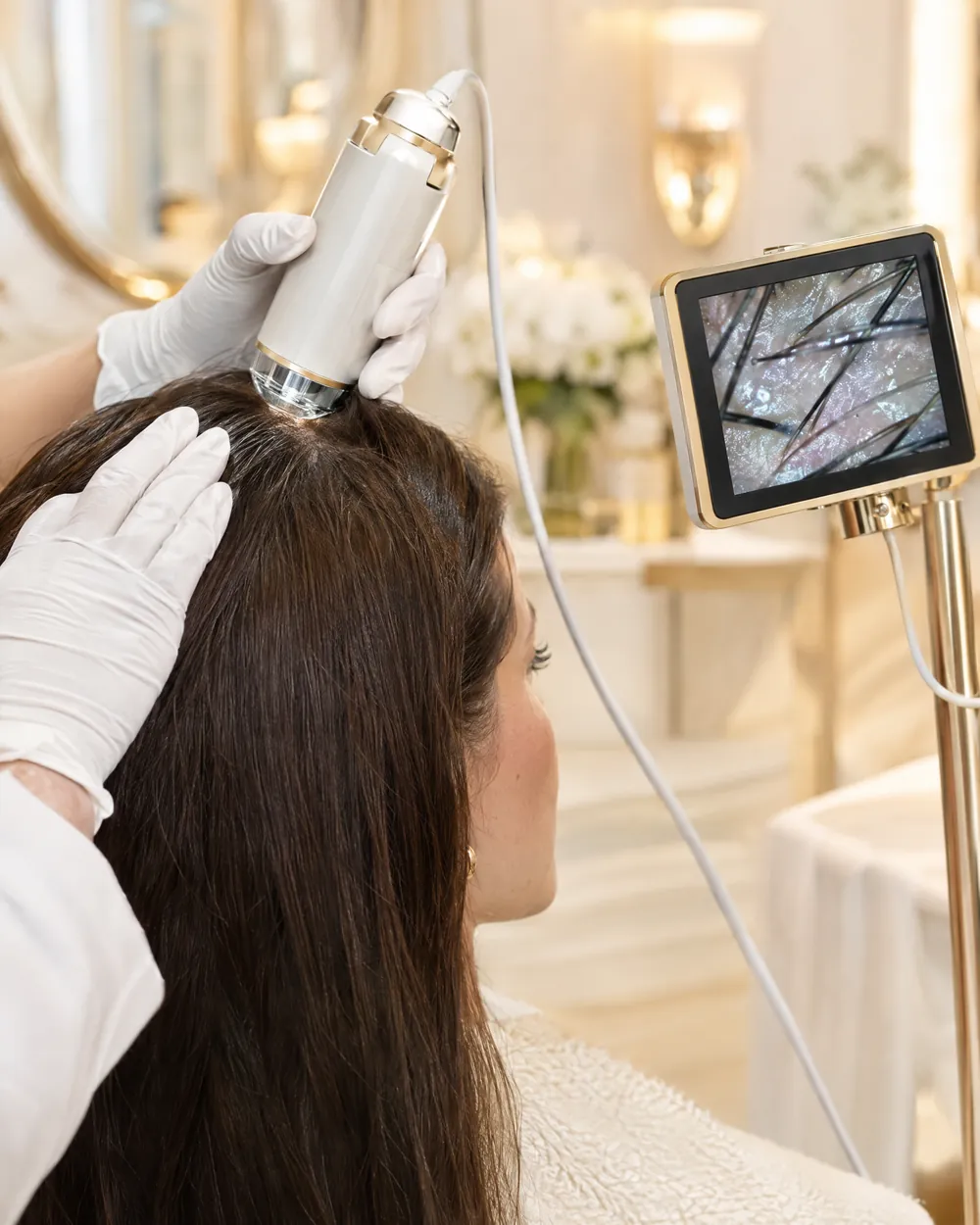
Vega Beauty is a beauty and care center. We don't diagnose, and we don't offer services aimed at medical conditions. If we notice something concerning during a scalp analysis, we refer you to a dermatologist first, then build a supportive care plan in line with your doctor's recommendations.
How can you support your hair during seasonal shedding?
During seasonal shedding, the goal is to keep your scalp healthy and protect your hair from unnecessary wear. Good habits don't change the shedding cycle, but they help your scalp feel comfortable and reduce breakage.
- Choose a gentle shampoo that suits your scalp, and wash by massaging the scalp with your fingertips, not your nails.
- Use lukewarm water rather than very hot water, which can dry out the scalp.
- Instead of rubbing wet hair with a rough towel, gently squeeze it dry, and detangle it with a wide-tooth comb.
- Cut back on blow-dryers, flat irons, and curling irons, and use a heat protectant when you do use them.
- Avoid tight ponytails, buns, and braids, since constant pulling can strain the hair root.
- Adjust how often you wash to how oily your scalp gets. Leaving an oily scalp unwashed for a long time can also be uncomfortable.
How does nutrition affect hair loss?
Hair is one of the body's non-vital tissues, so during poor nutrition or sudden weight loss, the resources going to hair are among the first to drop. A balanced diet supports a healthy hair cycle.
- Enough protein: Eggs, fish, legumes, dairy, and meat matter for keratin, the building block of hair.
- Iron: Red meat, legumes, and dark leafy greens. Your doctor can check your iron levels with a blood test.
- Zinc and B vitamins: Pumpkin seeds, walnuts, whole grains, and eggs are good sources.
- Omega-3: Oily fish, walnuts, and flaxseed support the scalp's moisture balance.
- Water: Drinking enough water each day contributes to the balance of your scalp, as it does for your skin.
Rather than taking vitamin and mineral supplements on your own, it makes more sense to have your blood work checked on your doctor's advice, especially if shedding is heavy. Taking more of certain supplements than you need may not help your hair, contrary to what you might expect.
Habits that strain the scalp during seasonal transitions
The sun, seawater, and chlorine of summer can leave hair dry, and in fall, the return of the heating and hot showers can strain the scalp's moisture balance. Recognizing the habits that wear on the scalp in this period helps hair look more lively. Frequent coloring and lightening, styling products with harsh chemicals, product buildup on the scalp, and hair tied tightly for long periods are among the things we see most often. These don't change the shedding cycle, but they can contribute to breakage and make hair look thinner.
The hair you lose in fall is usually not a loss at all. It's your hair making room for a new cycle.
What are common misconceptions about hair loss?
- “Washing often makes hair fall out.” False: The strands that come out in the wash were already ready to shed. Washing doesn't cause hair loss.
- “Cutting your hair short reduces hair loss.” False: Shed strands attract less attention on short hair, but the amount of shedding doesn't change.
- “Wearing a hat causes hair loss.” False: Unless it is very tight and causes constant friction, a hat doesn't lead to hair loss.
- “Seasonal shedding means more hair lost every year.” False: In seasonal shedding, strands are replaced by new ones.
- “Only men lose their hair.” False: Hair loss is common in women too, and its cause should always be looked into.
Istanbul's changeable weather, a demanding work pace, and stress are among the everyday factors that can affect your scalp's balance. At our center in Nişantaşı we offer personal Scalp Care and Hair Strengthening Care plans that begin with a scalp analysis. If your hair loss doesn't look seasonal, we refer you to a dermatologist first.
Frequently asked questions
How long does seasonal hair loss last?
For most people, seasonal hair loss eases noticeably within 6–8 weeks, though in some it can last up to a few months. If it goes on for more than 3 months, keeps increasing, or creates bare patches in specific areas, it may not be seasonal. In that case, you should see a dermatologist to look into the cause.
Why does hair fall out most in fall?
In the summer months, some hair follicles can stay in the growth phase longer. Toward the end of summer, those hairs enter the resting phase and fall out about 2–4 months later. That is why the cycle that builds over summer shows up as more visible shedding in September and October.
Is losing more than 100 hairs a day dangerous?
That alone doesn't mean it is dangerous. With long hair, on wash days, or during seasonal transitions, this number can be exceeded for a few weeks. But if shedding stays well above this level for a long time, your overall hair density drops, or bare patches form, you should see a dermatologist.
Should I take vitamins for hair loss?
Rather than taking vitamin and mineral supplements on your own, it is recommended that you talk to your doctor first, especially if shedding is heavy. Levels such as iron, vitamin D, or B12 can be checked with a blood test. If you don't have a deficiency, supplements often don't help, and too much of certain supplements can have unwanted effects.
Does Scalp Care stop hair loss?
Scalp Care makes no claim to stop hair loss. Its purpose is to keep the scalp clean, balanced, and comfortable, reduce buildup around the hair root, and help hair look more lively. Regular care can be supportive during the seasonal period, but if hair loss has a medical cause, your doctor's advice comes first.
Does stress cause hair loss?
Intense stress, serious illness, or major life changes can contribute to some hairs entering the resting phase early in certain people. This type of shedding is usually noticed 2–3 months after the stressful period. If it is heavy or lasts a long time, we recommend seeing a dermatologist.
Published: · Vega Beauty editorial team. This article is general information and does not replace a medical diagnosis or advice; whether a service suits you is assessed at your consultation. Cover photo: Magdalena / StockSnap (CC0).