Hair & Scalp
Why does your hair get staticky in winter? Flyaways, frizz, and the right care
In short
Hair gets staticky in winter because, in dry air, the electrical charge created by friction can't easily drain away from the hair strand. Strands carrying the same charge push each other away and stand up. Beanies, wool scarves, plastic combs, and rooms with radiator heating make this worse, and hair damaged by color and heat is affected more quickly. Moisture support, the right comb, and habits that cut down on friction often make a noticeable difference.
Hair that flies up the moment you take off your beanie, little crackles as the comb passes through, fine strands clinging to your face and scarf. When November arrives, this becomes an everyday nuisance for many people. In this post we explain why hair gets staticky in winter, how static differs from frizz, what you can do at home, and where professional hair care fits into the picture.
Why does hair get staticky?
When two surfaces rub against each other, electrical charge passes between them. When a hair strand touches a beanie, scarf, sweater collar, comb, or pillowcase, it picks up this charge. Strands carrying the same charge push each other away, which is why hair looks puffed up, messy, and lifted.
When there is enough moisture in the air, this charge drains away quickly and you don't notice it. In winter, though, the air outside is cold and dry, and humidity drops in rooms warmed by radiator heating. Because the charge can't drain away, hair can stay staticky all day. That is why static goes almost unnoticed in summer and suddenly increases in winter.
Are static and frizz the same thing?
They can look similar in the mirror, but their causes are different, and that difference affects which care you choose.
| Feature | Static | Frizz |
|---|---|---|
| When does it increase? | In dry air, in winter | In humid air, in the rain, and in summer |
| Cause | Electrical charge building up on the hair strand | The strand drawing in moisture from the air and swelling |
| How does it look? | Strands stand up and cling to your face and clothes | Hair looks voluminous, messy, and rough |
| First step | Moisture support and less friction | Balancing the strand with moisture and smoothing its surface |
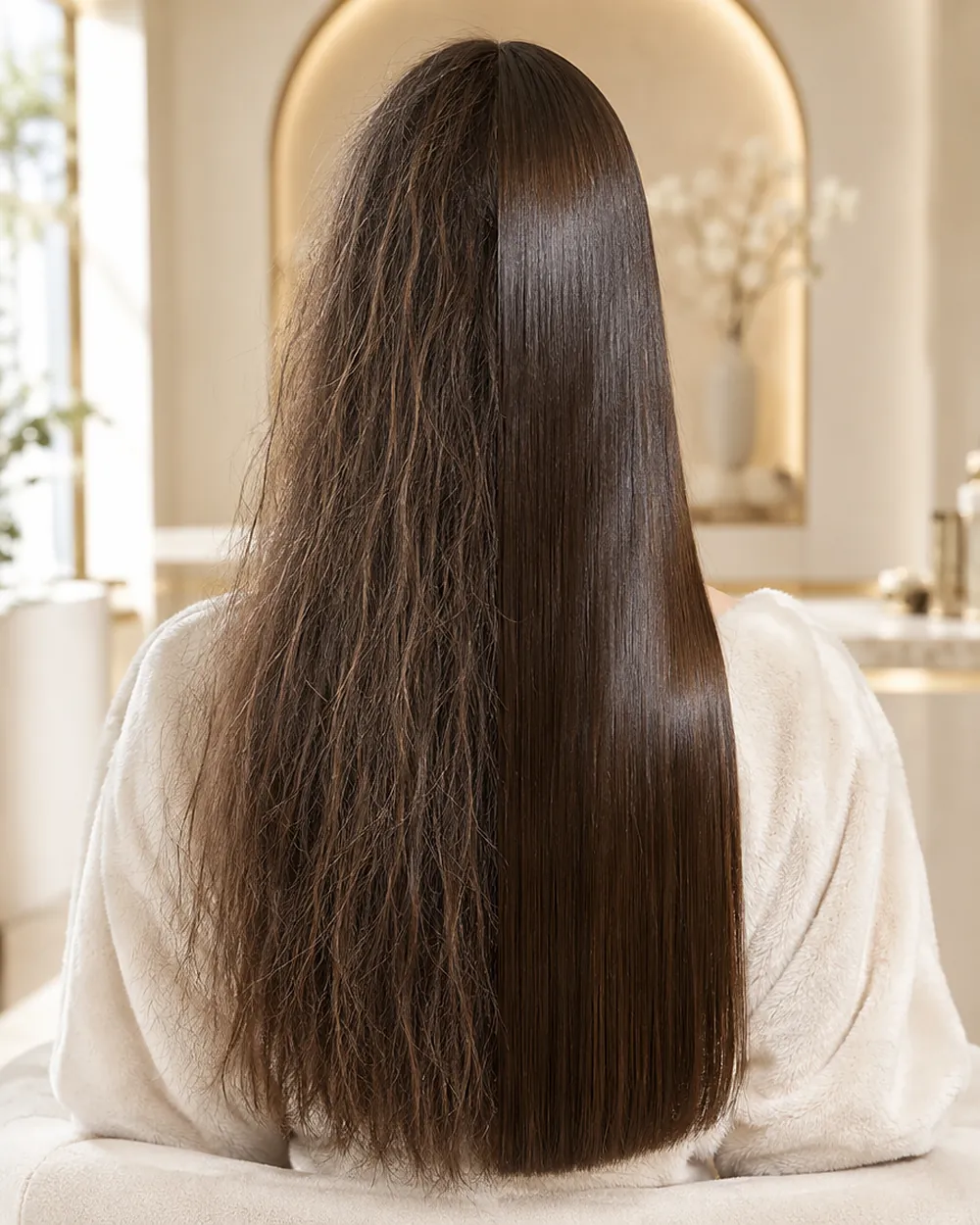
What the two have in common is a damaged hair strand. The strand's outermost layer is made up of a structure that resembles overlapping scales. Color, lightening, frequent blow-drying, and curling irons lift these cuticle scales. Hair with a roughened surface loses moisture faster and is also more affected by friction. That is why both static in winter and frizz in summer are more noticeable in colored and heat-styled hair.
Which winter habits make static worse?
- Plastic combs and brushes: Plastic builds up more charge when it rubs against hair.
- Wool and synthetic beanies and scarves: These fabrics are in constant contact with your hair and increase friction.
- Hot water and long showers: They reduce the moisture in your hair strands and your scalp.
- Rubbing your hair dry with a towel: This increases friction and roughens the surface of the strand.
- Blow-drying on high heat: It dries out the strand and makes static more noticeable, especially at the ends.
- Skipping conditioner: Hair washed without conditioner stays rougher and gets staticky easily.
- A dry room with radiator heating: As indoor humidity drops, the charge on the strand can't drain away.
How can you reduce static in your hair at home?
- Wash with lukewarm water: Wash your hair in lukewarm water and do the final rinse with slightly cooler water.
- Don't skip conditioner: Apply it to the lengths and ends, not the scalp; leave it on for a few minutes, then rinse.
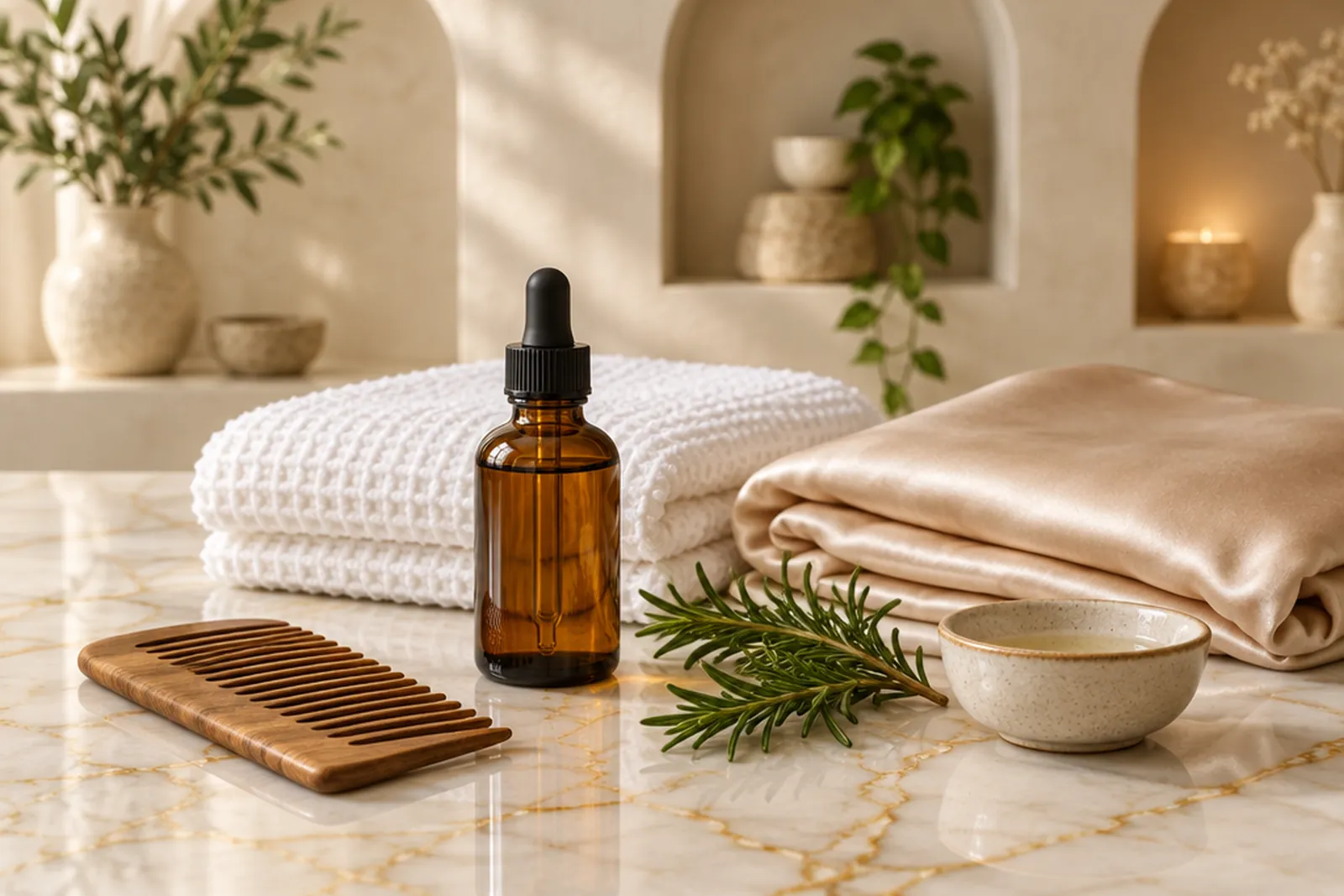
- Add a leave-in product: A light leave-in conditioner or a few drops of hair serum on the ends of towel-dried hair smooths the surface.
- Don't rub with a towel: Dry your hair by pressing it with a microfiber towel or a cotton T-shirt.
- Start blow-drying with a heat protectant: Dry on medium heat and finish with the cool setting.
- Change your comb: A wide-tooth wooden comb or a natural-bristle brush builds up less charge.
- Reduce friction: Choose a silk or satin lining where your beanie touches your hair; the same rule goes for your pillowcase.
- Balance indoor humidity: In rooms with radiator heating, especially the bedroom, a humidifier can be good for both your hair and your skin.
What does professional hair care add for static hair?
The steps you take at home are often enough. But if your strands have been clearly damaged by color and heat, or your hair looks dull and dry all winter long, professional care can support the process. We don't offer haircuts or coloring at our center; our hair services focus on the care of the hair strand and the scalp.
| Hair condition | Suggested care | Why? |
|---|---|---|
| Dry, stiff, staticky hair damaged by color | Hair Care | Masks and serums focused on moisture, nourishment, and repair for the strand |
| Dull, heavy hair that looks lifeless from product buildup | Hair Revitalizing Care | Cleansing and light nourishment for shine and volume |
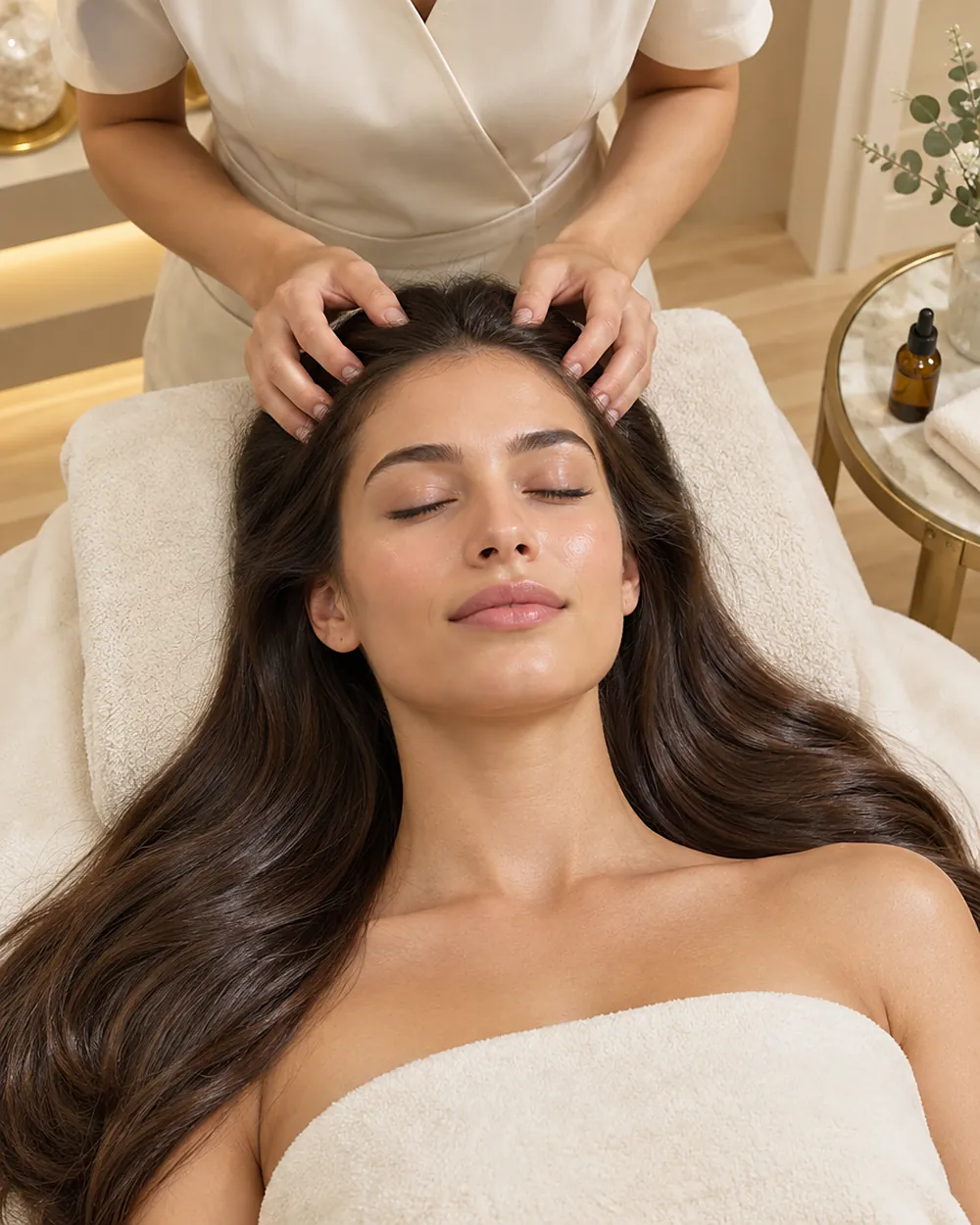
| A dry, tight, or itchy scalp | Scalp Care | Focuses on the scalp's balance |
Hair Care takes about 45–60 minutes and is planned 1–2 times a month, depending on your needs. Its effect is directly linked to the shampoo and conditioner you use at home and to your drying habits, so at the end of the session we also go over your home routine together. Hair Revitalizing Care is an option for hair that looks dull and heavy from the buildup left by rich products used all winter. If the products you applied to tame static have weighed your hair down, it helps make your hair light again.
If your hair is trying to tell you something in winter, it's usually that it's thirsty.
What are the common myths about static hair?
- “Staticky hair is unhealthy hair.” Healthy hair can get staticky in dry air too. But in damaged hair it happens more often and is more noticeable.
- “Washing your hair every day prevents static.” Washing often and in hot water can reduce your hair's moisture. Base how often you wash on how oily your scalp gets.
- “Hairspray fixes static.” Some sprays can dry hair out. For dry hair, a light serum or a leave-in conditioner is usually more suitable.
- “The more oil, the less static.” Too much oil weighs hair down and makes the roots look greasy. A few drops are enough.
- “Conditioner weighs hair down in winter.” Applied to the lengths and ends, conditioner doesn't weigh hair down; skipping it in winter can make static worse.
Which signs mean you should talk to a doctor?
Static is usually a care issue. But if it comes with any of the following, we recommend seeing a dermatologist:
- Your hair loss is heavy and started suddenly, or you've noticed bare patches in your hair.
- Itching, redness, and flaking on your scalp have lasted for weeks.
- Your strands have become noticeably thinner and brittle in a short time.
- The changes in your hair come with weakness, constantly feeling cold, a change in weight, or marked dryness of the skin.
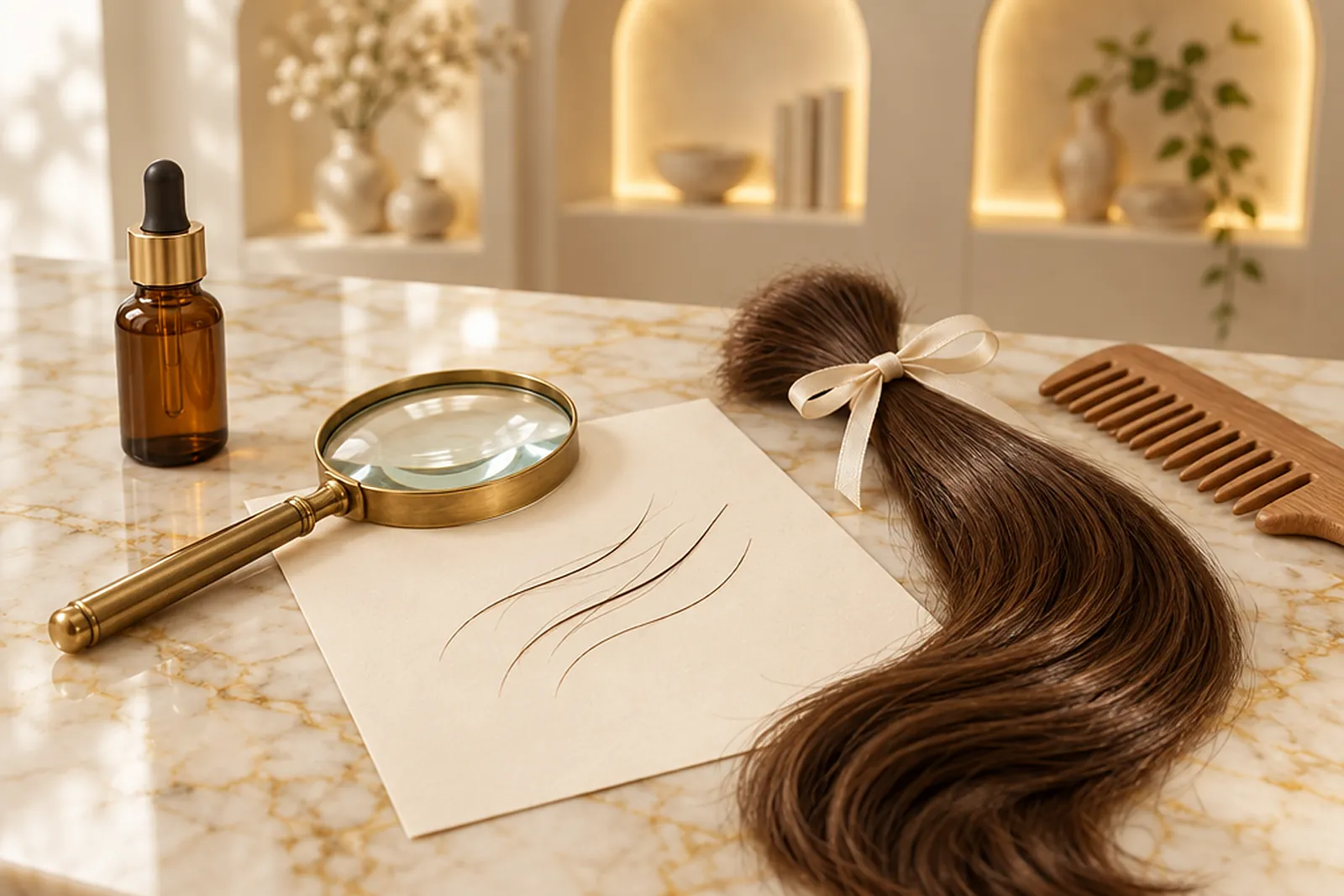
Our blog post on hair shedding versus breakage explains how to tell the two apart at home. At our center in Nişantaşı, hair care begins with a close look at your hair and scalp. Vega Beauty is a beauty and care center, and our hair care services are not a substitute for a medical evaluation.
Frequently asked questions
Why does my hair only get staticky in winter?
In winter, both the air outside and the indoor air warmed by radiator heating are dry. When there is less moisture in the air, the charge created by friction can't drain away from the hair strand, and your hair stays staticky all day.
Which comb should I use for staticky hair?
Wide-tooth wooden combs and natural-bristle brushes build up less charge than plastic combs. Combing gently, starting from the ends and without tugging, also reduces friction.
Does hair serum reduce static?
A few drops of hair serum or a light leave-in conditioner can help reduce static by smoothing the surface of the hair strand. Apply the product to the lengths and ends, not the roots.
Do beanies make hair staticky?
Wool and synthetic beanies can increase static by rubbing against your hair. Beanies lined with silk or satin, and taking your beanie off indoors, reduce this effect.
How soon does Hair Care reduce static?
After Hair Care, hair looks softer and smoother, and static often eases from the first few days. How long the effect lasts depends on the products you use at home and your drying habits. Sessions are planned 1–2 times a month, depending on your needs.
Does static cause hair loss?
Static itself doesn't cause hair loss. But combing staticky hair roughly and rubbing it often can increase breakage. If you notice heavy shedding, see a dermatologist.
Published: · Vega Beauty editorial team. This article is general information and does not replace a medical diagnosis or advice; whether a service suits you is assessed at your consultation.