Hair & Scalp
What to do at home between hair care sessions: a simple routine that helps the results last
In short
Between sessions, your main job at home is not to overload a scalp that was just cleansed at our center. Washing with lukewarm water as often as your scalp's oiliness calls for, keeping shampoo on the scalp and conditioner on the ends, applying the serum you were given to a clean scalp in the right order, and a few minutes of gentle massage are usually enough. Adding more products doesn't make the results last longer; more often, it adds buildup. If you notice stinging, redness, or a sudden increase in shedding, stop the routine and talk to us, or to a dermatologist if needed.
On the day of a hair care session, your scalp feels light and the roots feel fresh. That's where our clients' most common question comes from: “How do I keep this feeling until the next session?” Most of the answer lies in the days you spend at home between two sessions. This article covers the home routine between Hair Strengthening Care, Hair Revitalizing Care, and Scalp Care sessions. Our center doesn't offer haircuts, coloring, or blowouts; our subject here is the everyday care of the scalp and the hair strand.
Why does the time between sessions matter so much?
A Hair Strengthening Care program is usually planned as 6–8 sessions spaced 1–2 weeks apart. Scalp Care is mostly done every 2–4 weeks, and Hair Revitalizing Care once or twice a month. In other words, your hair spends an hour or two a month at our center and the rest of the time with your own habits. If a scalp that was cleansed in a session fills up again at home with heavy products or irregular washing, each session starts over instead of building on the last one.
Hair also renews itself in a slow cycle, which is why a strengthening program is usually assessed in its second half. A home routine kept steady through that period is also what lets us read the effect of the sessions accurately.
What should you watch for in the first hours and the first day after a session?
Each service comes with slightly different aftercare. The table below sums up the general framework at our center; if you were given a personal note, that note comes before the table.
| Service | Length and frequency | First hours / first day after the session | Focus at home between sessions |
|---|---|---|---|
| Hair Strengthening Care | About 45 min; usually 6–8 sessions, 1–2 weeks apart | Don't wash your hair for the first few hours so the serum can work | Keeping up the recommended home care throughout the program, gentle combing and drying |
| Scalp Care | About 45–60 min; every 2–4 weeks | No heavy products on the scalp for the first 24 hours; avoid very hot water | A washing rhythm that matches how fast your scalp gets oily, limiting extra exfoliation at home |
| Hair Revitalizing Care | About 45–60 min; once or twice a month | Stay away from products that weigh down the roots | A clarifying shampoo once a week, a routine with few layers |
| Hair Care | About 45–60 min; once or twice a month | Avoid very hot drying and curling irons on the first day | Moisture for the lengths and ends, heat protectant every time you style with heat |
The right interval for you is set at your scalp analysis and consultation, based on the condition of your hair.
How often and how should you wash your hair between sessions?
How often you wash depends not on the calendar but on how fast your scalp gets oily. The fresh feeling after a session is not a reason to put off washing; it's a chance to observe your own rhythm. When washing is put off too long, oil and residue build up again, while washing too often with very hot water can dry out the scalp. The balance comes from how you wash:
- Lather the shampoo in your palm with a little water, part your hair in a few places, and apply it to the scalp; the lengths get cleaned by the foam as you rinse.
- If your scalp got very oily or you used a lot of styling product, you can wash twice: the first wash loosens the buildup and the second cleans. For a dry scalp, one wash is usually enough.
- Keep the water lukewarm; hot water also strips the scalp's natural oils.
- Keep rinsing a little after the foam is gone; the nape and the area behind the ears are where residue tends to stay.
- Apply conditioner and masks to the mid-lengths and ends, and keep them away from the roots.
In what order should you use serums, tonics, and other products?
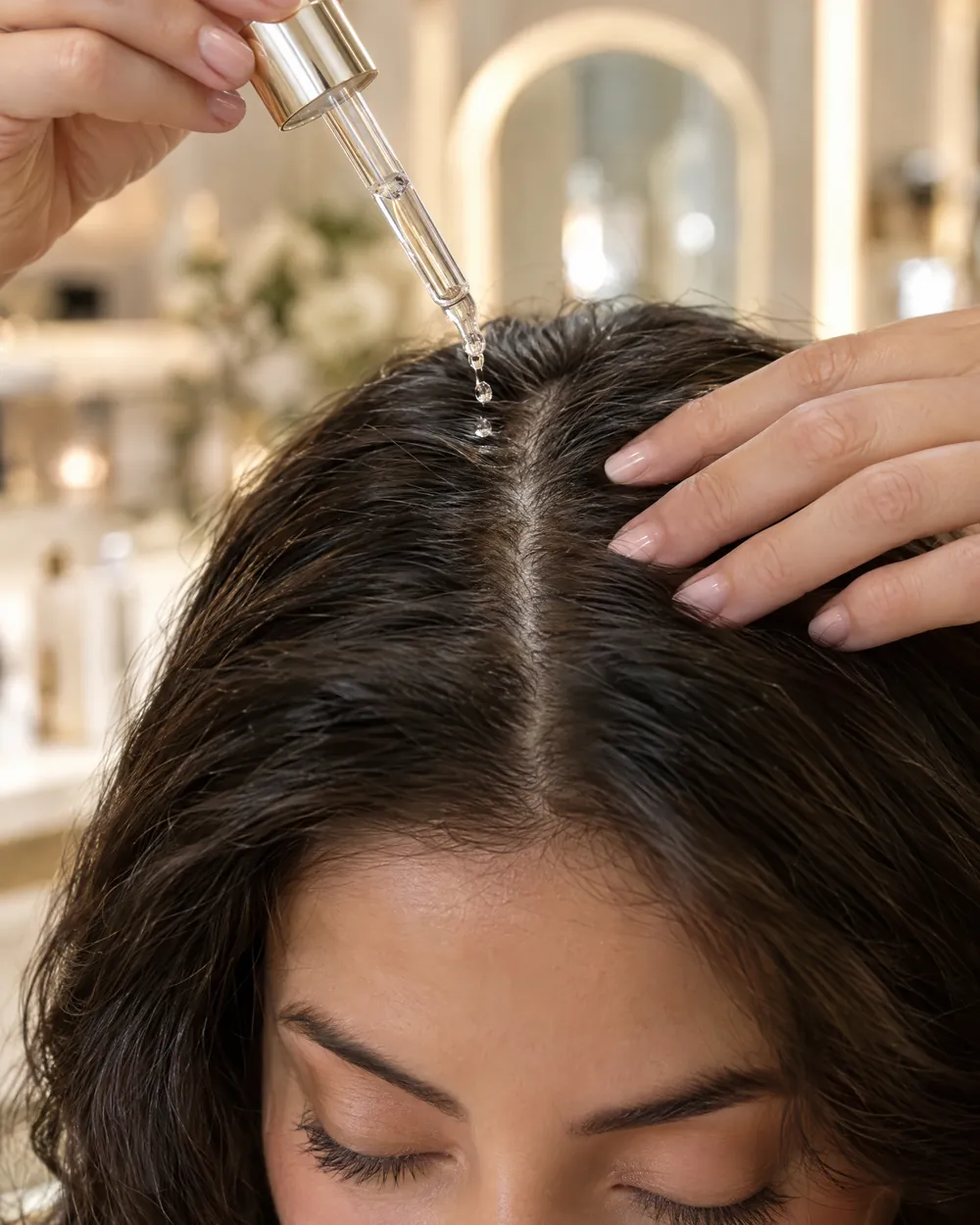
If you were given a serum or tonic for the scalp in a session, the product needs to reach the scalp. Applied in the wrong order, these products often end up sitting on the lengths. A simple order looks like this:
- Wash and rinse well: Applying serum to a scalp that's oily, coated with dry shampoo, or carrying styling residue makes it harder for the product to reach the skin.
- Blot out the water with a towel: Press your hair into the towel until it no longer drips. If the product's instructions call for a wet or dry scalp, follow them.
- Apply the scalp product: Part your hair in a few lines and drop the serum or tonic directly onto the scalp. Don't go over the recommended amount.
- Spread it with your fingertips: Work the product into the scalp with a short, gentle massage; don't use your nails.
- Add products for the lengths and ends afterward: Apply leave-in cream or end serum to the lengths only, without touching the roots.
- Heat protectant comes last: If you'll be drying or styling with heat, make heat protectant the final step.
Don't layer scalp products on top of each other on the same day; if more than one product was recommended, let's note together in the session which one is used on which day.
How do you massage your scalp at home?
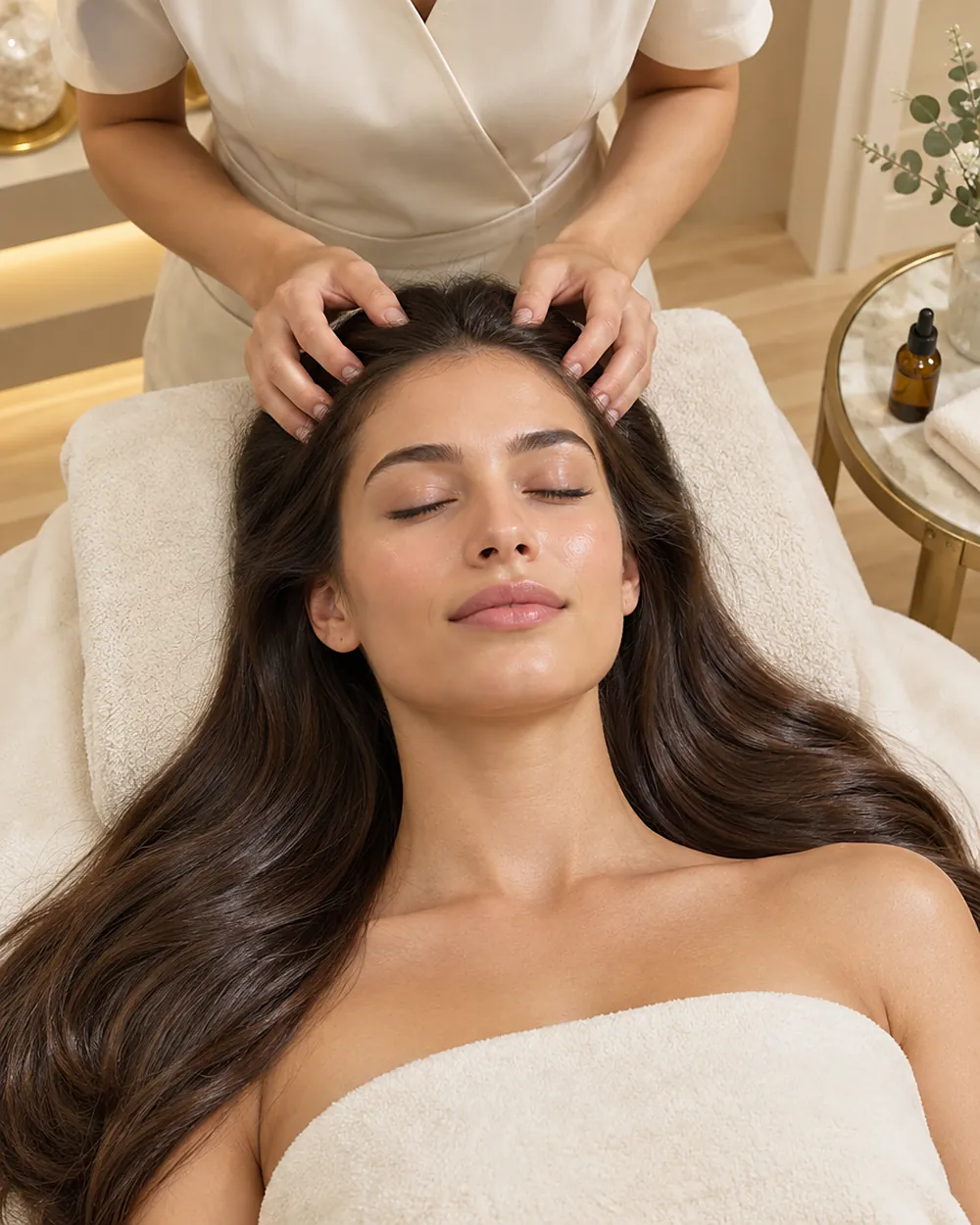
The scalp massage that's part of our sessions can be kept up at home in a short, simple form. You don't need any special tool. Place your fingertips on your scalp and, instead of sliding your fingers over your hair, gently move the scalp itself in small circles. Start at the nape and behind the ears, move to the temples, and then up to the crown. A few minutes is enough; you can do it while shampooing or after applying your serum.
The goal isn't to work the scalp hard but to create a fresh feeling at the roots; pressing hard, scratching, or pulling the hair doesn't serve that goal. If your scalp has irritation, crusts, or an open wound, take a break from massage. Massage at home doesn't replace the one in your session; it complements it.
Why do towel, comb, and pillow habits matter?
Between sessions, what wears out the hair strand most is often not a product but the small bits of friction repeated through the day:
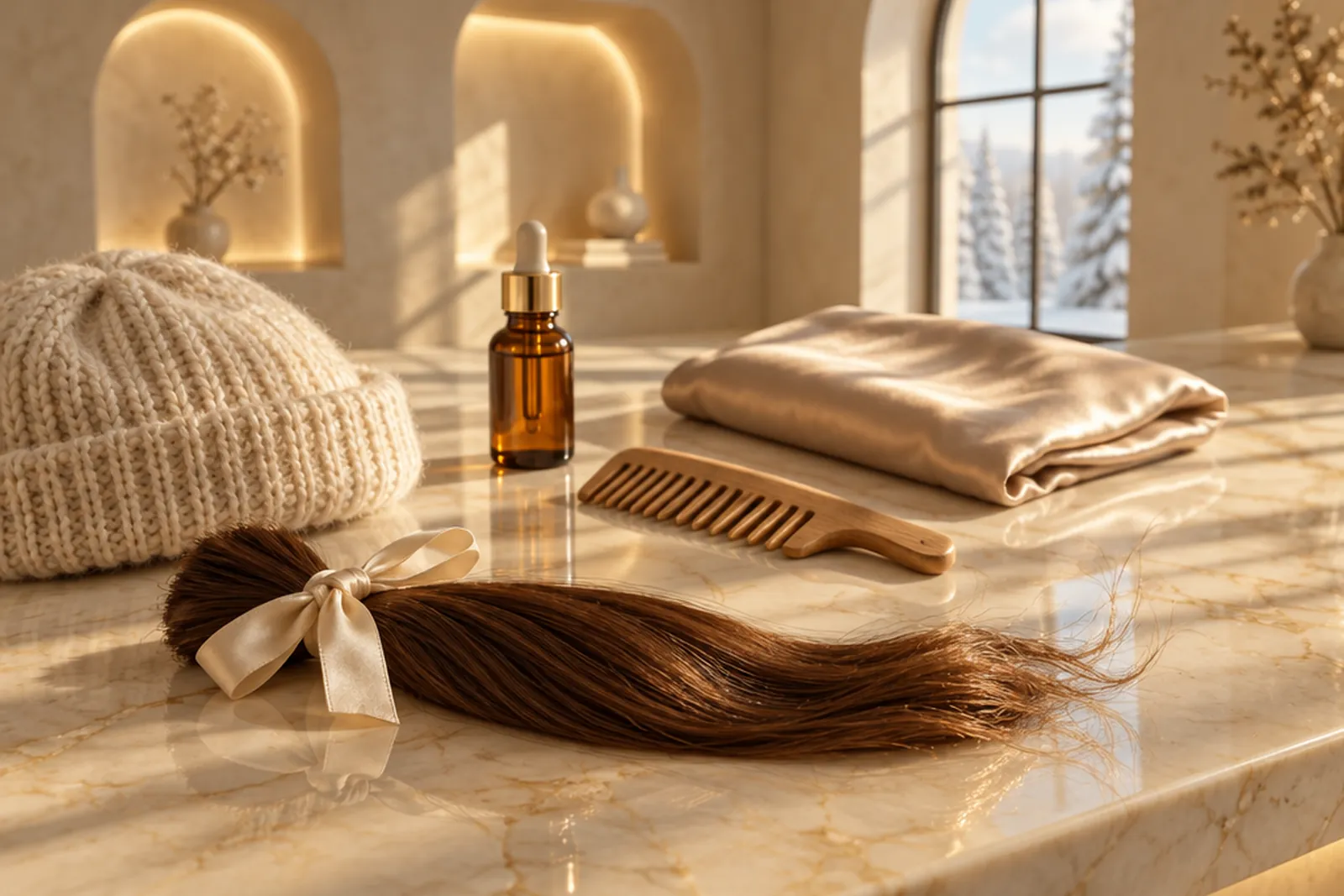
- Towel: Press your hair dry instead of rubbing it; keeping a towel tightly wrapped for a long time pulls on the strands and leaves the scalp damp.
- Comb: Detangle wet hair with a wide-tooth comb, starting from the ends; clean your combs and brushes regularly.
- Pillowcase: Sweat, oil, and product residue build up on your pillowcase. Change it often; a satin or silk pillowcase can reduce friction.
- Sleeping with wet hair: A scalp that stays damp all night can add to a heavy, itchy feeling; dry your roots before bed.
- Tying your hair up: Avoid pulling your hair tightly into the same spot every day and leaving it tied up while wet.
- Beanies and hats: In winter, these are the fabrics that touch your scalp most; wash them often and don't put them on over damp hair.
How do heat tools affect the results of a session?
Hair dryers, curling irons, and flat irons are where the softness gained in a session disappears fastest; high heat wears down the strand's outer layer and speeds up moisture loss. You don't have to give these tools up. If you blot out the water with a towel first, drying takes less time. Use the dryer on medium heat, don't hold it too close to your scalp, and don't keep it fixed on one spot. Save curling and flat irons for the days you really need them, and start with heat protectant every time.
Do more products mean better results?
This is the misconception we see most often between sessions. Many people who notice a difference after a session add products to build on it: a new serum, a second mask, exfoliation several times a week. But every layer can leave a little more residue at the roots and can cause stinging or itching on a sensitive scalp. When several products change at once, it also becomes impossible to tell which one is working.
For most people, the routine comes down to four things: a shampoo suited to your scalp, conditioner for the lengths, the scalp product recommended to you, and heat protectant if you use heat. Add any new product on its own and watch how your scalp responds for a few weeks. In the week of a session, the scalp has already been cleansed, so you usually don't need to add exfoliation at home.
What makes a session's effect last is not a new product but a rhythm you keep.
How much difference do nutrition and sleep make between sessions?
Sessions and your home routine support your hair from the outside; nutrition and sleep form the background. The hair strand is made largely of protein, and a balanced, varied diet is the foundation. Very restrictive diets, long periods of stress, and irregular sleep can show up in your hair a few months later. We don't recommend supplements; if you suspect a deficiency, look into it with your doctor. We cover the details in our article on nutrition and care habits for stronger hair.
How can you prepare for your next session?
A few short notes kept between sessions make it easier for us to tailor the next one to you. A note on your phone is enough:
- How many days after washing your roots get oily.
- Products you've added or stopped, and when.
- Days you felt itching, stinging, or tightness, and what you used that day.
- Any clear change in the amount of hair you see on your comb, your pillow, or in the shower.
- Any recent coloring or chemical services.
Don't apply heavy oils or styling products to your hair before your session day. If your program schedule slips because of work or travel, let us know and we'll rearrange the intervals together.
What are the common misconceptions about hair care between sessions?
- “I'm having sessions, so I don't need to do anything at home.” The session prepares the ground; your daily habits are what protect it between sessions.
- “The more serum I use, the faster it works.” More product than recommended weighs down the roots and leaves residue; it doesn't speed anything up.
- “My scalp feels fresh, so I can stretch out washing for a few more days.” Oil keeps building up even while the scalp feels fresh; keep your washing rhythm matched to how fast your scalp gets oily.
- “The hairs that come out in my hands during massage are falling out because of the massage.” Hairs that come away during a gentle massage or a wash are mostly ones already in the shedding phase. Still, if you notice a sudden, marked increase in the amount, talk to a dermatologist.
- “If I don't see a difference in two weeks, I should switch products.” Hair renews slowly; switching products often makes it harder to tell what's working.
When should you pause your home routine and let us know?
If you notice any of the following, stop the product you added most recently instead of adding a new one, and let us know; we'll replan your home care accordingly:
- Stinging, burning, or marked redness on the scalp after using a new product.
- Sensitivity or tightness that hasn't gone away by the day after a session.
- Roots that get oily or heavy much faster between sessions than they used to.
- Increasing itchiness or new flaking on the scalp.
When should you talk to a doctor?
Hair care services don't replace a medical evaluation. If any of the following applies to you, we recommend seeing a dermatologist before your next session:
- Heavy hair shedding that starts suddenly, or patchy, round bald spots.
- Long-lasting itching, redness, heavy flaking, oozing, sores, or pain on the scalp.
- Swelling, intense burning, or spreading redness that starts after using a product.
- Marked shedding that starts after giving birth, a serious illness, a change in medication, or a period of intense stress.
- Other signs alongside hair shedding, such as fatigue, weight change, or irregular periods.
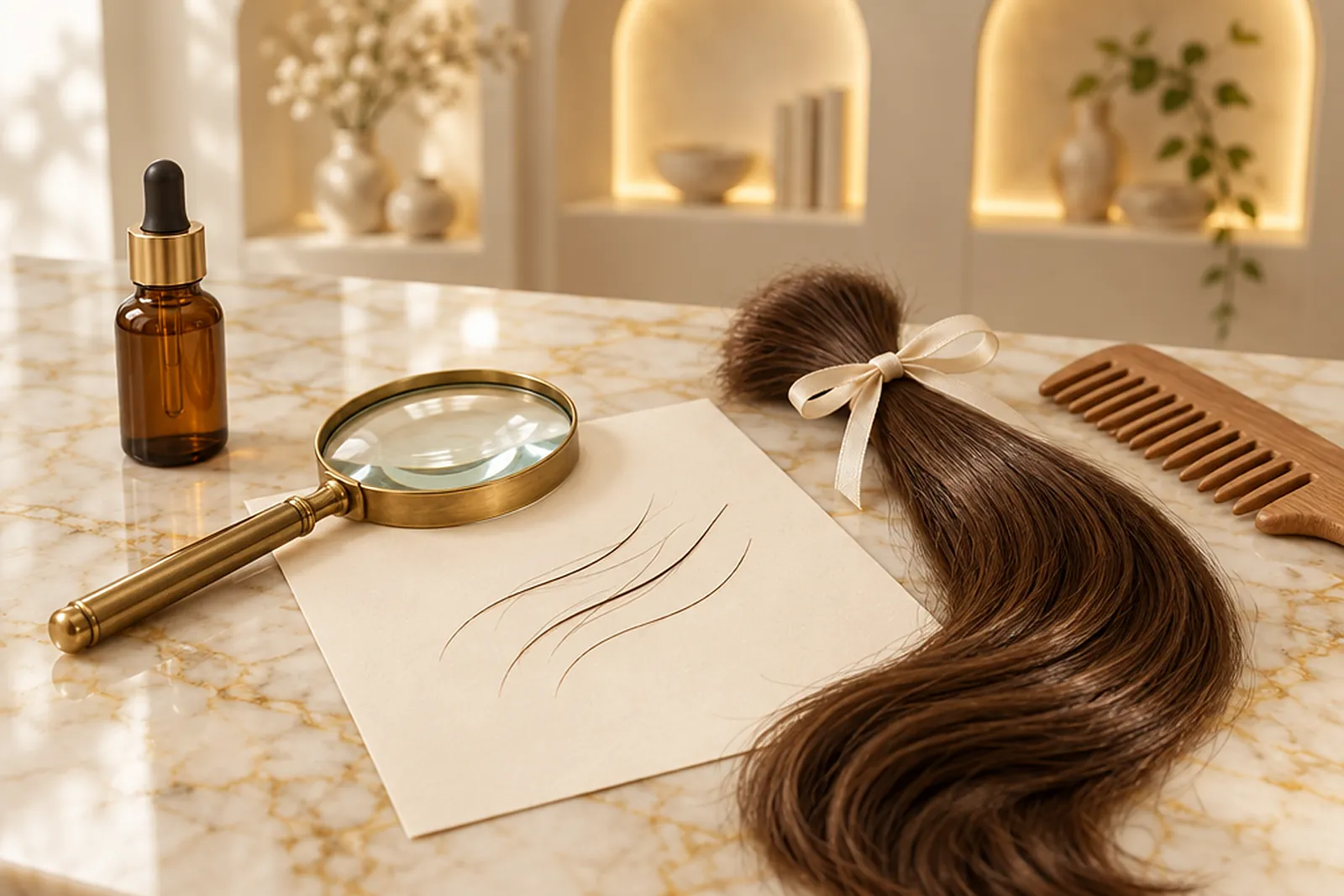
At our center in Nişantaşı, hair care sessions start with a scalp analysis using a magnifying camera, and at the end of each session we go over your home care recommendations together. Vega Beauty is a beauty and care center; if we notice a sign that calls for a medical evaluation between sessions, we'll refer you to a dermatologist rather than continue the program.
Frequently asked questions
When can I wash my hair after a hair care session?
It depends on the service. After a Hair Strengthening Care session, don't wash your hair for the first few hours so the serum can work. After Scalp Care, avoid heavy products on the scalp and very hot water for the first 24 hours. If you were given a personal note in your session, follow it.
Should I use a scalp serum at home every day?
How often to use it depends on the product's instructions and the recommendation made in your session. Using it more often or in larger amounts than recommended doesn't speed up the effect and can weigh down the roots. If you're unsure, bring the product to your next session.
Can I exfoliate my scalp at home between sessions?
If your scalp is used to it, we recommend limiting home scalp exfoliation to once a week. In the week of a session, the scalp has already been cleansed, so extra exfoliation usually isn't needed. If you have sensitivity, redness, or an open wound, put exfoliation off.
Can I massage my scalp every day?
As long as it's short and gentle, you can add it to your daily routine. Use your fingertips, not your nails, and don't press hard. If your scalp has irritation, crusts, or a wound, take a break from massage.
Can I use dry shampoo between sessions?
It can be used now and then as a temporary fix for a day you can't wash your hair. With regular use, it builds up at the roots and refills a scalp that was cleansed in your session.
What should I do if I'm not seeing results between sessions?
Hair renews slowly, so change takes time; a strengthening program is usually assessed in its second half. In the meantime, instead of switching products often, bring your notes to your next session. If you notice a sudden increase in shedding or a patchy bald spot, talk to a dermatologist.
Published: · Vega Beauty editorial team. This article is general information and does not replace a medical diagnosis or advice; whether a service suits you is assessed at your consultation.