Hair & Scalp
Why scalp care matters: the foundation of healthy-looking hair
In short
Scalp care matters because the scalp is the ground your hair grows from. When sebum, product residue, and dead cells build up and throw it off balance, hair can get oily faster and look heavy and dull, and the scalp may feel itchy or flaky. A regular routine suited to your scalp type supports hair that looks lighter, fuller, and more vibrant.
When we think about hair care, most of us picture ends, masks, and shine. But each strand grows from a root inside the scalp and is nourished there, so the condition of your scalp directly affects how your hair looks. If your scalp doesn't get the attention you give your face, even the most carefully chosen mask may not deliver the look you expect. This guide walks you step by step through why the scalp matters so much, the issues that come up most often, how a professional analysis works, and how to build a home routine for your scalp type.
What is the scalp, and why does it matter so much for your hair?
The scalp is one of the densest areas of hair follicles and oil glands on the body, and it forms the foundation of healthy-looking hair. Every strand emerges from a root inside the scalp. Oil glands around the root produce sebum, while sweat glands contribute to moisture and temperature balance. When this small ecosystem is in balance, the roots feel fresh and the strands look light and shiny.
When the balance slips, the picture changes quickly. Too much sebum weighs down the roots, too little creates a dry, tight feeling, and accumulated product residue can form a layer around the roots. That is why it helps to see the scalp as an extension of your skin and give it regular, mindful care of its own.
However much care you give your strands, hair is like a garden with neglected soil: it only looks vibrant when the scalp beneath it is in balance.
What are the most common scalp issues?
The ones we see most are oiliness, dryness, the look of dandruff, and product buildup. They often overlap. An oily scalp can also flake, for example, and the real issue behind a scalp that feels dry may be the wrong product. Here is a short look at each.
Oily scalp
With an oily scalp, hair starts to look flat and heavy at the roots soon after washing. Hormones, genetics, the season, stress, and frequent touching can all affect sebum production. The most common mistake is trying to “dry out” the scalp with harsh products, which in some people may lead the scalp to produce more sebum to protect itself.
Dry scalp
A dry scalp can show up as tightness, mild itching, and fine white flakes. Very hot water, frequent washing, dry air, and heated or air-conditioned rooms can make this feeling stronger. The aim with a dry scalp is to cleanse while holding on to moisture.
The look of dandruff
The look of dandruff comes from cells shed by the scalp collecting as visible flakes. For many people, mild, occasional flaking can be balanced through care habits. But if you have heavy, oily, yellowish flakes, marked redness, or long-lasting itching, the cause may be a dermatological condition, and a dermatologist should assess it.
Product buildup
Dry shampoo, sprays, mousse, gel, and heavy oils gradually build up at the roots. This buildup reduces volume, takes away the feeling that your scalp can breathe, and can make hair look dirty sooner. For people who use a lot of styling products, buildup is one of the most overlooked causes of scalp complaints.
How can you tell your scalp type?
The first step is to watch your scalp for 24 to 48 hours after washing. If your roots get oily within a day, your scalp may be oily. If they stay fresh for two or three days but feel tight, it may be dry. If different areas behave differently, it may be combination. Observing at home isn't always enough, though, because oiliness and flaking can appear at the same time.
- Pay attention to how your roots look and feel on the first day after washing.
- Note whether you see flakes on your shoulders or on dark clothing.
- Track when the itching gets stronger: right after washing, or as the days go by.
- List the styling products you use and how often you use them.
- Notice whether your scalp behaves differently as the seasons change.
These notes are also very useful in a professional assessment. Sharing them during a scalp analysis, alongside the images, makes it easier to build a more accurate care plan.
How does a scalp analysis work?
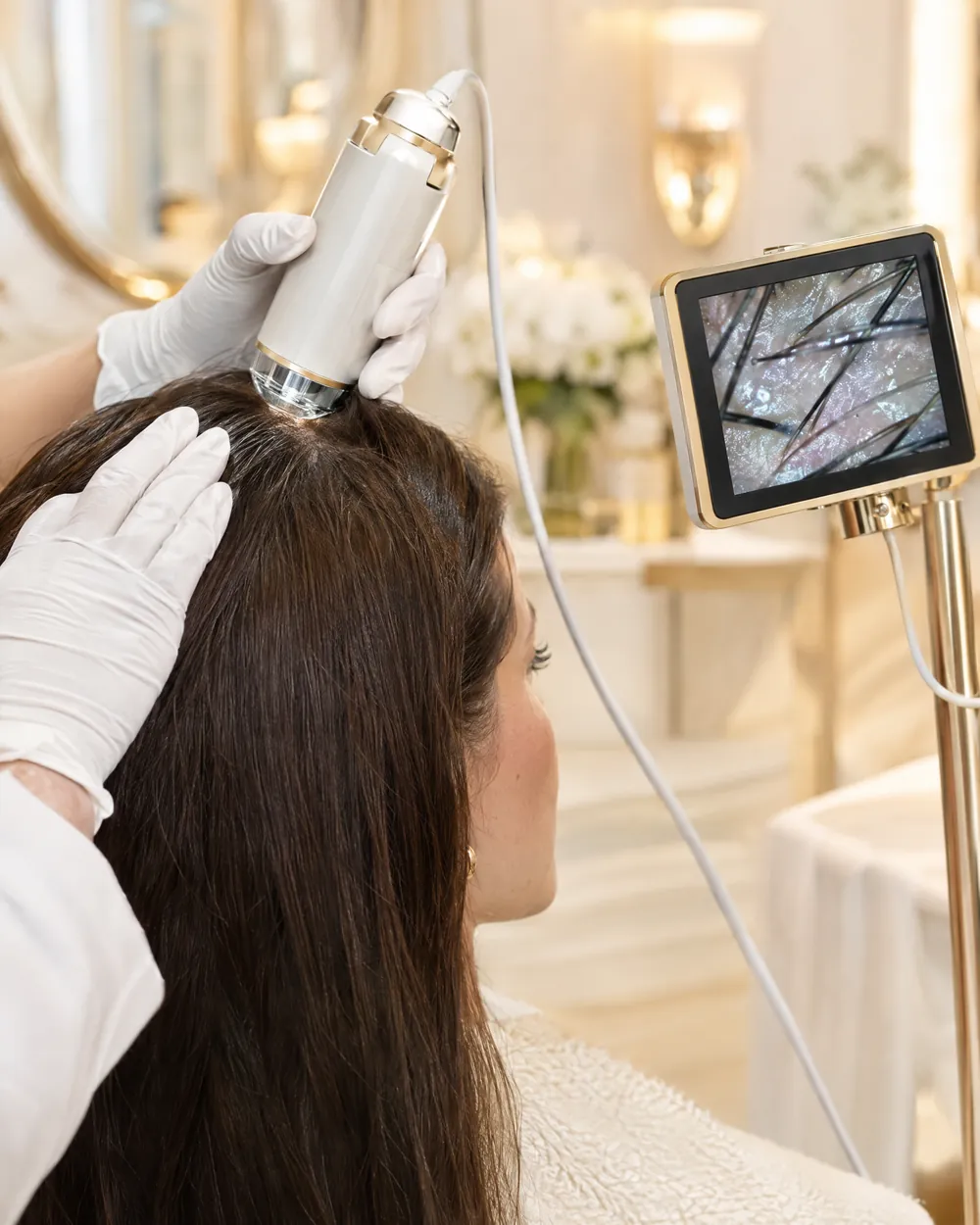
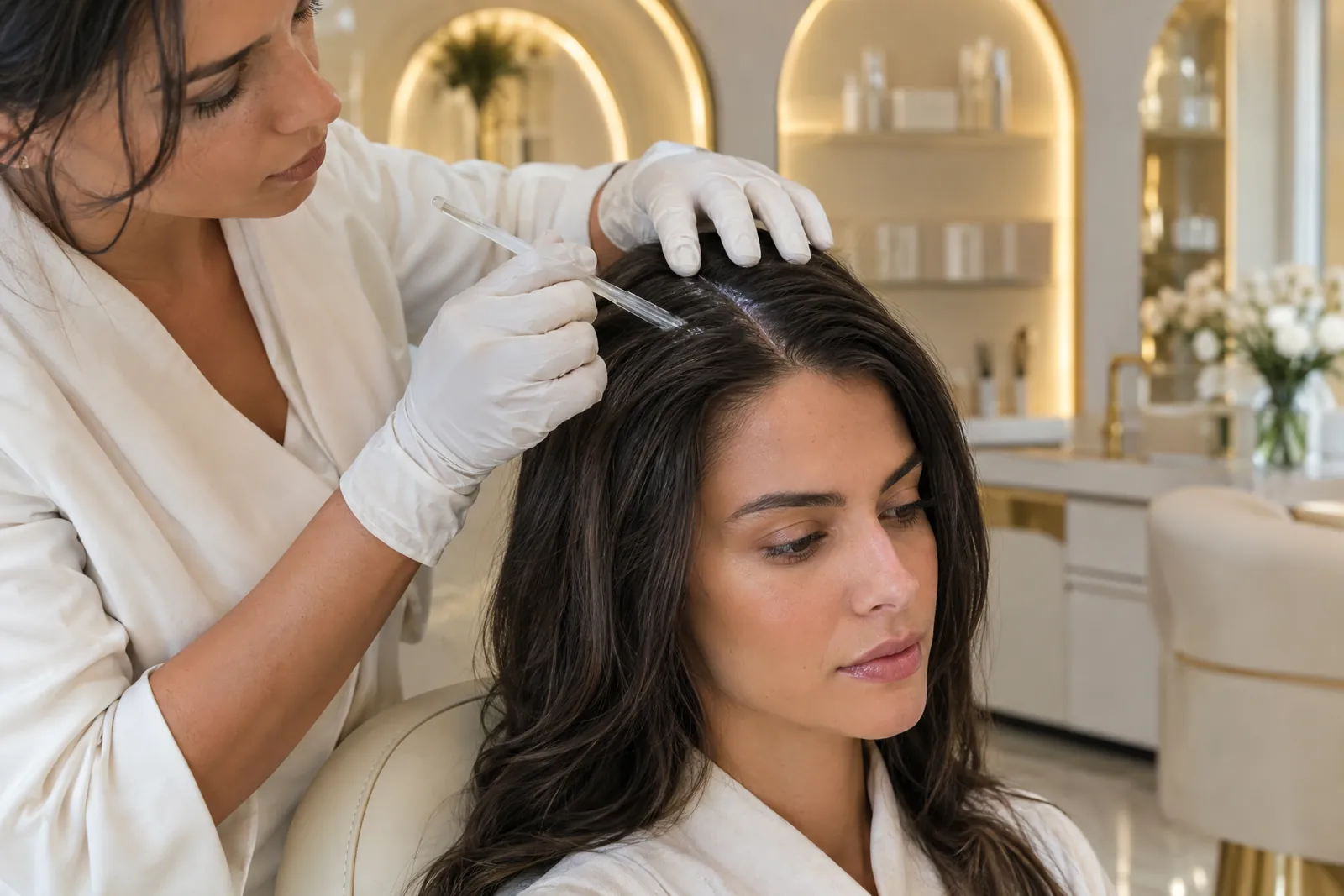
A scalp analysis is a close look at the scalp and hair roots with a magnifying camera. Oil deposits, flaking, dryness, and product residue that the naked eye misses all appear together on the screen. Your care is then chosen based on observation, not guesswork.
- At the initial consultation, we talk about your scalp complaints, how often you wash your hair, and the products you use.
- We look at different areas of your scalp (crown, nape, and temples) with a magnifying camera.
- We review the images together on screen and explain what they show about oiliness, dryness, and buildup.
- We recommend a care plan and home routine suited to your scalp type and needs.
- If anything stands out during the analysis, we recommend that you consult a dermatologist.
At Vega Beauty, scalp care always starts with this analysis. Sessions at our Nişantaşı center take place in private rooms, so we can go through the images together calmly and without rushing.
What does a clarifying peel do for your scalp?
A clarifying peel is a service that aims to gently dissolve the sebum, product residue, and dead cells that collect on the scalp. It works on a similar principle to a facial peel, but with products chosen for the sensitivity of the scalp. Once the buildup is gone, the roots feel fresher and the serums applied in the next step make better contact with the scalp.
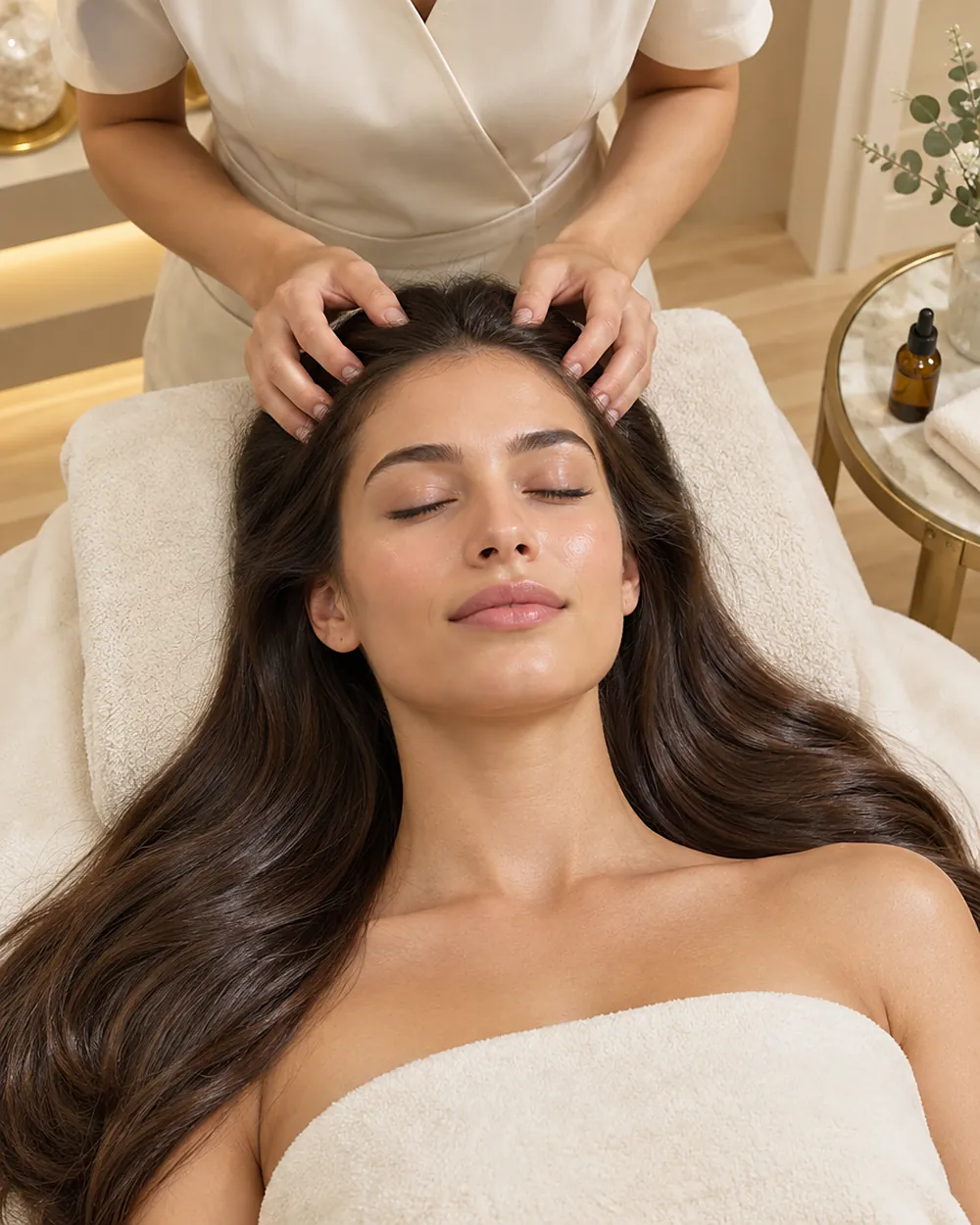
In professional scalp care, the peel is usually followed by a balancing serum, a relaxing scalp massage, and a wash suited to your hair type. The massage helps you unwind and leaves the roots feeling fresh. For most people, hair looks lighter and fuller at the roots after the session.
What should a routine look like for each scalp type?
A routine by scalp type means adjusting how often you wash, which shampoo you choose, and how often you clarify to suit you. The table below gives a general framework. As you build your own routine, watch how your scalp responds and make small adjustments.
| Scalp type | Common signs | Washing and home routine | Professional care suggestion |
|---|---|---|---|
| Oily | Oily roots within a day, a heavy feeling | A light, balancing shampoo; lukewarm water; no heavy products on the roots | Clarifying peel and balancing serum, usually every 2 to 4 weeks |
| Dry | Tightness, fine white flakes, mild itching | A gentle, moisturizing shampoo; less frequent washing; avoiding very hot water | Gentle clarifying and moisture-focused Scalp Care |
| Combination | Oily roots, dry ends | Shampoo on the scalp only, conditioner on the lengths only | Care with separate products for the scalp and the strands |
| Sensitive | Reddens easily, stings when you change products | Products with a simple scent and formula; trying any new product on a small area first | A gentle protocol after analysis; a referral to a dermatologist if needed |
| Buildup-prone | Dull look, loss of volume, gets dirty quickly | A clarifying shampoo once a week; less styling product | Clarifying peel and Hair Revitalizing Care |
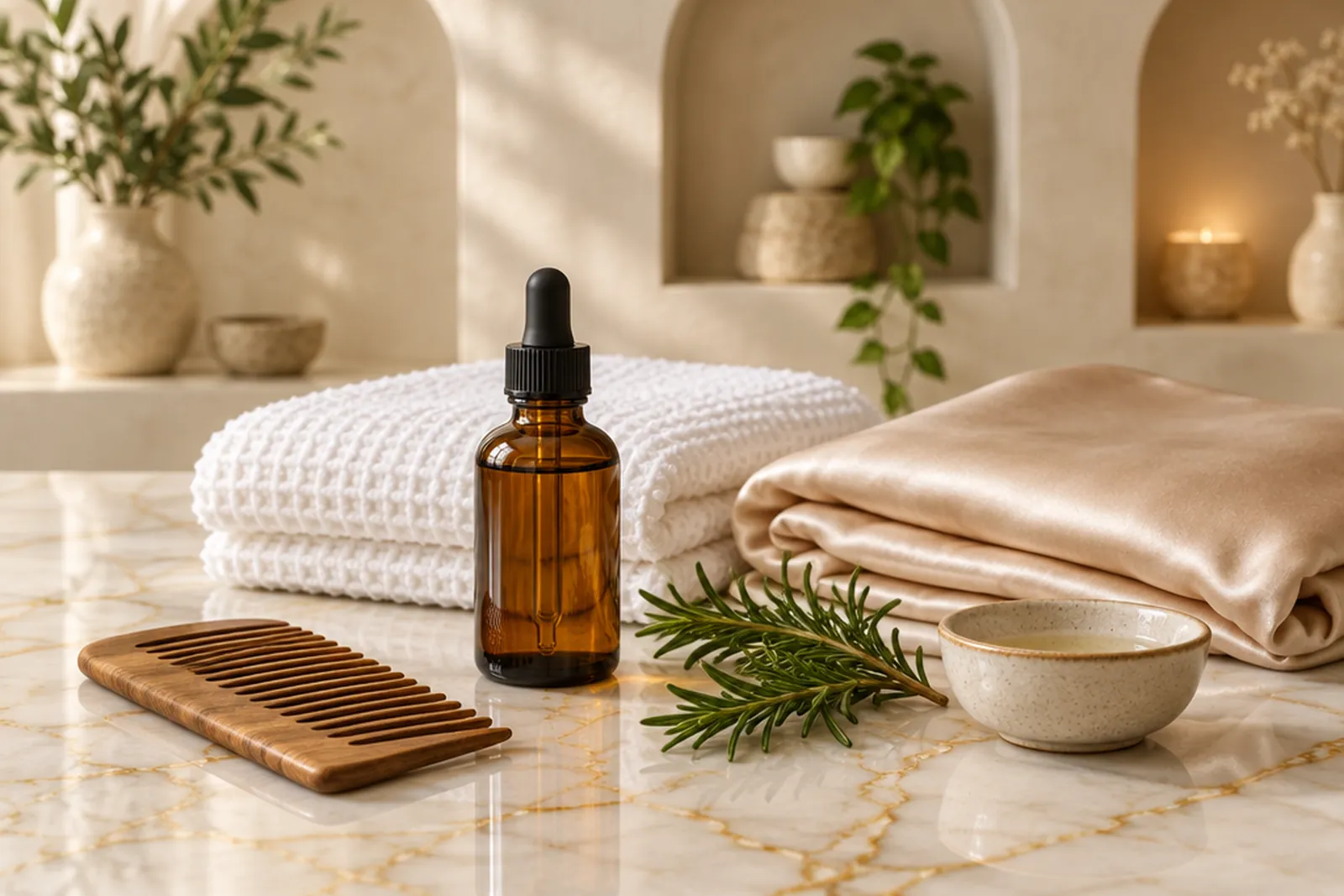
Whatever your type, a few basic habits apply to everyone. Massage shampoo into your scalp with your fingertips, not your nails. Rinse for a long time, since shampoo and conditioner left on the scalp can make it feel itchier. Keep conditioner away from the roots, and don't leave wet hair tied up for long.
What are the most common scalp care misconceptions?
The most common mistake is trying to solve every issue with a single product, when two complaints that look the same can have very different causes. These are the misconceptions we run into most often in daily life.
- “Washing your hair often damages the scalp.” With an oily scalp, washing as often as you need with a suitable shampoo usually causes no problems.
- “Dandruff means your scalp is dry.” Flaking can also occur on an oily scalp, and applying oil without knowing the cause can make things worse.
- “Putting oil on the scalp always nourishes it.” Rich oils can increase buildup and heaviness on some scalps.
- “Dry shampoo can replace washing.” Dry shampoo is a temporary fix, and regular use leads to buildup at the roots.
- “Very hot water cleans the scalp better.” Excessively hot water can dry out the scalp and increase sensitivity.
When should you see a dermatologist?
If you notice long-lasting itching, marked redness, burning, discharge, crusting, or hair loss in one area, see a dermatologist first. These signs go beyond what beauty care can address and may call for a medical evaluation. Vega Beauty is a beauty and care center: we do not diagnose, and we do not perform medical procedures.
- Itching that hasn't gone away in a few weeks or keeps getting worse
- Red, crusted, or weeping areas
- Heavy, oily, yellowish flaking
- Coin-sized or patchy hair loss
- Sudden, heavy hair shedding
If we notice anything like this at your consultation or during your scalp analysis, we will suggest postponing care and seeing a dermatologist first. Once your doctor agrees, supportive scalp care can be planned for later.
Frequently asked questions
Why is scalp care important?
The scalp is the foundation your hair grows from. When sebum, product residue, and dead cells are kept in balance, hair tends to look lighter, fuller, and more vibrant. A neglected scalp can bring down the overall look of your hair through oiliness, heaviness, and flaking.
How is a scalp analysis done?
A magnifying camera is used to look closely at the hair roots and different areas of the scalp. Oiliness, dryness, flaking, and product buildup are reviewed together on screen. Based on this observation, we recommend a care plan and home routine suited to your scalp type.
How often should you have professional scalp care?
It depends on the condition of your scalp, but every 2 to 4 weeks is usually recommended. Scalps with heavy oiliness or product buildup may need more frequent sessions at first, then fewer once they are balanced. Your interval is set individually after your scalp analysis.
Does scalp care help with the look of dandruff?
With mild, occasional flaking, clarifying and balancing care may help your scalp feel cleaner and more comfortable. But if the dandruff is long-lasting or itchy, or comes with redness or heavy, oily flakes, consult a dermatologist first.
How often should you use an at-home scalp peel?
For most people, once a week is enough. Using it more often or scrubbing hard can irritate the scalp. If you have open wounds, marked redness, or sensitivity on your scalp, it's wise to postpone the peel and talk to a specialist.
What should I keep in mind after scalp care?
For the first 24 hours, we recommend that you avoid heavy products on the scalp, skip very hot water when washing, and use the recommended shampoo regularly. Cutting back on heavy styling products and using a clarifying shampoo once a week can help the effect of your session last longer.
Published: · Vega Beauty editorial team. This article is general information and does not replace a medical diagnosis or advice; whether a service suits you is assessed at your consultation.