Body & Contouring
When can you return to care after giving birth? A timeline for skin, hair removal, and body
In short
What decides your return to care after giving birth isn't the calendar but your body's recovery. The first step is always your doctor's postpartum checkup and approval. Gentle facials and massage are usually the first services people return to. Laser hair removal, EMS, and pigmentation protocols are planned around how you gave birth, whether you're breastfeeding, and your doctor's opinion. Permanent makeup is postponed while you're breastfeeding.
The first months with your baby are when you have the least time for yourself. At some point, you'll look in the mirror and notice the skin that changed during pregnancy, your abdomen, or hair growing back, and that's completely natural. This post offers a general framework for when and in what order you can return to care services after giving birth. Every birth and every body is different, so nothing here replaces your doctor's advice.
What should you keep in mind before returning to care?
You need your doctor's approval before starting any care service after giving birth. The first weeks after delivery are the postpartum period, when the body recovers, and the checkup at the end of this period is a good starting point for understanding which services you can return to and when.
- Recovery times differ between vaginal and cesarean births.
- Breastfeeding may mean postponing certain services and products.
- A complication during or after delivery can change the timeline.
- Your sleep and energy change completely during this period, so it matters to set realistic goals.
When can you return to each service?
The table below is a general framework, and your doctor's approval is a precondition for every row. We plan your own schedule together at the consultation.
| Service | General approach | Deciding factor |
|---|---|---|
| Classic Facial and moisture-focused facials | Usually among the first services to return to | Doctor's approval, skin sensitivity |
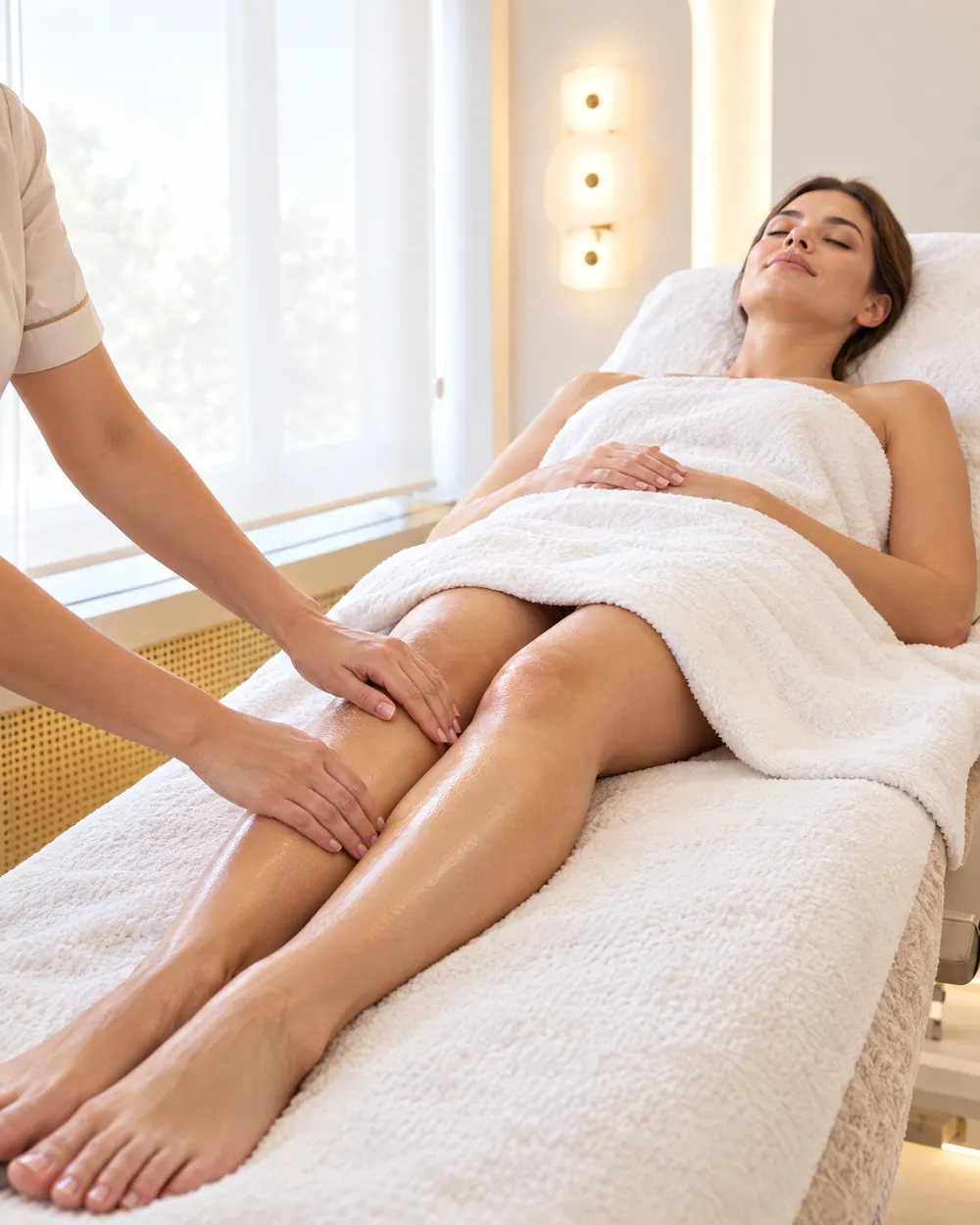
| Lymphatic Drainage Massage | Can be planned early with your doctor's approval | Type of delivery, cesarean scar area |
| Hydrafacial, Oxygeneo | Can be planned with gentle settings | Whether the serums used are suitable for breastfeeding |
| Laser hair removal | Planned after talking to your doctor | Hormonal changes, breastfeeding |
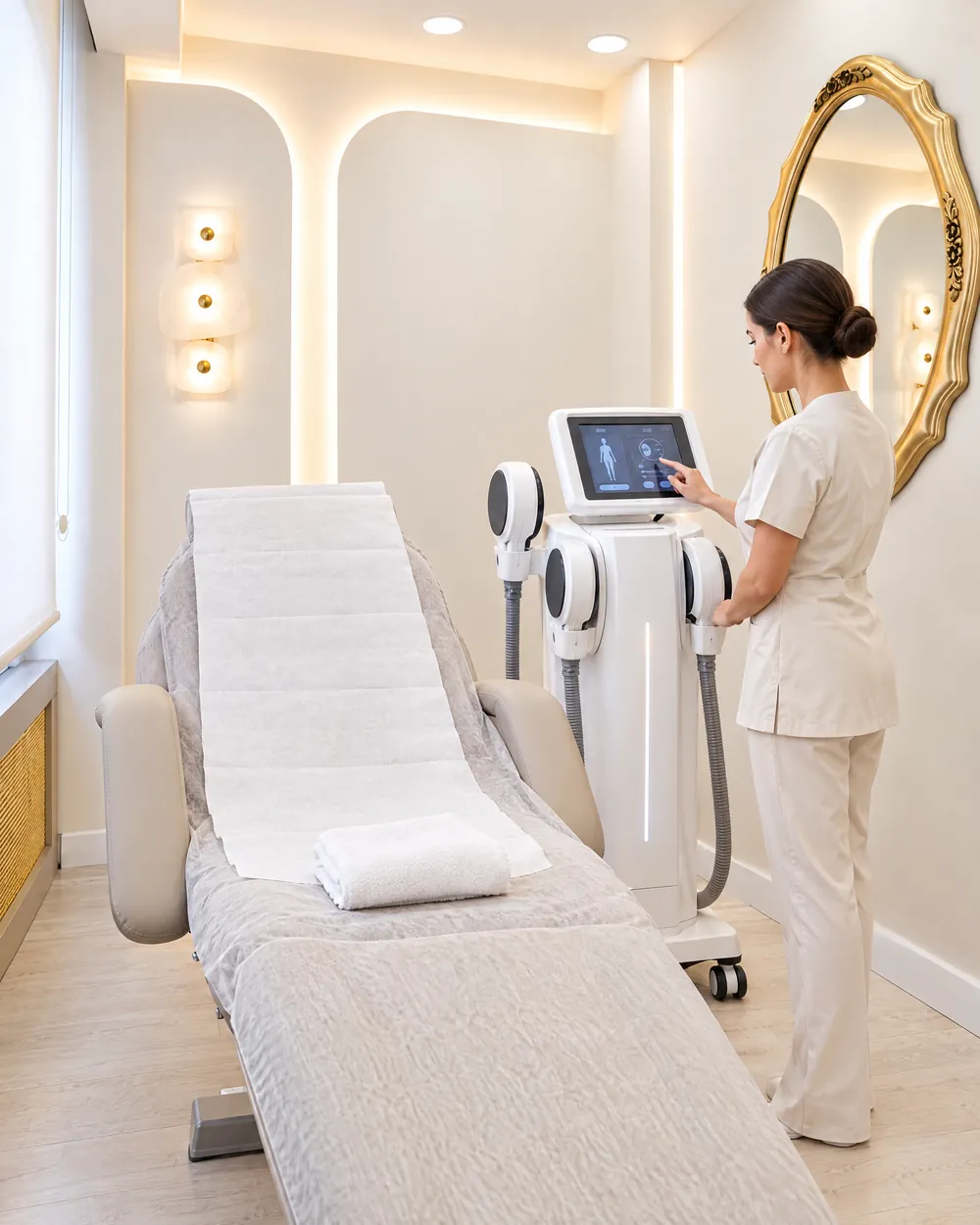
| EMS Body Contouring | After doctor's approval and an abdominal muscle assessment | Cesarean recovery, abdominal muscle separation |
| Pigmentation protocols | Planned according to the active ingredients to be used | Breastfeeding and your doctor's opinion |
| Permanent Makeup | Postponed while breastfeeding | The end of breastfeeding |
Why does skin change after giving birth?
The major hormonal shifts of pregnancy and the postpartum period directly affect the skin as well. Skin that looked radiant during pregnancy may turn dry, sensitive, or prone to breakouts after delivery. Too little, broken-up sleep also contributes to a more tired, sallow look.
The patches that appear during pregnancy, popularly known as the “mask of pregnancy,” can fade over time after delivery, but sun exposure slows this down. That's why the most valuable step in the postpartum period is wearing sunscreen regularly every day. Some active ingredients aimed at reducing the look of pigmentation aren't recommended while breastfeeding, so pigmentation protocols are planned together with your doctor's opinion.
When can you return to laser hair removal after giving birth?
We suggest asking your doctor when you can return to laser sessions after delivery and breastfeeding, and then updating your plan together with us. If your laser program was interrupted by pregnancy, the break doesn't send you back to the start. It only means the plan needs to be reassessed.
During this period, hormonal changes may cause differences in your hair: growth in areas that didn't have it before, or changes in density. This picture can shift as hormones settle. That's why we reassess your hair at your first postpartum session and build the plan around where things stand.
When can you start EMS for the abdomen?
Before starting EMS Body Contouring, you need your doctor's approval and an assessment of your abdominal muscles. During pregnancy, the abdominal muscles stretch to make room for the growing uterus, and in some women a separation can form along the midline. This is called abdominal muscle separation (diastasis recti), and whether it's present and to what degree should be assessed by a doctor or physical therapist.
- After a cesarean, the incision area must have fully recovered.
- If you have abdominal muscle separation, whether to start is decided with the opinion of a doctor or physical therapist.
- Always mention breastfeeding at the consultation.
- EMS supports muscle work; it isn't a method of fat loss or weight loss. It should be considered alongside nutrition and the exercise your doctor recommends.
Setting the right expectations matters here. The body's postpartum recovery can take months, and it differs widely from person to person. Targeted services don't replace that process; they can only support it when the right time comes.
What can lymphatic drainage do after giving birth?
A feeling of swelling in the legs and body is common during pregnancy and in the first weeks after delivery. Lymphatic Drainage Massage is a gentle massage technique that uses light, rhythmic movements to support surface fluid circulation, and with your doctor's approval, it can be a choice for feeling lighter in the postpartum period. After a cesarean, the incision area isn't worked on, and the scope of the massage depends on your recovery.
If swelling is pronounced and on one side in one leg, if it comes with pain, redness, or warmth, or if you're short of breath, don't wait for a massage; contact your doctor right away. These signs call for medical evaluation, not a beauty service.
In postpartum care, what makes the difference isn't rushing but following the right order.
Is hair loss after giving birth normal?
Noticeable hair loss that starts a few months after delivery happens to many women and is usually temporary. Hair that was kept from shedding by hormones during pregnancy starts to fall out in a short time after delivery. For most people, this shedding eases over time and the hair recovers.
During this period, it helps to cleanse your scalp gently, avoid tying your hair tightly, and eat a balanced diet. Services like Scalp Care can also be planned with your doctor's approval. If shedding continues for a long time or you notice distinct thinning areas, you should see a dermatologist.
What should you expect after giving birth?
The most important thing in the postpartum period is to give yourself time. The quick “bounce-back” stories you see on social media are a small, selected slice of real life. The changes your body went through during pregnancy happened over months, so it's entirely natural for recovery to need a similar amount of time.
Care services can help you feel good during this time and, when the time is right, help support your body's recovery, but they aren't a shortcut that speeds up the process. Even a short hour to yourself can give you room to breathe during a busy period.
- “I should start everything right after delivery.” No service begins without your doctor's approval, and rushing can make recovery harder.
- “EMS is the fastest route for the abdomen.” EMS supports muscle work, but it isn't performed until abdominal muscle separation has been assessed, and it isn't a weight-loss method.
- “You can't have any care while breastfeeding.” Gentle facials and massage can be planned during this time with your doctor's approval; only some services and products are postponed.
- “Hair lost after giving birth doesn't come back.” For most women, this shedding is temporary and eases over time.
How can you plan the time you set aside for yourself?
- As a first step, complete your doctor's checkup and find out which services you've been approved for.
- Pick something short and gentle to start; a facial or massage can be a good first step.
- Schedule appointments around your baby's feeding and sleep routine, at the time of day that works for you.
- Add services that take a program, like laser, EMS, or a pigmentation protocol, on a planned schedule after your doctor's approval.
- Leave permanent makeup until after you've finished breastfeeding.
At our center in Nişantaşı, we take our time with postpartum consultations. We listen to how you gave birth, whether you're breastfeeding, and what your doctor recommends, then build an order that suits you. Vega Beauty is a beauty and care center, and we refer you to your doctor whenever something needs a medical assessment.
Frequently asked questions
How soon after giving birth can I have a facial?
Gentle facials are usually among the first services people return to after giving birth, but you need your doctor's approval before starting. If you're breastfeeding, the products and active ingredients used in the facial are chosen accordingly. We'll plan the right time together after your doctor's checkup.
Can I have laser hair removal while breastfeeding?
We suggest asking your doctor when you can return to laser hair removal during breastfeeding. Hair structure can also change at this time because of hormonal shifts. After your doctor's approval, we'll reassess your hair and build the plan around where things stand.
Can I have EMS after a cesarean?
For EMS after a cesarean, the incision area must have fully recovered and your doctor must approve. If you have abdominal muscle separation, whether to start is decided with the opinion of a doctor or physical therapist. We don't work on the abdomen without this assessment.
Can I get permanent makeup while breastfeeding?
No, permanent makeup is postponed during pregnancy and breastfeeding. Once you've finished breastfeeding, we can plan eyebrow permanent makeup, Lip Blush, or lash-line enhancement through a consultation.
Will the dark spots from pregnancy fade after giving birth?
Pigmentation that appears during pregnancy can fade over time after delivery, but sun exposure slows this down. Wearing sunscreen regularly every day is the most valuable step. Some ingredients used in pigmentation protocols aren't recommended while breastfeeding, so the plan is made with your doctor's opinion.
How long does hair loss after giving birth last?
Shedding that starts a few months after delivery is temporary for most women and eases over time. Gently cleansing your scalp and eating a balanced diet support this process. If shedding continues for a long time or you notice distinct thinning, you should see a dermatologist.
Published: · Vega Beauty editorial team. This article is general information and does not replace a medical diagnosis or advice; whether a service suits you is assessed at your consultation.