Body & Contouring
Why does your body look loose after weight loss? Where Micro Plus and EMS can help
In short
Looseness after weight loss comes from two sources: skin that stayed stretched for a long time and lost its elasticity, and muscle that has lost tone. Micro Plus and EMS can support muscle tone and a more toned look, and they can be added to a program for mild to moderate looseness. Care devices won't remove significant excess skin, however; for that, the right person to see is a plastic surgeon.
You put in months of work, and the scale is where you wanted it. But the mirror doesn't show what you expected: your abdomen is soft, your upper arms don't look as firm as they used to, and your inner thighs seem loose. Whether you lost the weight through exercise, diet, stomach surgery, or medication under a doctor's supervision, the answer is similar. In this post we explain plainly where the looseness comes from, where services like Micro Plus and EMS can help, and where they reach their limit.
Why doesn't skin bounce back right after weight loss?
Skin is a tissue that can stretch and return to its original shape thanks to the collagen and elastin fibers inside it. But when an area stays stretched for a long time, those fibers lose some of their ability to recover. When fat tissue shrinks, skin can't shrink at the same pace, and the excess remains as a loose look. The main factors that affect recovery are:
- How long you carried the extra weight, and how much you lost
- Speed of weight loss: With very rapid loss, it can be harder for skin to adapt.
- Age and genetics: Collagen production declines with age.
- Sun damage and smoking: Both weaken the skin's support structure.
- Muscle loss: Too little protein and inactivity can increase muscle loss during weight loss.
Is the looseness from skin, muscle, or fat?
Looseness that looks the same can come from different sources, and the approach changes accordingly. This is the first thing we look at during the consultation. The table below gives a general idea; it wouldn't be right to draw a clear distinction without seeing the area.
| Possible source | What it looks like | Suitable approach |
|---|---|---|
| Reduced muscle tone | The area is soft but not sagging; it firms up when you tense the muscle | Resistance exercise, EMS or Micro Plus support |
| Mild skin looseness | Thin skin that returns slowly when pinched | Micro Plus, G5, regular movement, and patience |
| Remaining fat tissue | The pinched tissue is thick and soft | Diet and movement, a body contouring program |
| Significant excess skin | Skin folds and sags, with a rash forming underneath | Evaluation by a plastic surgeon |
The abdomen, inner arms, inner thighs, and hips are the most common areas for looseness. The abdomen has its own conditions after childbirth, which we cover separately in our postpartum care timeline post.
What can Micro Plus do here, and what can't it do?
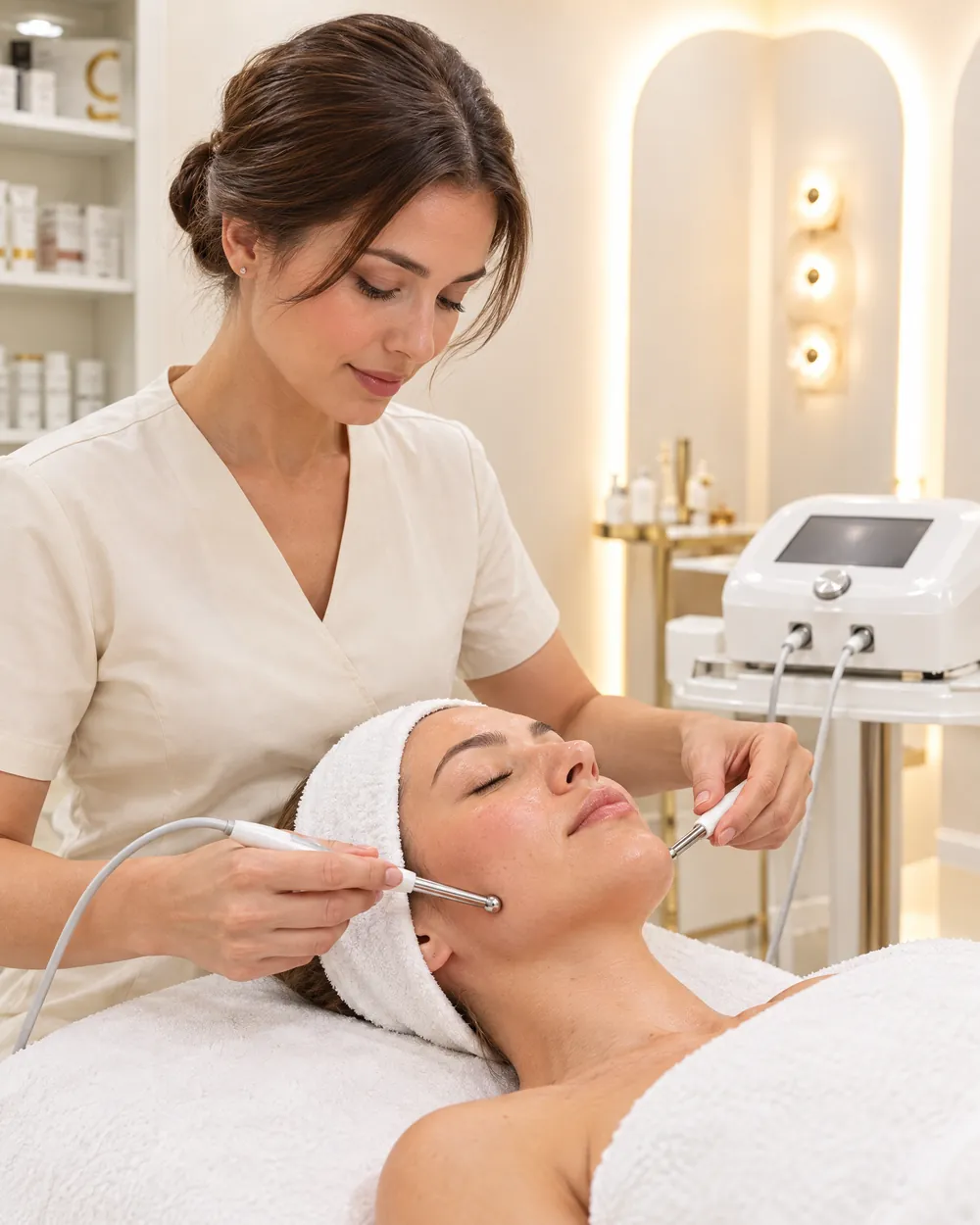
Micro Plus is a service that combines microcurrent and galvanic current. Low-intensity currents create controlled contractions in the muscles; the aim is to support muscle tone in the area and help the tissue look firmer. Sessions last about 30–45 minutes, usually once or twice a week, and most people plan for 6–10 sessions.
The line needs to be drawn clearly here. Micro Plus doesn't shrink skin or remove excess skin. It aims to help the area look more toned by working the muscle underneath. Research on these devices for looseness after weight loss is still limited, and the effect varies from person to person. That's why, instead of promising a single outcome, we track progress together through measurements and session notes.
Where do EMS and G5 come in?
Which service stands out depends on the area and the goal. In many programs, these services are designed together.
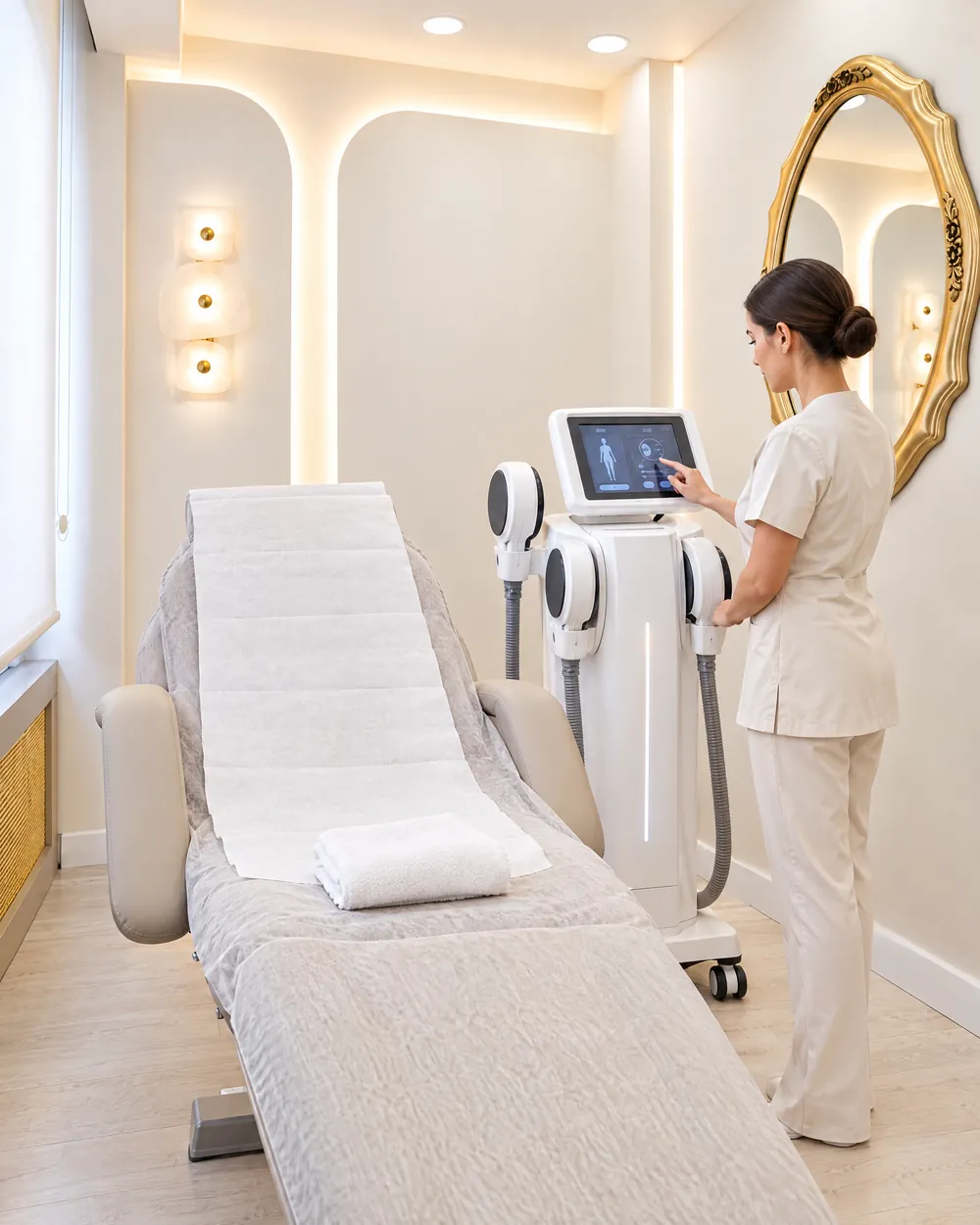
- EMS Body Contouring: Uses high-intensity electromagnetic energy to create intense contractions in the abdomen, glutes, arms, and legs. It stands out when muscle tone has declined, and it's usually planned as 4–8 sessions, twice a week.
- Micro Plus: Works at a lower intensity. It may be preferred for sensitive areas such as the arms and inner thighs, and for the jawline on the face.
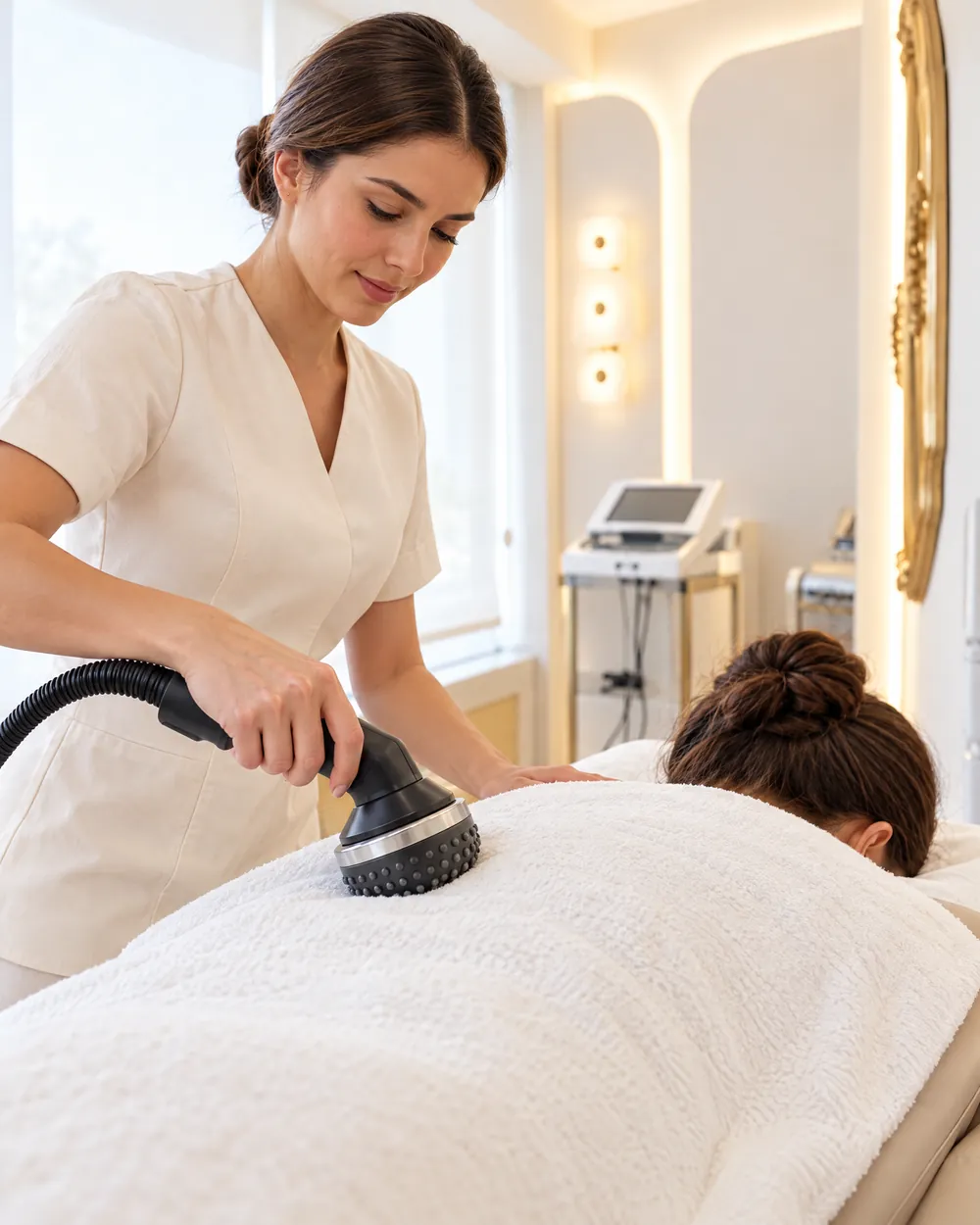
- G5 Massage: Works the tissue with vibrating heads and aims to support circulation and soften the look of cellulite. In a program, it completes the side that addresses tissue rather than muscle.
When should you start a program?
As you keep losing weight, your skin keeps changing too. That's why having your weight stable for a few months gives a sounder basis for assessing looseness. Skin can keep recovering for some time after weight loss, so what you see today may not be the final picture.
This doesn't mean waiting and doing nothing. Starting resistance exercise and a balanced diet while you're losing weight helps reduce muscle loss. If you're losing weight under a doctor's supervision, taking medication, or have had surgery, be sure to mention it at your consultation. EMS is not used for people who have recently had surgery, and we set the schedule based on your doctor's opinion.
What can you do at home to reduce looseness?
- Do resistance exercise: Working with weights or resistance bands 2–3 days a week preserves muscle tissue and helps the area look fuller.
- Don't neglect protein: Let your doctor or dietitian set your needs; too little can increase muscle loss.
- Keep your rate of weight loss moderate: About 0.5–1 kilogram a week is a commonly recommended rate; talk to your doctor about what's right for you.
- Keep your skin moisturized: Moisture helps skin look soft and feel comfortable. It won't remove looseness, but it does help the look of the surface.
- Protect yourself from the sun, and quit smoking: These are the two most basic ways to protect your skin's support structure.
- Track with a tape measure: Measure at the same points every month. On its own, the scale doesn't give accurate information during this process.
What expectations are realistic?
The most common cause of disappointment with looseness programs is the wrong expectations. The table below summarizes the framework we discuss with clients at the consultation.
| Topic | Realistic expectation | What not to expect |
|---|---|---|
| Appearance | The area looks more toned and firm | Excess skin disappearing |
| Feel | A feeling of firmness, a body that feels more comfortable in motion | A noticeable change in the first session |
| Measurements | Small differences on the tape measure | Weight loss |
| Exercise | Support for exercise | A replacement for exercise |
| Process | Gradual progress with regular sessions | A result that needs no upkeep |
Muscle responds as you work it, skin takes time, and excess skin calls for a different decision.
What are the common misconceptions about looseness?
- “If I lose a little more weight, the looseness will go away.” Further weight loss often makes looseness more visible.
- “Collagen supplements tighten sagging skin.” Supplements may offer a limited contribution to hydration and elasticity, but they don't reverse moderate or advanced looseness.
- “A device session replaces exercise.” These services sit alongside exercise. Resistance training is still the main way to preserve muscle mass.
- “If I work one area, that area will slim down.” Muscle tone improves, but you can't choose a single area to lose fat from.
- “Massage melts away excess skin.” Neither massage nor devices remove excess skin. Saying so would only set you up with the wrong expectation.
When should you talk to a doctor before starting?
Some situations belong to a doctor, not a care center. In others, the service isn't done at all. Be sure to share this information at your consultation.
- If your skin folds and you get a rash or sores underneath it, get a plastic surgeon's opinion.
- If you feel a bulge or separation running down the middle of your abdomen, talk to a doctor.
- If you've had stomach surgery, plan the program with the input of the team that operated on you.
- If you're losing weight unintentionally and can't explain why, see a doctor first.
- Micro Plus is not used if you have a pacemaker, epilepsy, a history of active cancer, or a metal implant in the area, or if you are pregnant.
At our center in Nişantaşı, we assess the area together at the consultation, take measurements, and listen to your health history. If the looseness is at a level a program can support, we build a suitable plan. If we see significant excess skin, we say so plainly and refer you to a doctor instead of suggesting sessions. Vega Beauty is a beauty and care center; we don't replace medical evaluation.
Frequently asked questions
Does sagging skin tighten on its own after weight loss?
With mild looseness, skin can continue recovering for a while after weight loss. Recovery depends on your age, how much weight you lost, how long you carried the extra weight, and your genetics. Significant excess skin doesn't go away on its own.
Does Micro Plus get rid of sagging?
Micro Plus doesn't remove excess skin. By supporting muscle tone, it aims to help the area look more toned in cases of mild to moderate looseness. The effect varies from person to person.
Which is more suitable, Micro Plus or EMS?
If muscle tone has declined and you're targeting large muscle groups such as the abdomen and glutes, EMS may stand out. Micro Plus may be preferred for more sensitive areas such as the arms and inner thighs. Many programs combine the two; the decision is made at your consultation.
Should I start a program while losing weight or after?
For assessing looseness, it's sounder to have your weight stable for a few months. Starting resistance exercise and a balanced diet while you're losing weight, though, helps reduce muscle loss.
How many sessions do I need?
Micro Plus is planned as 6–10 sessions for most people, once or twice a week, and EMS is usually 4–8 sessions, twice a week. The number is set at your consultation based on the area and your goal.
Can I have these services after stomach surgery?
EMS is not used for people who have recently had surgery. We decide which service can be done and when with the input of the team that operated on you, so be sure to share your surgery details at the consultation.
Published: · Vega Beauty editorial team. This article is general information and does not replace a medical diagnosis or advice; whether a service suits you is assessed at your consultation.