Permanent Makeup
Why does old eyebrow permanent makeup change color? Gray, orange, and bluish tones
In short
Eyebrow pigment lightens in the skin over time, and that's expected. Which shade your brows turn, though, depends on the pigment's composition, how deep it was placed, your skin's undertone, and the sun. Near-black or deeply placed pigment can drift toward gray and blue, while a brown that has lost its dark component can turn orange. If the old pigment has lightened enough and the shape suits you, a new session with color-balancing tones can be planned. With very dark or differently shaped brows, the pigment has to be lightened first, and we'll refer you to a dermatologist for that.
You may notice that brows you had done years ago have drifted from brown to gray, blue, or orange. That usually raises two questions at once: why did this happen, and can a new session be done over them? This article explains what causes the color change and when old brows can be worked over.
Why does eyebrow permanent makeup change color over time?
Eyebrow permanent makeup changes color because pigment lightens in the skin over time, and not every color component lightens at the same speed. Fading isn't a flaw but an expected process; the real question is which shade your brows will fade toward. Four factors decide that shade:
- Pigment composition: Brown tones aren't a single color but a mix of several, and the dark and warm components in the mix lighten at different speeds.
- Placement depth: How deep the pigment sits in the skin changes how the color looks from the surface.
- Skin undertone: Pigment is seen together with the warm or cool undertone of your skin.
- Sun: Regular sun exposure speeds up lightening and can upset the balance of the tone.
How does brown pigment turn gray or orange?
Brown pigment turns gray or orange when one component of the mix outlasts the others. If the dark, cool component stays in the skin longer, the brow shifts toward gray and blue; if the warm components stay longer, it shifts toward orange, red, or salmon.
Depth is a separate factor. Dark pigment placed deeper than it should be is seen through the upper layers of skin, so it looks cooler, more bluish or grayish, than it really is, much as veins look blue beneath the skin. Undertone adds to the picture: on cool-toned skin an ashy brown can drift toward gray more easily, and on warm-toned skin a warm brown can drift toward orange more easily.
What can each shade point to?
The shade you see is a good starting point for understanding the cause, but the final word comes from examining the brow up close. The same brow can also show more than one shade, in which case each area is evaluated separately.
| Shade you see | Possible cause | What can usually be done |
|---|---|---|
| Gray, bluish, greenish | Near-black or very dark pigment, placement deeper than it should be, cool undertone | If the pigment has lightened enough, a new session with a warm balancing tone may be considered |
| Orange, reddish, salmon | The dark component of the brown has lightened and warm tones remain; regular sun exposure | Neutralizing with an ashy, cool balancing tone may be considered |
| Pinkish, purplish | The red component remains dominant; combined with dark pigment left deep in the skin, it can look purple | Balancing or waiting for a while, depending on how strong the tone is |
| Patchy, faded in places | Uneven retention, oily skin, picking at scabs or using active products during recovery | If the shape suits you, replanning with an even base |
| Still dark, harsh, and a different shape | Dense pigment, an old shape that doesn't suit the face | No session is done over it; referral to a dermatologist to have the pigment lightened |
Can a new session be done over old eyebrow permanent makeup?
It depends. If the old pigment has lightened enough and the shape suits your face, a new session can be planned; if the pigment is still very dark and dense, or the shape is very different, no session is done over it. New pigment doesn't replace the old pigment. It's added on top of it.
When can we work over it?
If the old brow has clearly faded, only a slight gray or warm shadow remains, and the old shape falls inside the new brow, a new session with color-balancing tones can be planned. In these cases, a soft-gradient technique such as powder brows can cover old marks more evenly. We discussed the difference between the techniques in our blog post on microblading and powder brows.
When does the pigment need to be lightened first?
If the old pigment is still dark and dense, if the brow extends beyond the new shape, or if there's a clear difference in shape between the two brows, any session done over it will make the problem worse. The pigment needs to be lightened first, and that isn't a beauty center procedure; in that situation, we'll refer you to a dermatologist. Your doctor decides on the appropriate method, and once your skin has recovered, we can look at a new session together.
What do we look at during the evaluation?
During the evaluation, we look at six points that show whether it's possible to work over your old brows.
- Current tone: We examine the brow in light close to daylight to see whether it has shifted toward gray, warm tones, or more than one color.
- Pigment density: We look at how much the old color has lightened and how clearly it shows through the skin.
- Symmetry of the shape: We compare the shape, height, and length of the two brows and assess whether the new shape can take in the old one.
- Skin type: Pigment can lighten faster and more diffusely in oily skin and stay crisper in dry skin, and the choice of technique follows from that.
- Date of the last session: A recent session may not have settled into its final tone yet, in which case we wait first.
- Scarring or raised skin: If the brow area has hardness, raised spots, or scar tissue, no session is done and a doctor's opinion is requested.
New permanent makeup is not done during pregnancy or breastfeeding; if this applies to you, we'll postpone the session.
How does color balancing work?
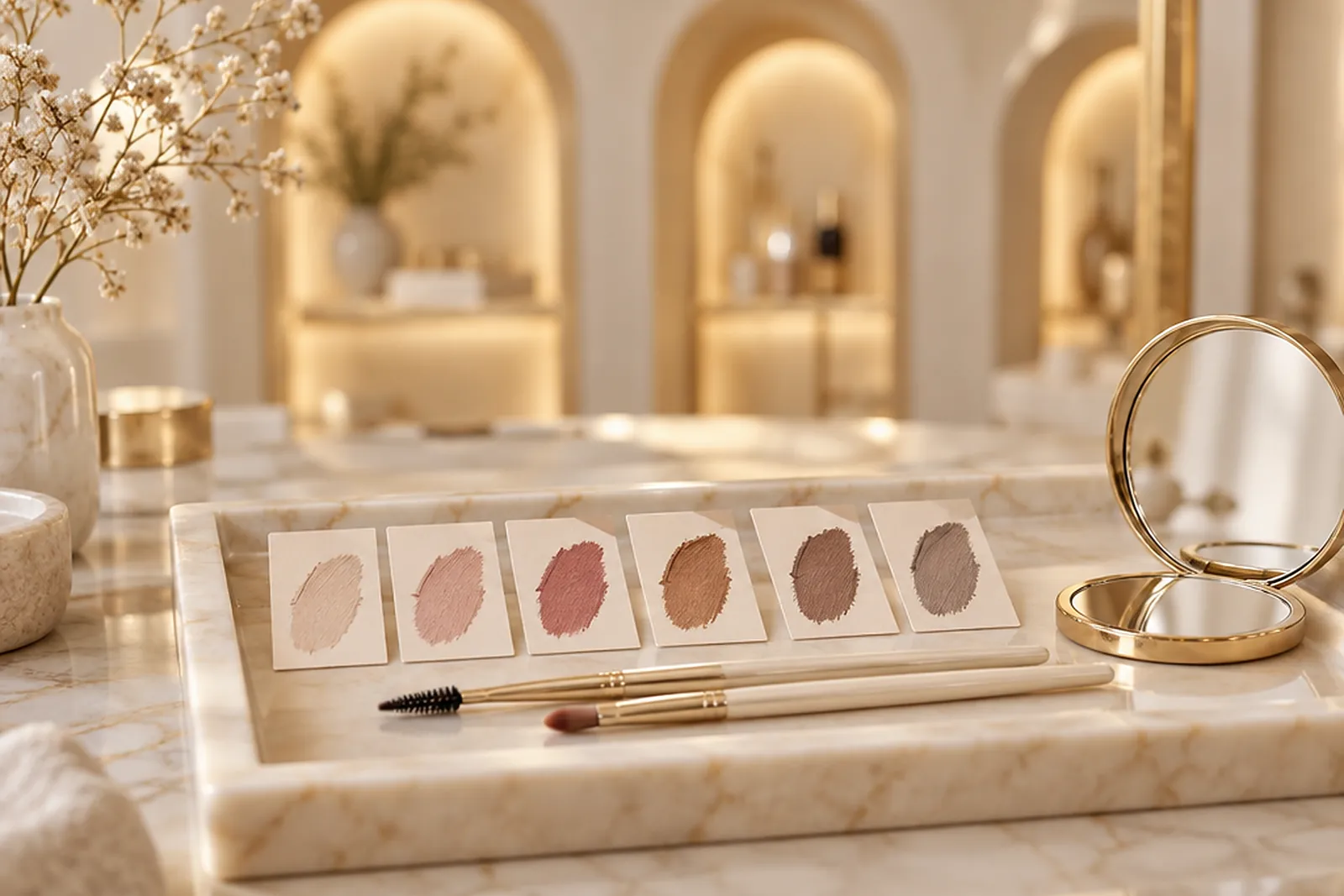
Color balancing is based on neutralizing an unwanted tone with its opposite. Shades that sit across from each other on the color wheel soften each other's effect: for brows that have turned orange, an ashy, slightly greenish balancing tone might be considered, and for brows that have turned gray or blue, a warm one. It's the same logic as using a peach-toned concealer to cover dark under-eye circles.
Expectations matter here. Color balancing isn't possible in every case; if the old pigment is very dense, a balancing tone only adds another layer and can make the brow look darker. It's often not finished in one session, and the goal isn't to make the old color disappear but to bring the brow closer to a natural shade.
The first step in correcting an old brow is to look not at what to add, but at what's left underneath.
How do you avoid the same problem with a new session?
To avoid the same problem, pigment is chosen to suit your skin undertone, placed superficially at the right depth, and planned together with a touch-up.
- Pigment that suits your undertone: Instead of near-black shades, we prefer a balanced brown that matches your hair color and undertone.
- The right depth: Pigment is placed in the upper layer of the skin; pigment that goes deeper tends to drift toward gray over the years.
- Gradual intensity: We start with a soft tone and build intensity at the touch-up if needed, because lightening a dark color is much harder.
- Touch-up plan: The first touch-up usually takes place within 4–6 weeks, after recovery; later refreshes are planned around the condition of the brow.
What habits help protect the color of eyebrow permanent makeup?
The habit that does the most to protect the color is shielding your brow area from the sun every day.
- Apply a thin layer of sunscreen every morning without skipping the brow area.
- Skip the brow area with retinol, acid serums, and exfoliating products; these speed up skin renewal and can help the pigment lighten sooner.
- Mention your eyebrow permanent makeup during facials; the area is protected during exfoliation and steps with strong active ingredients.
- If you're planning laser hair removal on your face, tell your specialist about your brows; because pigment can absorb laser light, this area is left outside the laser pulses.
- Add a yearly check to your calendar; a small maintenance touch-up when the tone starts to shift reduces the need for extensive correction later.
What are the common misconceptions about old eyebrow permanent makeup?
- “Black brows last longer.” Black pigment can last a long time, but it lasts as a gray or bluish shadow, not as black.
- “Once the color has turned, it stays that way for good.” Pigment keeps lightening, and in suitable cases the tone can be softened with color balancing.
- “Going darker on top will cover it.” Dark pigment doesn't erase the tone underneath; it adds a layer on top, which makes the brow harsher and increases the amount of pigment that will need lightening later.
- “Permanent makeup never fades.” Because pigment is placed superficially, it's expected to lighten over the years; the speed varies with skin type and sun exposure.
When should you talk to a doctor?
If you notice a change other than color in your brow area, we recommend seeing a dermatologist before any new session:
- You have redness, raised skin, or itching in the brow area that doesn't go away.
- Hardness, swelling, or a raised spot you can feel has developed in the old session area.
- The brow has scar tissue, or an area that looks shiny and tight compared with the skin around it.
- It's clear that the old pigment is too dark to work over and needs to be lightened first.
At our center in Nişantaşı, we make the decision about your old eyebrow permanent makeup together, after examining your brows up close at the consultation and completing a skin analysis. If working over it isn't the right choice, we'll tell you so plainly. Vega Beauty is a beauty and care center; when we see that the pigment needs to be lightened or that your brow area needs medical evaluation, we'll refer you to a dermatologist.
Frequently asked questions
Can I cover orange eyebrow permanent makeup with brow tint?
Brow tint clings to the hairs and doesn't change the pigment in your skin. Because the hairs get darker, the orange shadow may be less noticeable for a while, but tint fades within a few weeks and the color underneath shows again. If you're thinking about a lasting solution, the old pigment needs to be evaluated first.
Will gray brows turn back to brown on their own over time?
Usually not. Because the gray or bluish look comes from the dark component and the placement depth, the tone doesn't shift toward brown even as the pigment lightens; only a paler gray shadow remains. Whether working with a warm balancing tone is appropriate is evaluated at your consultation.
Can color balancing be finished in one session?
One session is often not enough. The balancing tone settles along with the skin during recovery, and the true result shows only after a few weeks; the tone is then readjusted at the touch-up session. The denser the old pigment, the more steps may be needed.
Do I have to wait for my old brows to disappear completely?
Not always. If the pigment has clearly lightened and its shape fits the new brow, a new session can be planned without waiting for it to disappear completely. If the brow is still dark and dense or the shape is very different, a dermatologist's evaluation is needed first, rather than waiting.
Why might my two brows have faded differently?
If one brow gets more sun, for example because the same side always faces the light while you drive, the pigment on that side may lighten faster. Sleeping position, differences in oiliness, and the pigment holding differently on each side can also play a part. In the evaluation, each brow is assessed separately, and if needed, the tones are balanced separately.
Published: · Vega Beauty editorial team. This article is general information and does not replace a medical diagnosis or advice; whether a service suits you is assessed at your consultation.