Permanent Makeup
How is permanent makeup color chosen? An undertone guide for brows, lips, and lash lines
In short
Permanent makeup color is chosen by looking at your skin's undertone, your hair and brow color, how your skin holds pigment, and how the color will fade over time. Because the same pigment can look different on two people, the decision comes from a preliminary design and a test with you rather than from a single color chart. The goal is a shade that softens after recovery and stays natural as time passes; if fine-tuning is needed, it happens at the touch-up session.
In permanent makeup, color shapes the result as much as the drawing does. Shape is measured against your facial proportions, while color is read together with your skin, your hair, and the light. Once pigment settles into the skin, it can't be wiped off like lipstick or a brow pencil, so getting the color right from the start matters a great deal. In this post we explain how color is chosen for brows, lips, and lash-line enhancement, what skin undertone does, and how to answer the question of whether to go a shade lighter or darker.
What determines color in permanent makeup?
Color is chosen based on your skin's undertone, your hair and brow color, the texture of your skin, and the intensity you want. None of these decides alone; they are read together. At the initial consultation we usually look at:
- Skin undertone: Whether your skin leans toward yellow, pink, or olive green.
- Hair and brow color: Harmony with your natural brows and hair points to the shade that stands out least on your face.
- Skin type: Oily, dry, or thick skin can hold pigment differently.
- Daily wear: Whether you want a natural, no-makeup look or a more defined line.
What is skin undertone, and how does it affect color choice?
Undertone is the warm, cool, or neutral direction your skin carries regardless of its surface color. It's a critical piece of information because it determines which way a pigment will drift on your skin. The same brown pigment can lean toward red on warm-toned skin and toward gray on cool-toned skin, which is why undertone is the first thing we look at when choosing a pigment.
There are practical ways to read your undertone: whether the veins on your wrist look closer to green or blue, whether gold or silver jewelry suits you, and whether you tend to burn or tan easily in the sun. These are only clues; the final word belongs to a look in natural light.
How do hair and brow color guide pigment choice?
Hair and brow color are the main reference for which direction the pigment should take and how dark it should be, because the goal is a natural harmony across your face. The table below shows a general tendency; the decision for each person is always made during the preliminary design.
| Hair / brow color | Skin undertone | General color direction |
|---|---|---|
| Light blonde, ash blonde | Cool or neutral | Soft beige-brown tones with low warmth |
| Dark blonde, light chestnut | Neutral | Medium brown; balanced tones that don't turn red |
| Chestnut, dark brown | Warm | Dark brown tones with a cooling balance |
| Near-black hair | Cool or olive | Dark brown, one shade softer than black; harsh black is avoided |
| Dyed hair | Any undertone | The reference is your natural brows and skin, not your hair |
With dyed hair, the most common mistake is matching the brows to your current hair color. Hair color can be changed, but pigment stays in the skin, so the direction is always chosen from the natural traits that last.
How does color choice for lips and lash lines differ from brows?
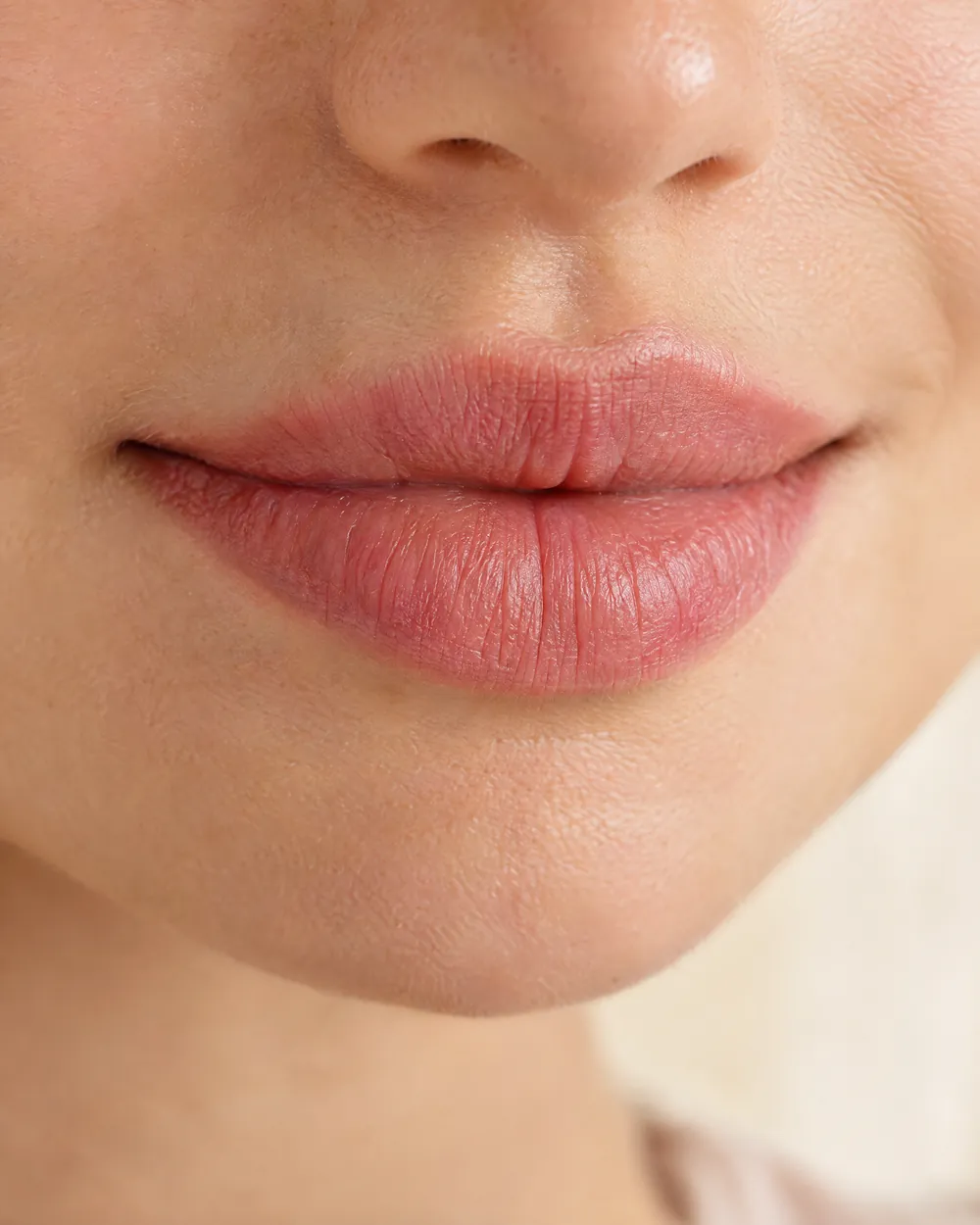
Lip color is based on the undertone of your lips, and lash-line color on your lash color and the skin around your eyes; both work differently from brows. With brows the goal is to match the hair, while with lips it's to bring life to a pale or purple-toned base. As we also note on our Lip Blush service page, placing pink pigment directly on dark or purple-toned lips can give unexpected results, so we first make a plan that balances the existing tone.
- Brows: Your natural hair color and skin undertone are decisive; we watch for warm red and cool gray drift.
- Lips: The undertone and current depth of your lips are the starting point; the aim is for the color to look like healthy vitality, not lipstick.
- Lash line: Because this is a thin line close to the lash roots, dark brown or near-black tones are mostly used; on light eyes, a soft brown can look more natural.
Why does the same pigment look different on different skin?
Pigment is filtered through your skin's thickness, its moisture and oil balance, and the natural color of the layer it sits in, so the shade on the color chart and the shade on your skin may not match. Pigment can tend to fade faster on oily skin and stay crisper on dry, thin skin. Your skin's own color also acts as a base: dark brown can read warmer on a yellow base and cooler on a pink one.
The shade on the color chart is a starting point; the real color emerges in how the pigment looks on your skin.
Why does pigment fade or change tone over time?
Pigment lightens over time with skin renewal, sun exposure, and your care habits. This is a natural process, and the tone may shift slightly as it fades. As we note on our Lip Blush service page, results on the lips generally last 1–2 years; because lip tissue sheds pigment faster than other areas, the touch-up interval varies from person to person. For brows and lash lines, too, the duration depends on your skin and lifestyle.
Sun, intensive peels or acid-based products, and frequent sauna or pool use can speed up fading. We explain in a separate post why older brows drift toward gray, orange, or bluish tones; the topic here is how to make choices that reduce that drift from the start.
How do you decide between one shade lighter and one shade darker?
Two facts are weighed together when making this decision: during recovery the color looks darker in the first days and then softens, and over time the pigment fades. So the aim is usually not to hit the exact shade on day one but to focus on what will look right after recovery and months later.
- Reasons to choose the lighter shade: A preference for a natural, soft look, fair skin, thin brows, or light, no-makeup wear.
- Reasons to choose the darker shade: A preference for a defined line, dark hair, or situations such as oily skin where pigment may fade faster.
- The middle path: For most people, starting one shade softer and darkening at the touch-up if needed is the more comfortable route.
When it's time to decide, many people think, “Let's go a little darker, it'll fade anyway.” Fading does happen, but if the initial color is well past the target, it can stand out on your face throughout recovery.
Is it better to start darker or lighter?
In most cases it's safer to start with a measured shade closer to the lighter side, because pigment can be added, but taking back a color that has settled is much harder. Starting light makes the touch-up session a flexible chance to adjust the color to your skin; starting dark narrows the room for adjustment.
On skin that sheds pigment quickly, on oily or sun-exposed skin, and in fast-renewing areas such as the lips, a slightly fuller start can be planned. So the rule isn't “always go light” but “start with what's easiest to reverse.” We finalize the details together at the consultation, after looking at your skin.
How do the color test and preliminary design work?
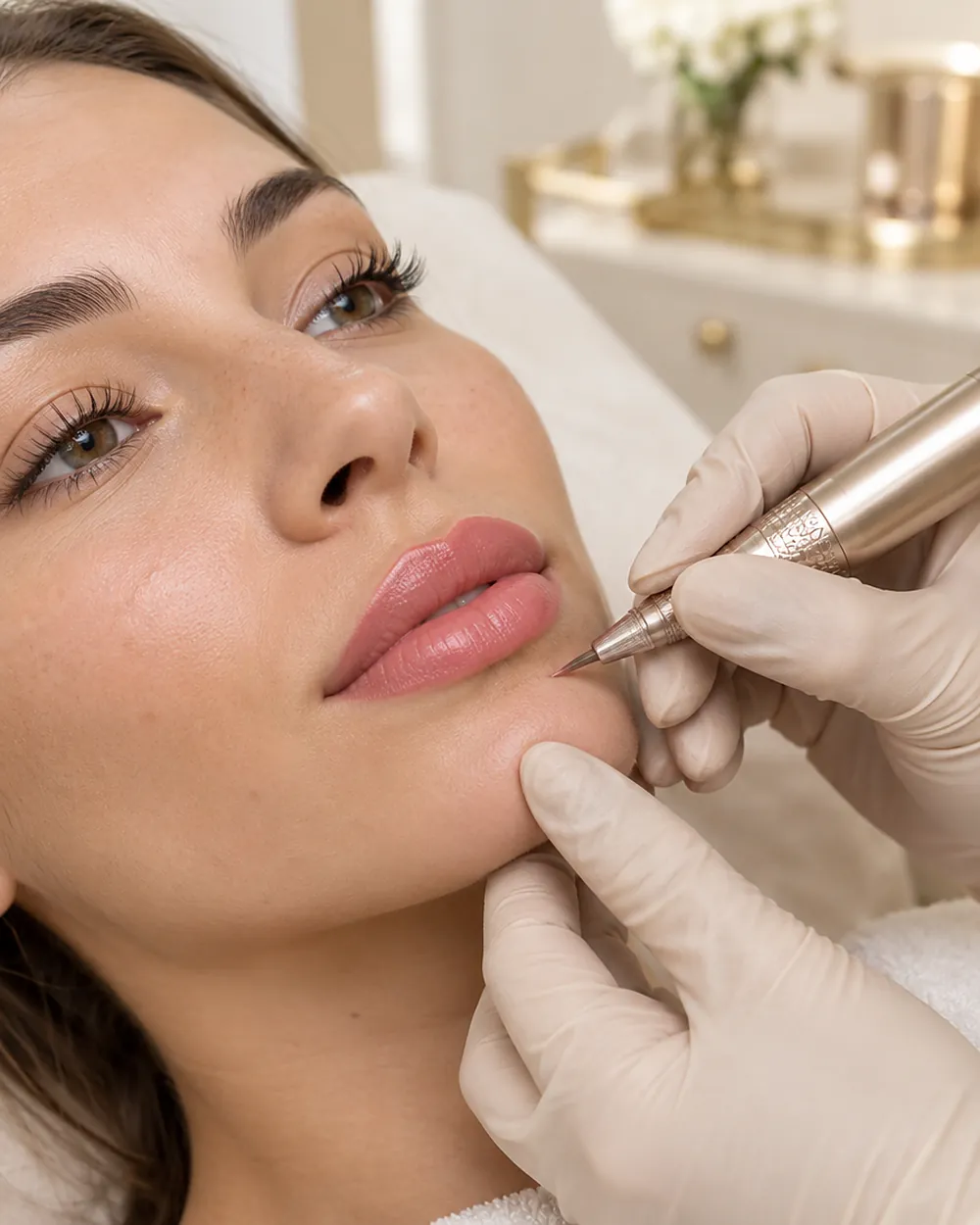
The color test and preliminary design are the step that lets you see the color and shape on your skin before any pigment is placed. Before the session, we proceed in this order:
- We look at your skin undertone and your hair and brow color together in natural light.
- We explain the color direction we recommend and discuss one-shade-lighter and one-shade-darker options.
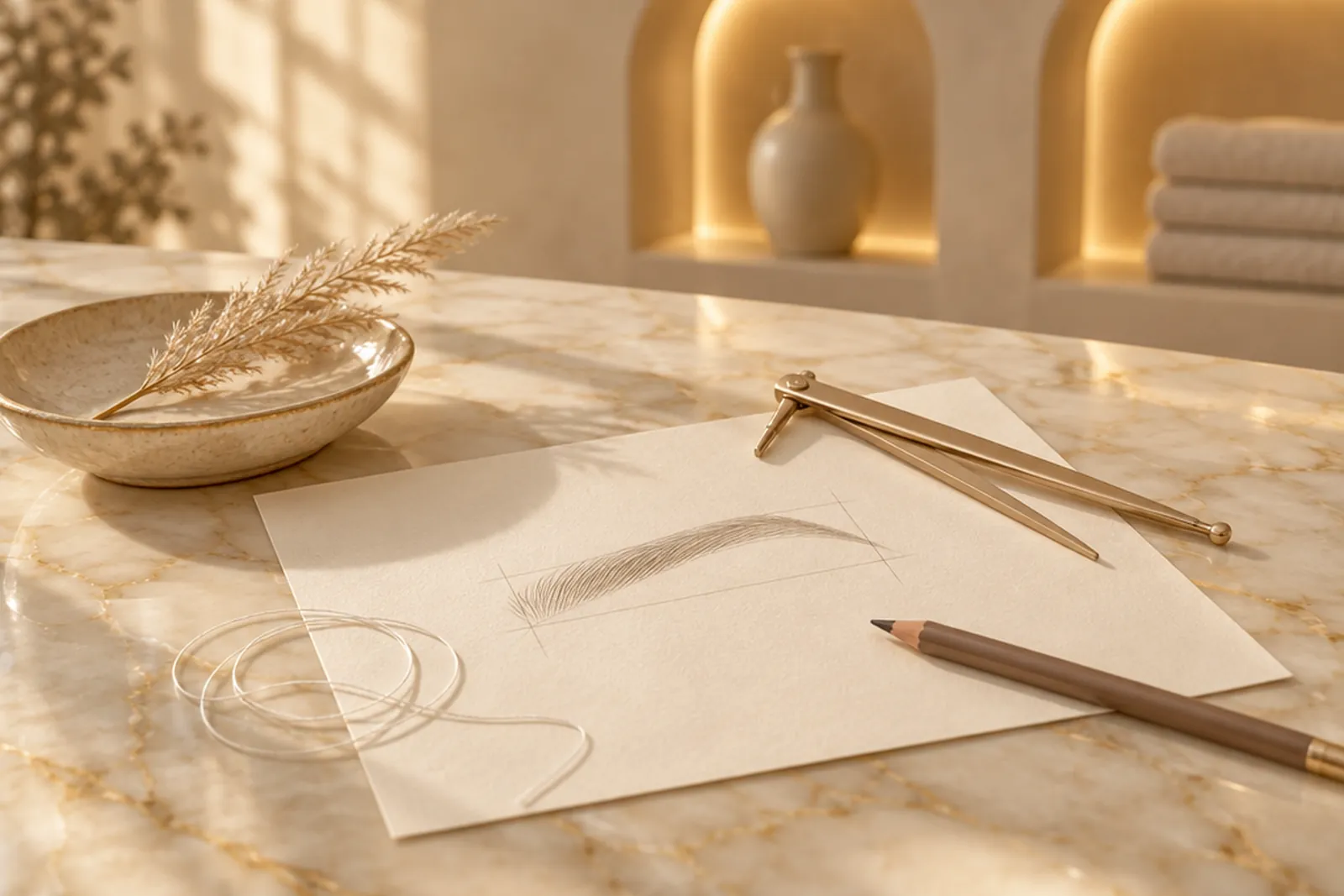
- We apply the preliminary design to your face with measuring and drawing, then assess the color and shape together in the mirror.
- We check the design with your facial expressions and from different angles, adjusting it if needed.
- After your approval we begin the session, and we reassess the color at the touch-up after recovery.
How does the touch-up session adjust color?
Besides filling in areas that have faded or didn't hold, the touch-up is a chance to fine-tune the color based on how your skin holds pigment. At the touch-up, done 4–6 weeks after the first session, we can see the true color on recovered skin; faded areas are filled in, and if needed the tone is slightly deepened or balanced.
What are the common myths about color choice?
- “A shade that looks good on the color chart will look good on me.” The same pigment can look different on skin; the decision is made from the preliminary design on your skin, not from the chart.
- “If I start dark, the color will last longer.” Starting dark doesn't mean the color will last longer; it only looks stronger during recovery, while fading progresses according to your skin.
- “If I've dyed my hair, I should match my brows to the new color.” Hair changes while pigment stays in the skin; the reference is your natural brows and skin undertone.
- “The color will never change afterward.” Pigment fades over time and the tone may shift slightly, which is why touch-ups are a natural part of the program.
- “The result stays the way it looks on day one.” The color looks darker in the first days and softens with recovery; the final color is assessed once recovery is complete.
Which situations call for talking to a doctor?
If any of the following applies to you, we recommend talking to your doctor before a permanent makeup session; in some cases the session is postponed or not done at all.
- Pregnancy and breastfeeding: Permanent makeup is not done during this period.
- An active skin problem, infection, wound, or redness in the area: The session is postponed until it has fully cleared.
- A history of recurring cold sores on the lips: Preventive measures may be planned on your doctor's advice.
- Blood thinners or a clotting disorder: Don't stop any medication on your own; your doctor's approval is required.
- Diabetes, conditions that affect the immune system, and a tendency to keloids: Nothing is planned without a doctor's opinion.
- Recent botox, filler, or laser near the area: Be sure to mention it at the consultation.
- A known allergy to pigment or dye: This should be assessed with a doctor before the session.
Color choice is the most personal step in permanent makeup, and it depends more on a decision made on your skin than on a color chart. At our center in Nişantaşı, we look at your undertone and your hair and brow color together at the consultation, see the preliminary design on your face, and proceed with your approval. Vega Beauty is a beauty and care center; if we notice something that needs medical evaluation, we refer you to a doctor.
Frequently asked questions
How can I tell which permanent makeup color is right for me?
The right color is the one that works with your skin undertone, your hair and brow color, and the way your skin holds pigment. You find this out by seeing the color on your skin in the preliminary design, not from a color chart. Looking in natural light and deciding with the softened, post-recovery result in mind is the soundest approach.
Do permanent brows turn red or gray over time?
As pigment fades, the tone may drift slightly warm or cool. This risk goes down when a color suited to your undertone is chosen, but it doesn't disappear completely. It may be possible to balance this drift at a touch-up session; for details, see our post on color changes in older permanent brows.
Why does the color look dark in the first days?
As the skin recovers, a crust and some sensitivity form over the pigment, so the color looks darker than it really is in the first days. It softens with recovery.
How is the pink tone chosen for Lip Blush?
The starting point is the current undertone and depth of your lips. Because pink pigment placed directly on dark or purple-toned lips can give unexpected results, we first make a plan that balances the existing tone. Lip Blush results generally last 1–2 years, and the touch-up interval varies from person to person.
What color looks most natural for lash-line enhancement?
For most people, dark brown or near-black tones blend with the lash roots. For light-colored eyes and for those who want a thin line, a soft brown can look more natural. The decision is made during the preliminary design based on your eye color, lash density, and how defined you want the line to be.
What happens if I don't like the color?
The process starts with you seeing the color and shape in the preliminary design and giving your approval. At the touch-up session after recovery, the tone can be adjusted according to how your skin actually holds the pigment. That's why starting with a measured shade at the first session is an advantage: it leaves room for adjustment.
Published: · Vega Beauty editorial team. This article is general information and does not replace a medical diagnosis or advice; whether a service suits you is assessed at your consultation.