Skin Care
Men's skin care: a simple routine for shaving, oiliness, and pores
In short
Men's skin is usually thicker and oilier, pores look more visible, and regular shaving creates a slight abrasion on the surface every day. That's why the routine that works for men is a consistent one, not a crowded one: a gentle cleanser morning and evening, a light moisturizer suited to your skin, and sunscreen in the morning. Good shaving habits reduce irritation, and professional care at regular intervals rounds out this routine with pore cleansing and moisture balance.
For many men, skin care begins and ends with shaving foam and a bar of soap. If you don't want to fill the bathroom shelf with products but aren't happy with a forehead that shines by afternoon, a neck that turns red after shaving, or visible pores on your nose, you're in the right place. In this post we explain why men's skin behaves differently, how shaving affects it, and how to build a simple routine with three products.
Why does men's skin behave differently?
Men's skin is usually thicker, produces more sebum, and has more visible pores. Most of these differences come from hormones and become noticeable from puberty on. Higher oil production means skin turns shiny faster during the day, and pores fill more easily, especially on the forehead, nose, and chin.
Thick, oily skin has one advantage: in some people, fine lines may show up later. Men's skin also carries a load that most women's faces don't: shaving, repeated almost every day.
How does shaving affect your skin?
Every shave takes a thin layer off the top of your skin along with the hair, creating a slight abrasion on the surface. That alone isn't a problem. The trouble comes from shaving unprepared skin with a dull blade, against the grain, going over the same spot again and again, which strains the skin's protective barrier.
- Irritation and redness: These show up right after shaving, especially on the neck and under the chin.
- Razor burn: You feel burning and stinging on the surface and see small red spots.
- Dryness and tightness: These increase when shaving is followed by soap or an alcohol-based lotion.
- Ingrown hairs: A hair cut short and sharp curls back into the skin; we explain the causes in detail in our blog post on ingrown hair.
Which steps protect your skin before and after shaving?
Protecting your skin doesn't mean giving up shaving. It means preparing your skin for the shave and soothing it afterward. The following sequence helps reduce irritation when you shave your face and neck.
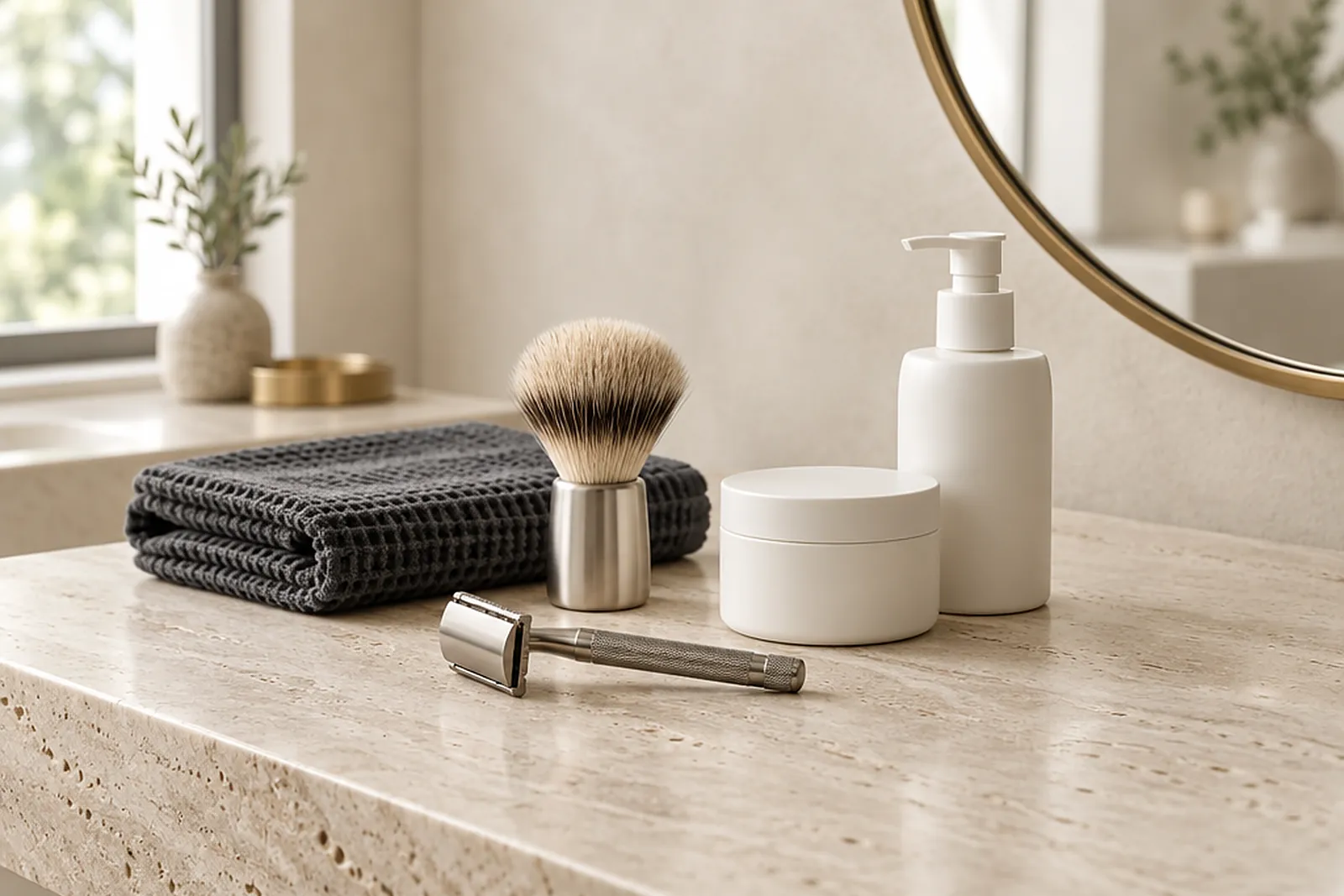
- Shave after a shower or after wetting your face with warm water for a few minutes; softened hair cuts with less resistance.
- Never put a razor to dry skin. Apply foam or gel and wait a moment for it to work in between the hairs.
- Use a sharp, clean blade, and change it as soon as you feel it tugging.
- Make the first pass in the direction of hair growth. Hair direction often changes on the neck, so check it once in the mirror with your finger.
- Don't go over the same spot repeatedly, and don't press the blade into your skin.
- Rinse with cool water, then pat dry with a towel without rubbing.
- Finish with an alcohol-free, soothing moisturizer.
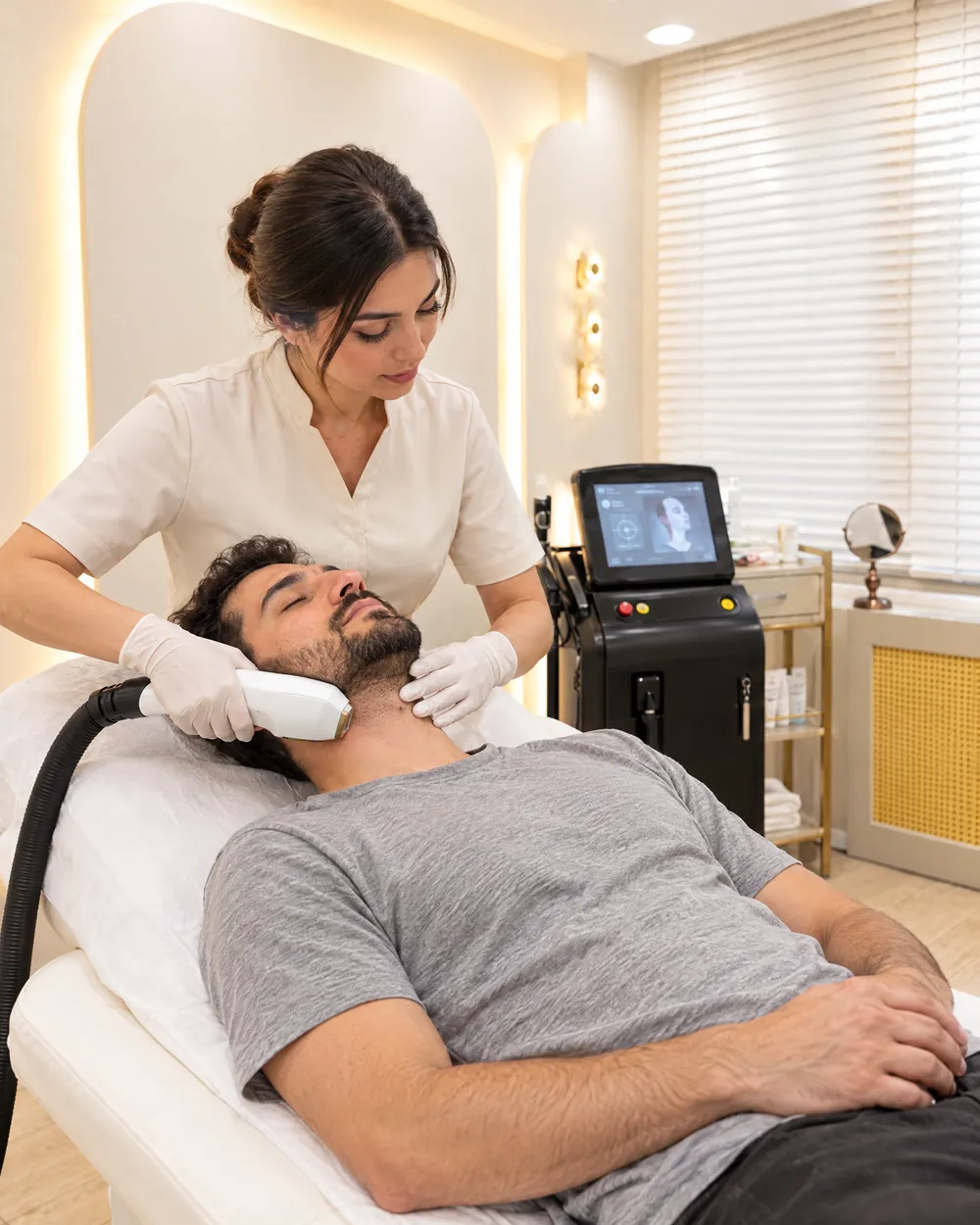
To keep the nape and beard lines tidy, some men who use a razor daily and get frequent irritation in these areas also consider laser hair removal for those lines. That is a separate assessment and can be discussed at the consultation if you'd like.
What's the simplest routine for a man who doesn't want a lot of products?
The simplest routine has three steps: cleansing, moisturizing, and sun protection. Once these three become a habit, you can add a new product if you need one, but not before.
| Step | Morning | Evening |
|---|---|---|
| Cleansing | Wash with a gentle gel or foam cleanser in lukewarm water | A more thorough wash to remove the oil, sweat, and city grime of the day |
| Moisturizing | Gel for oily skin, a creamier but light moisturizer for dry skin | The same moisturizer; a soothing formula if you shaved in the evening |
| Sun protection | A light, broad-spectrum sunscreen that leaves no shine | Not needed |
| Shaving day | An alcohol-free soothing moisturizer after shaving | If mornings are short on time, moving your shave to the evening gives skin time to recover |
A practical way to cut down on products is to combine moisturizer and sunscreen in one product, so your morning takes two steps. We can work out which texture suits your skin with a skin analysis.
A good routine for men's skin is one you can still do tomorrow morning.
What helps with an oily look and visible pores?
The way to manage an oily look is to balance skin, not dry it out. Harsh soaps and alcohol-based lotions strip surface oil for a while and leave that “squeaky clean” feeling, but that feeling often signals a stressed barrier. Dehydrated skin turns shiny again within hours, and a cycle begins in which it seems to produce even more oil.
- Washing twice a day is enough; washing more often upsets the balance.
- If shine bothers you during the day, press it away with blotting paper instead of washing your face.
- A light gel moisturizer is part of the routine for oily skin, too.
- Don't squeeze your pores. The goal isn't to close them but to help them look cleaner and less visible.
If you have a beard, how do you care for the skin under it?
Growing a beard reduces shaving irritation, but it doesn't end skin care. The skin under a beard gets less air, and oil, dead cells, and food residue build up there. Dryness, itching, and white flakes among the hairs are common in this area.
A beard needs cleansing just as your face does. Work your facial cleanser, or a gentle shampoo made for beards, down to the roots with your fingertips, and rinse well, since residue makes itching worse. A few drops of beard oil or a light moisturizer then softens the hair and comforts the skin underneath.
How do exercise, helmets, and sweat affect your skin?
Sweat alone doesn't harm your skin. The problem is sweat that stays on the skin for a long time and combines with friction. The forehead, temples, and chin strap line, where a helmet, cap, headphones, or sports headband touches, are especially sensitive in this respect.
- Wash your face as soon as you can after exercise; if a shower isn't possible right away, at least rinse with water.
- Use the gym towel on your body, not your face, and bring a separate clean towel for your face.
- Wipe down or wash helmet and cap pads and headphone cushions regularly.
- Change your pillowcase at least once or twice a week; oil and sweat from your beard transfer to it.
- Before a workout, choose a light moisturizer over a rich cream.
What does professional care offer men?
Professional care adds the deep cleansing and moisture steps a home routine can't reach. For men, this most often means pore cleansing and restoring moisture balance to skin tired out by shaving.
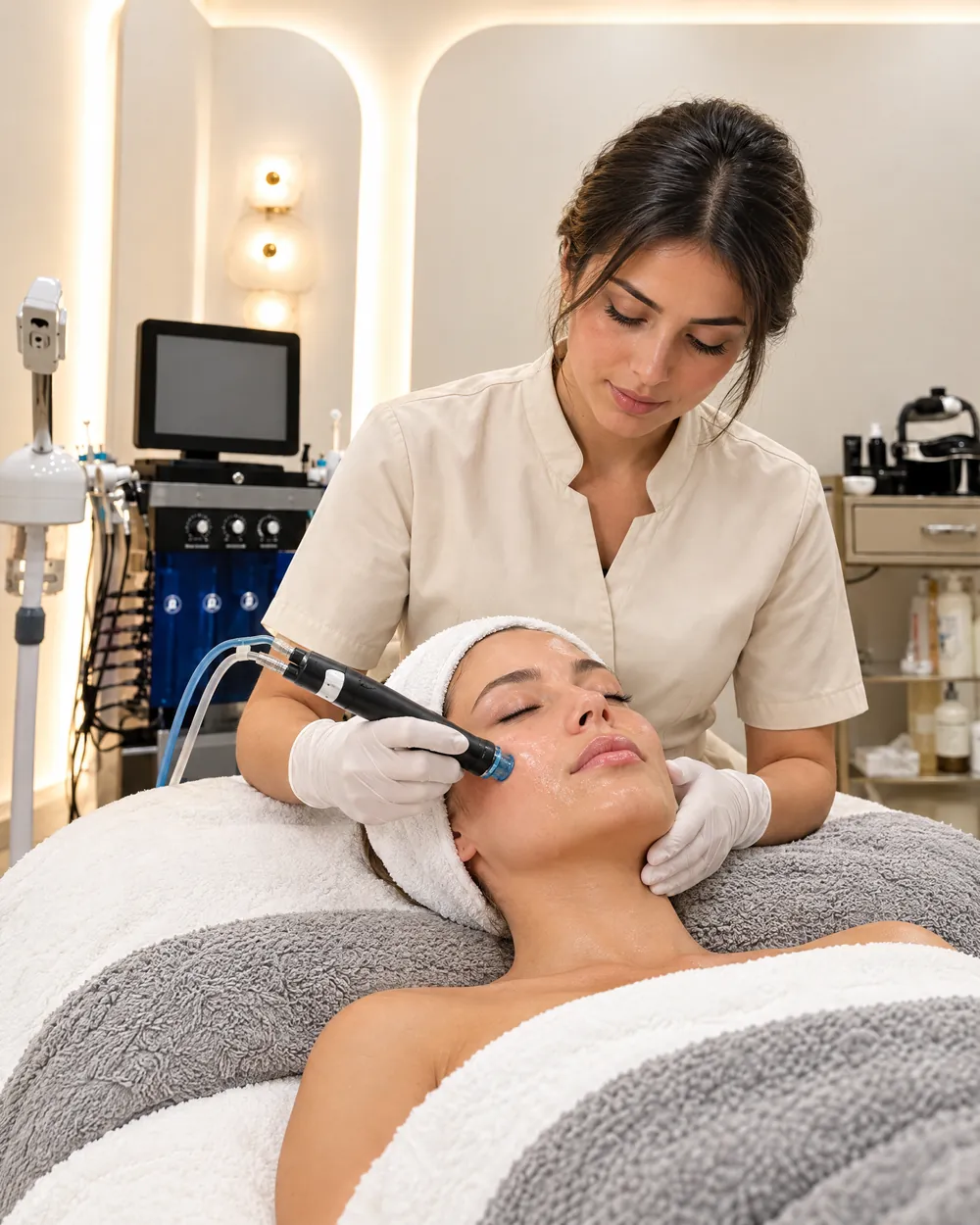
Hydrafacial cleanses pores with a vacuum-assisted tip, without squeezing them, then delivers hydrating serums to the skin. The session takes about 45–60 minutes and usually leaves no noticeable redness, so most people go back to work the same day. It can be scheduled every 3–6 weeks, depending on what your skin needs.
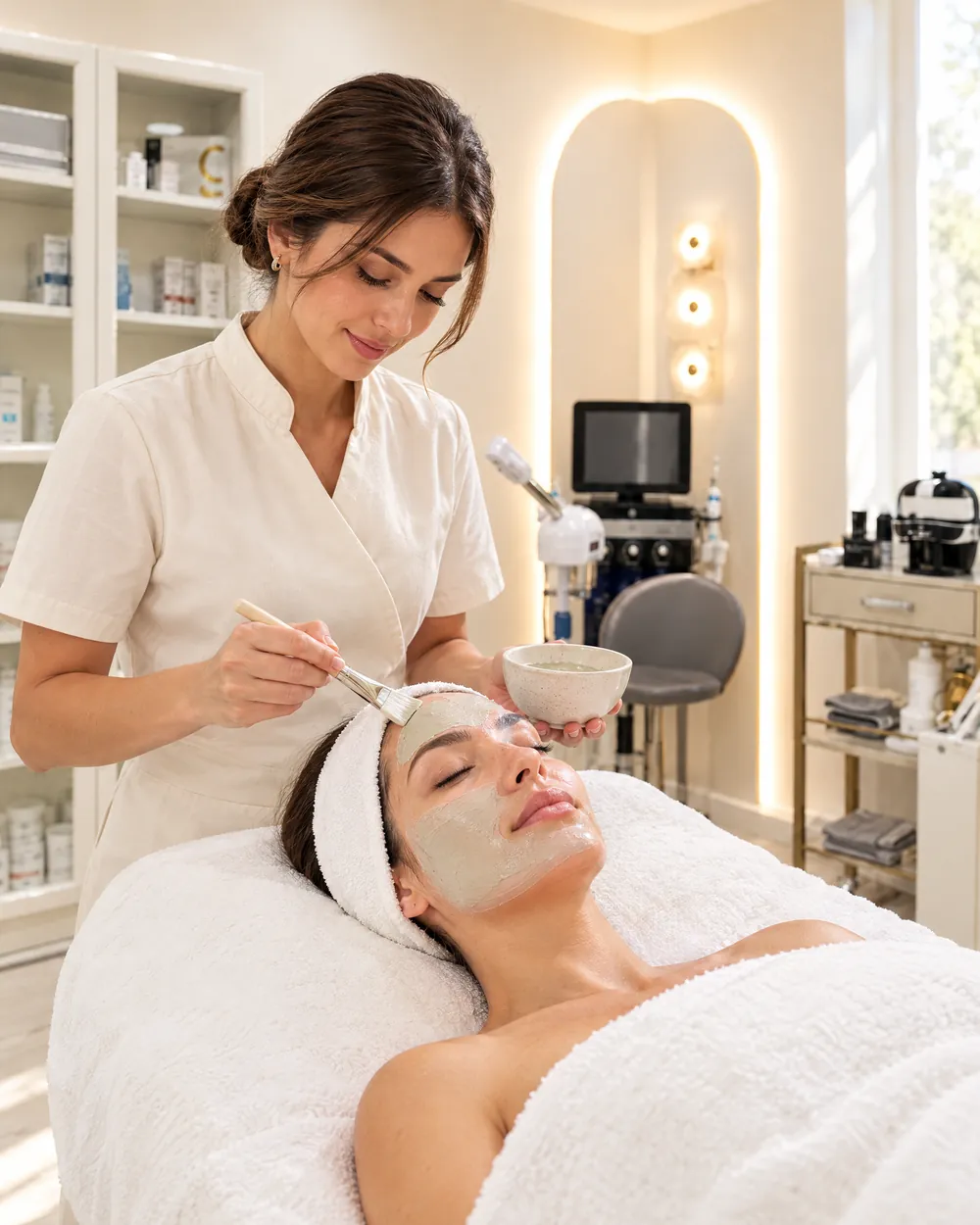
A Professional Facial starts with a skin analysis, and the deep cleansing, peeling, pore purifying, and mask steps are chosen to suit the state of your skin that day. It's usually recommended once a month, and sauna and intense exercise are put on hold for the following 24 hours.
What happens at the consultation for a man coming in for the first time?
The first meeting is about getting to know your skin, not a sales pitch. Our specialist looks at your skin's oil and moisture balance, pore structure, and sensitivity in the shaving area, and asks about your shaving habits and the products you use. Just jot down the names of your products before you come; no other preparation is needed.
For many men, the hard part of the first step is not knowing what to ask, so we talk in your words, not technical terms. The consultation takes place one-on-one in a private room. You may hear a care recommendation at the end, but you don't have to decide anything. Simply streamlining your home routine is a worthwhile outcome too.
What are the common misconceptions about men's skin care?
- “Men's skin doesn't need care.” Men's skin may be thicker, but it is still affected by sun, shaving, and city grime. It needs different care, not less.
- “If aftershave burns, it's disinfecting.” The burn comes from alcohol touching a surface that shaving has lightly abraded. It's a sign of irritation, not cleanliness.
- “Oily skin doesn't need moisturizer.” Oily skin that lacks moisture turns shiny faster; a light moisturizer supports the balance of oil and moisture.
- “Sunscreen is for women.” The sun affects dark spots and the look of aging regardless of gender, and that includes your ears, the back of your neck, and areas where hair has thinned.
When should you see a doctor?
The following are matters for a dermatologist, not a beauty center. If you notice any of them, we recommend talking to your doctor before making a care plan.
- Stubborn, painful, or inflamed acne, especially if it has started to leave marks.
- Recurring, inflamed bumps in the beard area.
- Redness or a burning feeling on the face that doesn't go away and has become persistent.
- Constant itching, redness, and flaking under the beard that doesn't ease despite care.
- A mole that changes in shape, color, or size, or that bleeds or itches.
At our center in Nişantaşı, the process starts the same way for male clients: a consultation and skin analysis, then a simple plan that fits your skin and your pace. Vega Beauty is a beauty and care center; if we find something during the analysis that calls for medical evaluation, we refer you to a dermatologist before any care begins.
Frequently asked questions
At what age should men start skin care?
There's no set age. The time you start shaving and noticing oiliness is a good moment to make cleansing and moisturizing a habit. Sunscreen belongs in your routine at any age, while professional care is planned with a skin analysis when the need arises.
Does shaving every day damage your skin?
With the right technique, it doesn't cause problems for most skin. If irritation keeps coming back, shaving every other day, switching to an electric shaver that leaves hair short, or moving your shave to the evening gives your skin time to recover.
Do men need separate products?
No. What matters in choosing a product is skin type, not gender. Some products aimed at men can contain heavy fragrance or alcohol, so reading the ingredient list is more useful than looking at the packaging.
Can I go back to work after a Hydrafacial?
Yes, most people go back to work the same day. For the first 24 hours we recommend staying away from saunas and exfoliating products and keeping up with your moisturizer and sunscreen.
Does beard oil suit every skin type?
Light oils suit most beards, but on skin prone to oiliness and breakouts, rich oils can burden the pores. In that case, it's more balanced to apply a small amount to the hair tips only or to switch to a light moisturizer.
How often should men get a Professional Facial?
For many men, once a month is a balanced framework; the interval can be shorter for those who exercise intensely or have oily skin. For skin that responds well to a home routine, facials at the change of seasons may also be enough. We set the right frequency together at the consultation.
Published: · Vega Beauty editorial team. This article is general information and does not replace a medical diagnosis or advice; whether a service suits you is assessed at your consultation.