Longevity
Longevity skin care: 5 habits that protect your skin over the long term

In short
Longevity skin care is a long-term approach that aims less at making skin look good today and more at keeping it healthy and balanced years from now. It rests on five habits: daily sun protection, regular sleep, balanced nutrition, professional care based on skin analysis, and a simple but consistent home routine. The outcome depends not on any single procedure but on keeping up these habits.
What is longevity skin care?
Longevity skin care is an approach that aims to manage the skin's aging process in a healthy, balanced way rather than trying to stop it. The focus is less on quick visible change and more on preserving the skin's barrier, moisture balance, and elasticity over the years. In this approach, care isn't a short-term effort but a way of life.
Where classic anti-aging care often focuses on lines that have already become visible, the longevity approach takes an earlier, broader view: it looks at the daily habits that affect your skin, environmental factors, and regular professional support together.
| Topic | Short-term care mindset | Longevity approach |
|---|---|---|
| Goal | Quick visible effect | Balanced, healthy skin over the years |
| Focus | Visible lines and spots | Barrier, moisture, elasticity, and protection |
| Method | One-time intensive procedures | Daily habits and regular care |
| Product choice | Trends and strong actives | A simple, consistent routine that suits your skin |
| Measure of success | Immediate change | Consistency and the overall balance of your skin |
1. Why is sun protection essential every day, in every season?
Sun protection is essential because a significant share of the visible signs of skin aging is linked to sunlight. The sun's rays reach the skin not only in summer but also on cloudy and winter days, and some can pass through glass and clouds. That's why a broad-spectrum sunscreen should be the last step of your routine every day.
- Use enough product on your face, neck, and the backs of your hands; a thin layer often isn't enough.
- If you're outside during the day, reapply every 2–3 hours.
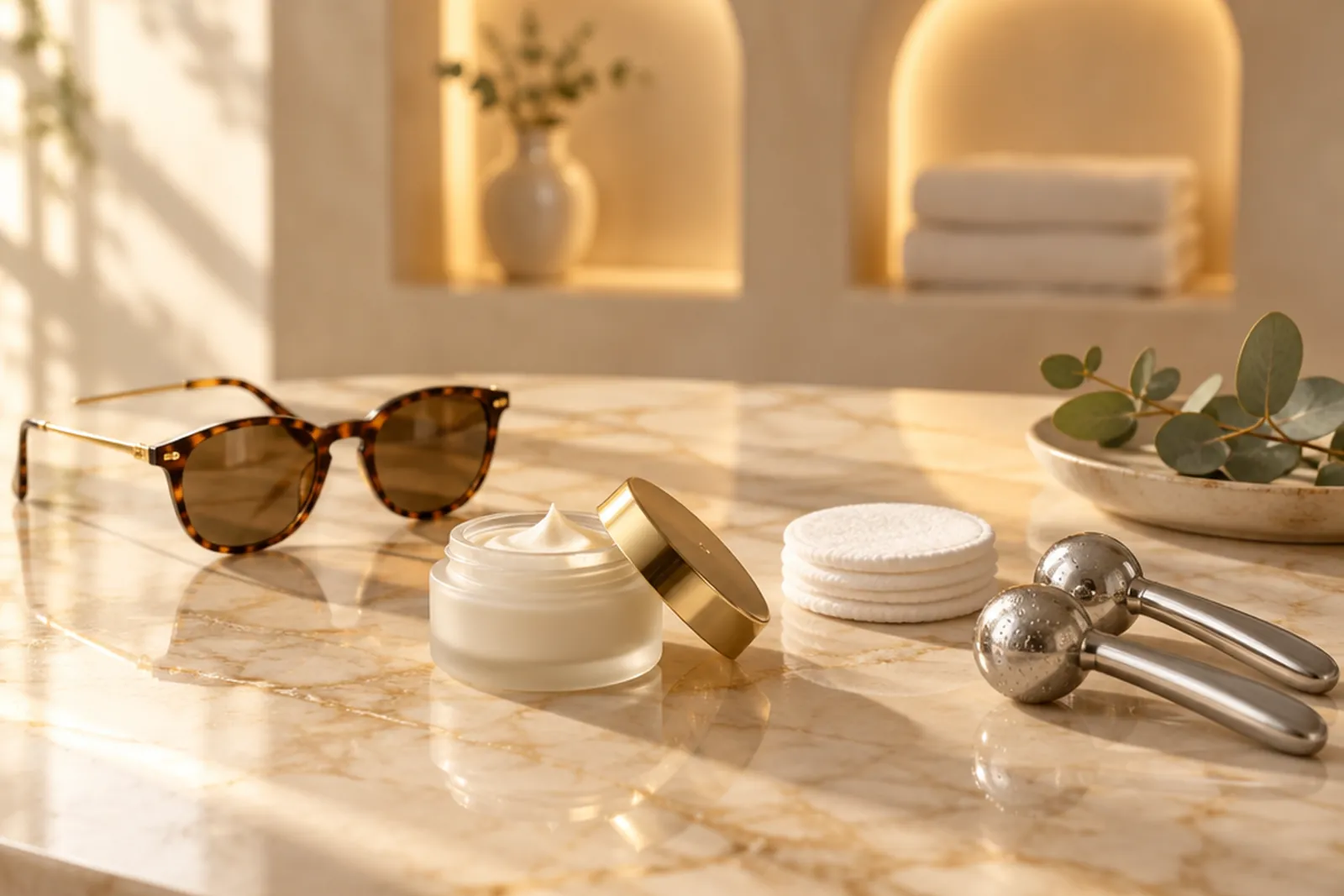
- Pair sunscreen with physical protection such as a hat and sunglasses.
- If you work near a window, wear sunscreen indoors too.
2. How does sleep affect your skin?
Sleep directly affects your skin, because skin speeds up its renewal processes overnight. Regular, sufficient sleep helps skin look more rested and lively in the morning. Lack of sleep, on the other hand, can show up as a tired look around the eyes, dullness, and a feeling of lost moisture.
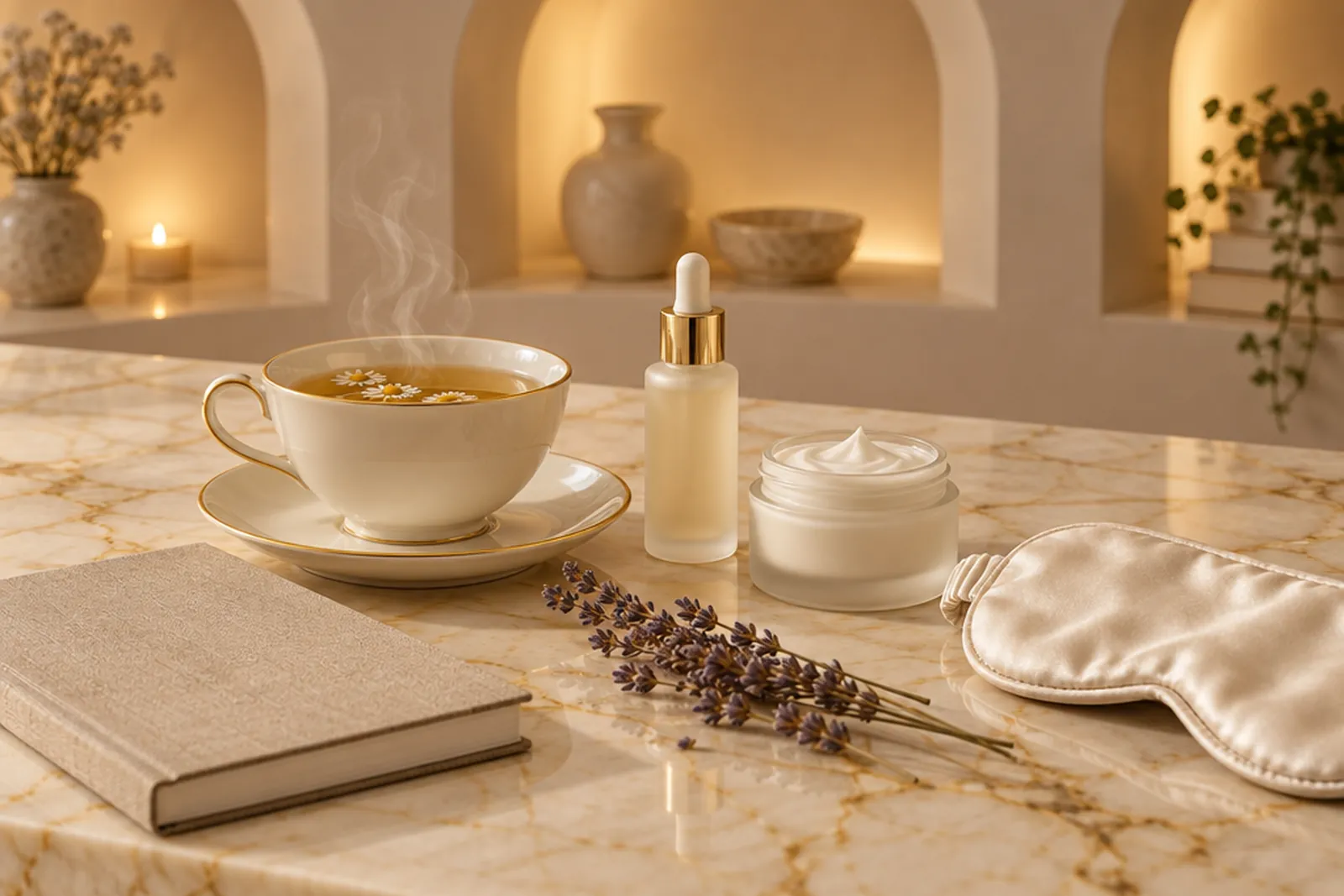
To support your sleep routine, try to go to bed at about the same time each day, cut back on screen time before bed, and make your evening skin care part of the ritual of getting ready for sleep. A silk or satin pillowcase can make a small difference by reducing friction on your face.
3. How do food and water show up in your skin?
A balanced diet supports the skin's building blocks, and drinking enough water helps with moisture balance. Colorful vegetables and fruits, healthy fats, and enough protein provide the nutrients your skin needs. Limiting excess sugar, processed foods, and alcohol can also help skin look more balanced.
- Include vegetables and fruits in different colors at every meal.
- Regularly eat sources of healthy fats such as olive oil, walnuts, avocado, and fish.
- Make drinking water a habit throughout the day; don't wait until you're thirsty.
- If you're considering a specific diet or supplement, talk to a doctor or dietitian.
4. Why does regular professional care matter?
Professional care matters because it adds the deep cleansing and renewal steps a home routine can't reach. Facials at the change of seasons help your skin adapt to its shifting needs. What counts here is less the frequency than the consistency and a plan based on skin analysis.
At Vega Beauty, a year planned with the longevity approach may consist of steps such as hydration-focused facials, purifying with Hydrafacial, renewal with Oxygeneo, and anti-aging care, arranged around your skin's seasonal needs. Every service takes place in a private room, after the analysis at your consultation.
5. What should a simple, consistent home routine look like?
An effective home routine has a few well-chosen steps and is followed every day without skipping. Using many products at once can strain the skin barrier; consistency matters much more than the number of products.
- Morning: a gentle cleanser, an antioxidant serum, moisturizer, and sunscreen.
- Evening: makeup removal, double cleansing, an active ingredient if needed, and moisturizer.
- Once a week: a light exfoliant or hydrating mask that your skin tolerates.
- When adding something new to your routine, try one product at a time and watch how your skin responds for a few weeks.
How does longevity skin care change with age?
The core principles of longevity skin care are the same at every age, but priorities shift as your skin's needs change. Age alone doesn't decide things; genetics, lifestyle, and past sun exposure also affect your skin's condition. The framework below gives a general idea, and your personal plan takes shape from your skin analysis.
- Your 20s: the time to establish basic habits. Sun protection, regular cleansing, and moisturizing are at the center of your routine.
- Your 30s: moisture loss and dullness may become more noticeable. Antioxidant ingredients and seasonal professional facials can be added to your routine.
- Your 40s: care that supports elasticity and moisture balance comes forward. Your home routine is adjusted more carefully based on how your skin responds.
- 50 and beyond: skin may be drier and more sensitive. A gentle, nourishing routine that supports the barrier and regular Moisture Facials become more important.
Periods of hormonal change, intense stress, or major lifestyle shifts can also affect what your skin needs. So a longevity plan isn't something you prepare once and leave alone; we update it together as your skin changes. At Vega Beauty, a short evaluation at each change of season keeps the plan current.
How do professional care and a home routine work together?
Professional care and a home routine aren't alternatives; they complement each other. Professional care provides deep cleansing, renewal, and hydration support, and your home routine maintains that effect in the days between sessions. Sticking to the simple routine recommended after a facial helps you arrive at your next session with more balanced skin.
Small adjustments by season
The framework of a longevity routine stays the same all year, but small seasonal adjustments make it easier to keep your skin balanced. Cold air and indoor heating can dry skin out in winter, so it makes sense to switch to a more nourishing moisturizer; in summer, lighter textures and more frequently reapplied sun protection make sense. The change of seasons is also a good time to prepare your skin for the next stretch with a professional facial.
Consider environmental factors too
City life exposes your skin not only to the sun but also to factors such as air pollution, air-conditioned rooms, and seasonal temperature swings. Cleansing your skin carefully in the evening, using an antioxidant serum, and paying attention to moisture balance indoors can help lighten the load these factors put on your skin. Smoking is among the leading factors that harm the skin's appearance; quitting is one of the most valuable steps in a longevity approach.
What are the common misconceptions about longevity skin care?
The most common misconception is that skin care should start only once visible lines appear. In fact, the earlier protective habits begin, the easier it is to keep your skin balanced.
- “You don't need sunscreen in winter.” The sun's rays reach your skin in every season.
- “More products mean better results.” Too many products can strain the barrier; simplicity often works better.
- “Expensive products always work better.” What matters is how well a product suits your skin and how regularly you use it.
- “One intensive procedure will last for years.” Long-term results are maintained through regular care and daily habits.
Beauty isn't a one-time procedure; it's the care you show yourself over the long term.
When should you talk to a doctor?
See a dermatologist for new moles or moles that change in shape or color, long-lasting redness, itching, or flaking, and rapidly spreading pigmentation. Vega Beauty is a beauty and care center; when something calls for medical evaluation, we'll refer you to a doctor. At our center in Nişantaşı, your care plan can be arranged in line with your doctor's recommendations.
Frequently asked questions
At what age should longevity care start?
Sun protection, regular sleep, and a basic home routine matter at every age, and the earlier they start, the stronger the foundation. A professional care plan usually takes shape from your late 20s on, depending on your skin's needs. The starting point varies from person to person and is determined by skin analysis.
Do I need expensive products?
No. What matters more than price is how well a product suits your skin, how balanced its ingredients are, and how regularly you use it. A gentle cleanser, a good moisturizer, and a broad-spectrum sunscreen used every day are a solid start for many people. Other products can be added later as your skin needs them.
How often should I have a professional facial?
For many people, a facial at the change of seasons or once a month is enough. The right frequency depends on your skin type, lifestyle, home routine, and how your skin responds to facials. At Vega Beauty, frequency is planned individually based on the skin analysis at your consultation and updated when needed.
What's the difference between longevity and anti-aging care?
Anti-aging care mostly focuses on visible lines and the look of sagging. The longevity approach offers a broader framework: it looks at sun protection, sleep, nutrition, home routine, and regular professional care together, with the aim of keeping your skin balanced over the years. Anti-aging care can be part of that plan.
Does stress affect the skin?
Yes. Long-term stress can contribute to skin looking duller, more sensitive, and less balanced in many people. Disrupted sleep and a neglected routine add to this effect. Regular sleep, movement, breathing exercises, and time set aside for your own care are habits that support your skin's appearance.
Does longevity skin care apply to men too?
Of course. Sun protection, cleansing, moisturizing, and regular professional care matter just as much for men's skin. Because shaving can strain the skin barrier, using a soothing, moisturizing product after shaving is an important step to add to a man's routine.
When will I notice results with longevity care?
The longevity approach aims for long-term balance rather than quick change. Even so, many people feel the effect of habits such as regular sleep, moisturizing, and sun protection within a few weeks, as skin that looks more rested and balanced. The real difference shows up over the years, in how well your skin's overall condition holds up.
Published: · Vega Beauty editorial team. This article is general information and does not replace a medical diagnosis or advice; whether a service suits you is assessed at your consultation.