Hair Removal
Starting laser hair removal in winter: why it helps and how to plan your calendar

In short
Winter is a comfortable time to start laser hair removal. Your skin gets less sun, your tan has faded, and it's easier to keep session intervals intact without vacations breaking them up. A plan that starts in November leaves room for 3 to 7 sessions before summer, depending on the area. In most areas the process won't be finished by summer, but your first sessions can go ahead without pressure from the sun. We set up the calendar area by area at your consultation.
The decision to get laser hair removal is often made on the first warm days, when clothes get shorter and shaving and waxing are back on the agenda. But laser hair removal isn't something that wraps up in a few weeks. It's a process that spans months, following the hair growth cycle. In our blog post on laser hair removal in the summer months, we explained that sessions can continue through the summer with the right rules. In this post, we look at the other side of the coin: why starting in winter is comfortable, how far a plan that starts in November can get by summer, and what to watch for during the winter months.
Why is starting laser hair removal in winter an advantage?
The advantages of starting in winter have mostly to do with the sun. The laser targets pigment in the hair root. On skin darkened by the sun or recently tanned, the energy setting is chosen more cautiously, and sometimes the session is postponed. In the winter months, this uncertainty mostly goes away.
- Your skin gets less sun: Your summer tan has faded, so your skin is more predictable on session day.
- Sun protection after sessions gets easier: The area needs protection from the sun for at least two weeks, and covered-up winter clothing takes care of that on its own.
- Session intervals get broken up less: Summer vacations and beach plans often shift the calendar, while intervals are easier to keep in the winter months.
- Mild redness stays out of sight: The brief pinkness after a session won't affect your daily life under covered clothing.
- Some sessions are behind you as summer arrives: Compared with a plan started in spring, your hair may be clearly thinner by the time summer comes.
Why does laser hair removal take months?
Hairs don't all grow at the same time. Each follicle goes through growth, regression, and rest phases. The laser is most effective on hairs in the active growth phase, and in a single session it reaches only the hairs in that phase. Time is left for the other hairs to enter it, which is why session intervals range from 4 to 10 weeks, depending on the area.
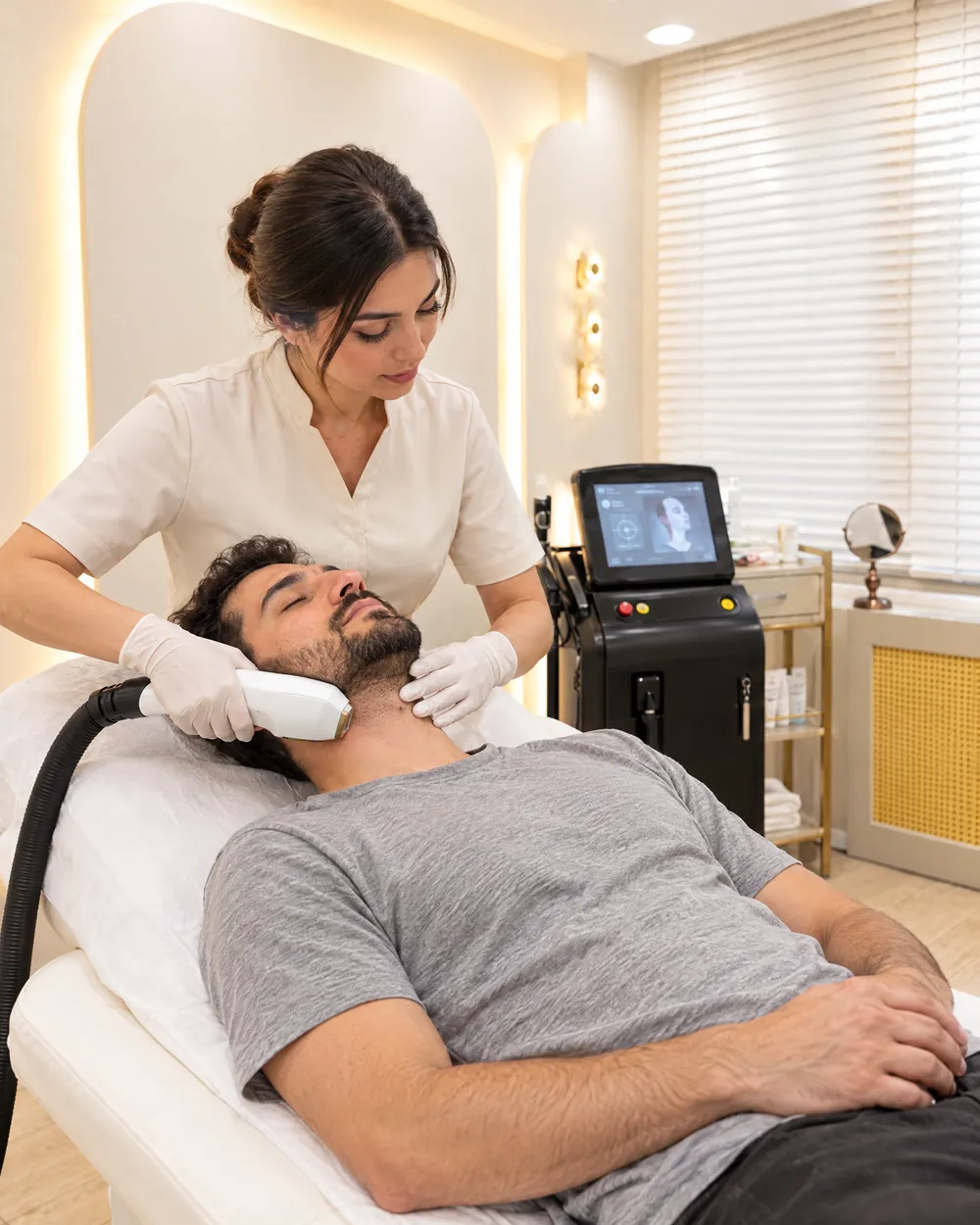
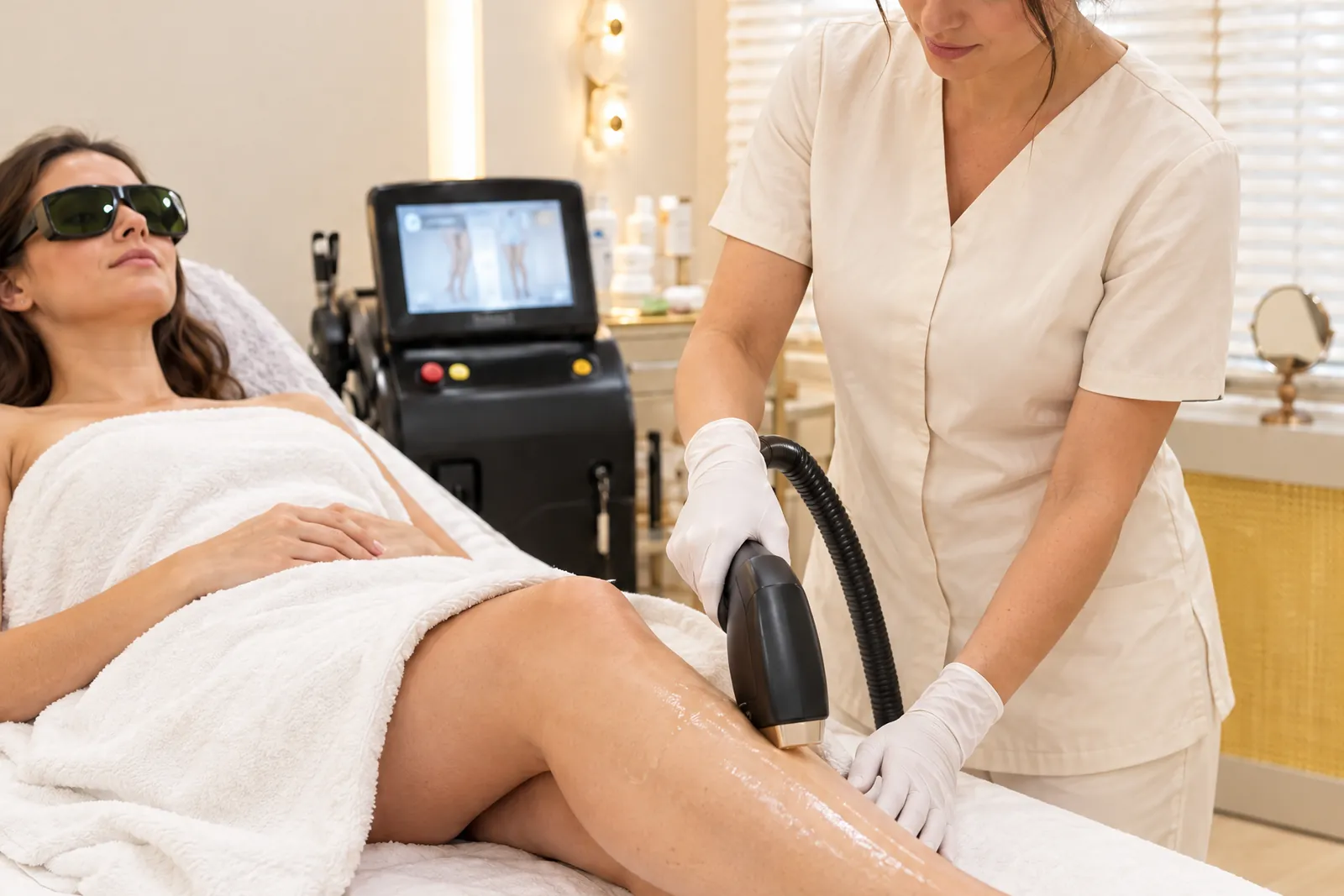
The Soprano Ice Platinum we use at our center combines Alexandrite (755 nm), diode (810 nm), and Nd:YAG (1064 nm) wavelengths in a single handpiece, and its cooled handpiece keeps the skin's surface cool during the session. But however advanced a device is, it can't speed up the hair cycle. That's why, in laser hair removal, starting at the right time matters as much as the choice of device.
How many sessions can a November start fit in before summer?
There are about 30 weeks from early November to early June. The table below shows about how many sessions fit into that time for each area if sessions stay on schedule, and how many sessions most people need in total. The figures are a general framework. Hair type, skin type, and hormonal status all change the number of sessions.
| Area | Session interval (typical) | Sessions from November to June (approx.) | Total sessions (for most people) |
|---|---|---|---|
| Upper lip, chin, face | 4–6 weeks | 6–7 | 8–12 |
| Underarms | 5–7 weeks | 5–6 | 6–8 |
| Bikini area | 6–8 weeks | 4–5 | 6–10 |
| Arms | 6–8 weeks | 4–5 | 6–8 |
| Legs | 8–10 weeks | 3–4 | 6–8 |
| Back, chest, shoulders (men) | 6–8 weeks | 4–5 | 8–12 |
As the table shows, the process may be well along as summer approaches in areas like the underarms, while sessions will still be going on when summer comes in areas with longer intervals, like the legs. This isn't a problem. You can continue through the summer months by following the sun rules.
What should you watch for with laser hair removal in winter?
Winter is an easy season as far as the sun goes, but it has a few rules of its own. Vacation plans and dry skin are the two issues we run into most often in winter.
- If you're planning a ski trip, schedule your session around it. Snow reflects sunlight, and sun exposure on uncovered areas such as the face is no less than in summer.
- If you're going somewhere warm for New Year's, plan your session at least two weeks before the trip or after your tan has faded.
- Avoid hot showers, saunas, hammams, and intense exercise for 24 to 48 hours after your session. That includes the hot environments people often turn to in winter.
- Keep the area away from thick, rubbing fabrics in the first few days. Loose, soft clothing is more comfortable.
- Don't wax, tweeze, or use an epilator while you're having sessions. This rule doesn't bend just because your hair isn't showing in winter.
- Shave the area the day before your session, and don't apply heavy creams, oils, or fragranced products to it on session day.
Does dry winter skin affect laser hair removal?
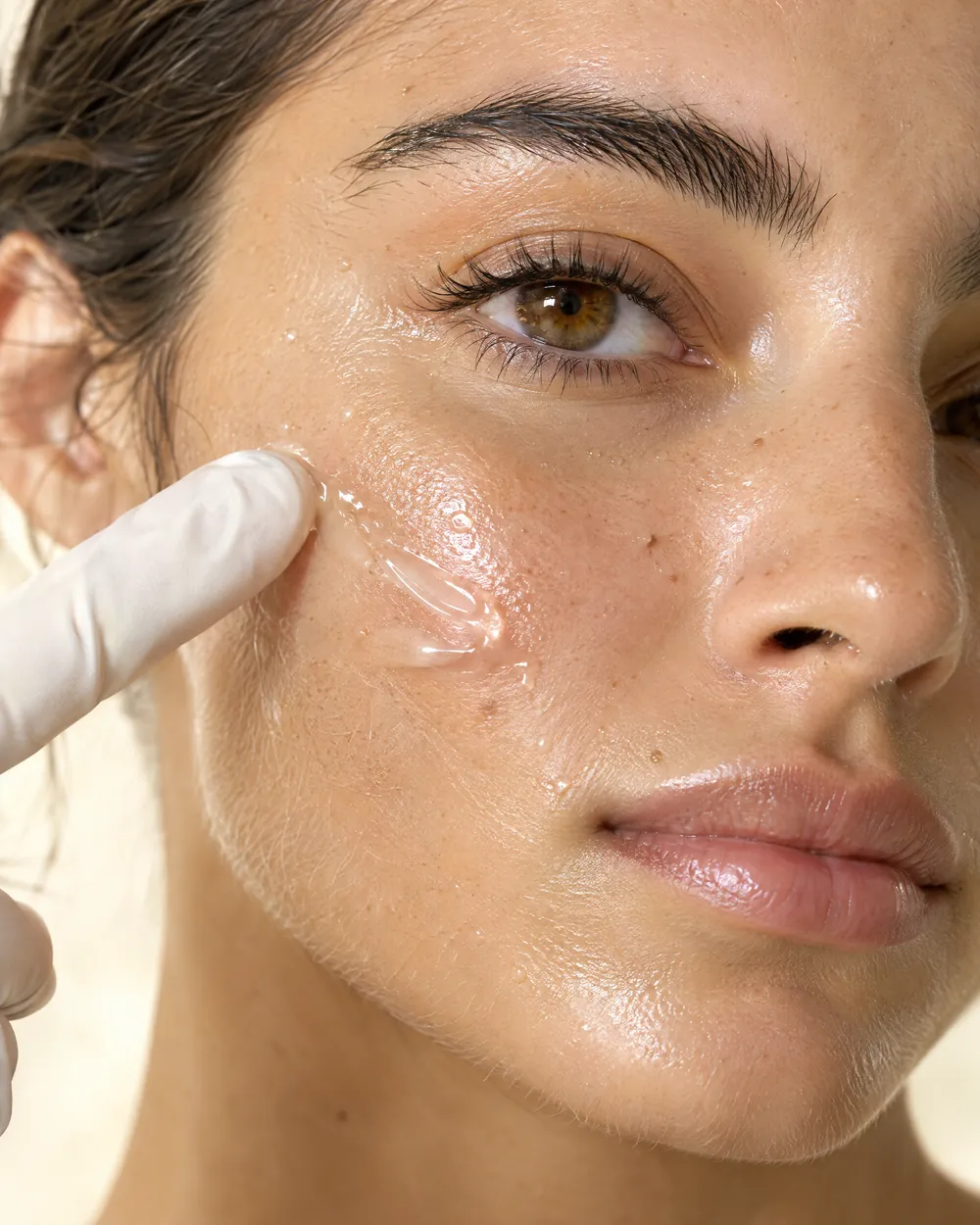
Cold air, wind, and indoor heating reduce your skin's moisture. Dry, tight, flaky skin can feel more sensitive after a session, so moisturizing the area regularly in the winter months makes sessions more comfortable. Heavy cream isn't applied to the area on session day, though. Moisturize in the days before your session and after it.
If your skin feels tight and dehydrated after a session, a gentle, fragrance-free moisturizer is enough. For clients having laser on the face who want to soothe their skin, we can add a Moisture Facial to the plan. We decide on the order and interval together at the consultation.
How do you build a winter calendar around vacations and New Year's?
The calendar is the most important part of a plan that starts in winter. Here are the steps we follow at the consultation:
- Choose your areas: We talk about which areas you want done and which one is your priority.
- Assess your skin and hair: We note your skin type, hair color and density, and any hormonal history.
- Pick your first session date: If you haven't been in the sun recently, the first session can usually take place in the days after your consultation.
- Mark your vacations: We add plans such as New Year's, the midyear school break, and ski trips to the calendar, and sessions are placed around those dates.
- Put the intervals on the calendar: Each area's session interval is planned separately, and more than one area can be done on the same day.
- Remember the spring rules: When the sun starts getting stronger, the sun rules before and after sessions become important again.
What should you do if hair grows in between sessions?
In the 1 to 3 weeks after a session, some of the hairs affected by the laser shed on their own, and some hairs may look as if they're still growing. This is a natural part of the process. Between sessions, only shave. Waxing, tweezers, and epilators aren't used because they pull out the root the laser will target at the next session.
The most efficient start in laser hair removal is to set your calendar in winter, without waiting for the first warm day.
What are the common myths about laser hair removal in winter?
- “Laser hair removal can only be done in winter.” With the right device and rules, laser hair removal can be planned all year. Starting in winter is comfortable but not required.
- “You don't need sunscreen in winter.” Uncovered areas such as the face and hands see the sun in winter too, and on a ski trip, snow reflects the light and increases the effect.
- “If hair grows between sessions, the laser isn't working.” Each session only reaches the hairs in the active growth phase at that moment, so other hairs coming in is expected.
- “In winter, it's more efficient to let your hair grow out before a session.” Shaving the day before a session is recommended. Long hairs create heat at the surface and make the session less comfortable.
When should you see a doctor?
If any of the following applies to you, we recommend talking to your doctor before you start laser hair removal.
- Hair on your face and chin is dense or increasing quickly, which can be a sign of a hormonal condition.
- You are pregnant or breastfeeding. Sessions are postponed during this time.
- You take a medication that can cause sensitivity to light.
- You have an active skin condition, a cold sore, or an open wound in the area.
- You have noticed a mole in the area that has changed in shape, color, or size.
At our center in Nişantaşı, laser hair removal starts with a consultation and takes place in closed, private rooms. We review your areas, your hair, and your winter calendar together and plan your session intervals from the start. If we see a sign at the consultation that calls for medical evaluation, we refer you to a doctor before starting.
Frequently asked questions
What is the most suitable season to start laser hair removal?
With the right device and rules, you can start laser hair removal in any season. Fall and winter are comfortable times to start, since there's less sun exposure and vacations break up session intervals less often.
If I start in November, will I be done by summer?
It depends on the area. In areas like the underarms, the process can be well along by summer, while in areas with longer intervals, like the legs, sessions continue into summer. Your total number of sessions becomes clear at the consultation, based on your hair and skin type.
Can I have laser after a ski trip?
Snow reflects sunlight, so a ski trip increases sun exposure on uncovered areas such as the face. If you have a noticeable tan or sunburn, your session may be postponed. Telling us your vacation dates at the consultation lets us plan the calendar around them.
Can I take a hot shower after laser hair removal in winter?
We recommend avoiding hot showers, saunas, hammams, and intense exercise for 24 to 48 hours after your session. A lukewarm shower is fine, but keep the area away from rough scrub mitts and friction.
Can I shave between sessions?
Yes, shaving is the only method used between sessions. Waxing, tweezers, and epilators pull out the root, which removes the laser's target, so they aren't used while you're having sessions.
Can I have laser hair removal on dry skin?
Yes. In the winter months, regularly moisturizing dry skin in the days before your session makes it more comfortable. Heavy cream isn't applied to the area on session day, and you can continue with a gentle, fragrance-free moisturizer after the session.
Published: · Vega Beauty editorial team. This article is general information and does not replace a medical diagnosis or advice; whether a service suits you is assessed at your consultation.