Hair & Scalp
Why does your scalp itch in winter? Dryness, the look of dandruff, and the hat effect
In short
In winter your scalp is under pressure from two sides: cold and wind outside, and air dried out by heating inside. Long hot showers, sweat trapped under a hat, synthetic fabrics, and going out with wet hair add to the load, and the result is often itching and flaking. But not all flakes mean the same thing. Fine, white, dry flakes usually point to dryness, while larger, oily, yellowish flakes point to the look of dandruff. Choosing the right care starts with that distinction. Redness, crusting, or itching that lasts for weeks needs a doctor's assessment.
By the end of October the heating is back on and the hats are out of the closet, and many people notice an all-day itch and white flakes on the shoulders of their coat. Most of us call it dandruff right away. But several different things can sit behind a winter itch, and each needs different care. In this post we look at how winter conditions affect the scalp, how to tell dryness from the look of dandruff, and what a simple winter routine looks like.
Why does the scalp itch more in winter?
The scalp itches more in winter because, in a single day, it deals with both cold, windy air outside and air dried out by heating inside. A few winter habits add to those two stresses:
- Heating: Humidity drops in a warm, closed room, and the scalp loses moisture more easily.
- Cold-to-warm transitions: Stepping from a cold street into a warm office or metro can increase the feeling of tightness and itching.
- Long, hot showers: Very hot water also strips away the scalp's natural oils.
- Beanies and hats: They create friction, and sweat and sebum stay trapped underneath with no air.
- Wool and synthetic fabrics: Scarves and sweater collars can feel prickly on the back of the neck, and they increase static in dry air.
- A scalp that gets less air: Long hours under hats and hoods or with your hair tied up leave the scalp feeling less fresh.
How can you tell a dry scalp from the look of dandruff?
You can usually tell by looking at the flakes and noticing how your scalp feels. Fine, white, dry flakes with a feeling of tightness usually suggest a dry scalp, while larger, oily, yellowish flakes with a greasy itch suggest the look of dandruff. Both can appear in the same person, and the comparison below does not replace a diagnosis.
| Feature | Dry scalp | The look of dandruff |
|---|---|---|
| Flakes | Fine, white, and dry; fall away easily | Larger, oily, and yellowish; may stick to the roots |
| How the scalp feels | Tight, slightly itchy | Greasy and itchy |
| Hair strands | May be dry and full of static | Get oily quickly at the roots and look heavy |
| What makes it worse in winter? | Heating, long hot showers | Washing less often, sweat and sebum under a hat |
| What helps? | Lukewarm water, a gentle shampoo, short showers, humid indoor air | Washing as often as your oiliness calls for, thorough rinsing, avoiding heavy oils |
| When to see a doctor? | Itching that lasts for weeks despite care | Redness, thick crusts, or flakes spreading to the face and behind the ears |
Why can the look of dandruff increase in winter?
When you wash your hair less often in winter and sweat and sebum build up under a hat, the look of dandruff can become more noticeable. It is generally linked to sebum and the scalp's natural balance of microorganisms: some microorganisms that live on the scalp feed on sebum, and in some people this process can contribute to skin cells shedding faster and clumping together. In this situation, the oils and rich creams suggested for a dry scalp can weigh things down rather than help.
The first step in calming an itch is knowing whether the flake is dry or oily.
How often should you wash your hair in winter?
In winter, wash your hair according to how quickly your scalp gets oily, not according to the season. Here is the dilemma: put off washing to stay warm and oil and flakes build up, but wash often in very hot water and your scalp dries out. How you wash matters more than how often:
- Keep the water lukewarm. Enjoy the hot shower on your body, then wash your hair at the end with cooler water.
- Apply shampoo to the scalp and conditioner only to the lengths and ends.
- Work the shampoo in with your fingertips, not your nails.
- Rinse for a long time. The back of the neck and behind the ears are where foam tends to linger.
How do beanies and hats affect the scalp?
A hat protects your scalp from the cold, but friction, sweat, and lack of air can make itching worse. When you walk into a warm place wearing a hat, your scalp sweats, and once sweat and sebum are trapped under the fabric, the itchy, oily feeling becomes more noticeable. You don't have to give up hats. A few habits are enough:
- Wash your hat often. A hat that goes unwashed all season collects sweat, sebum, and product residue.
- If wool makes you itch, choose styles lined with cotton or silk.
- Take your hat off indoors. If you have been sweating, lift your roots with your fingers to let air in.
- Don't put a hat on wet or damp hair.
Does going out in the cold with wet hair affect the scalp?
Yes. Going out in the cold with wet hair keeps the scalp damp and cold for a long time, and a hat on top creates a warm, moist environment, which can contribute to itching. The solution is to dry your hair at the roots too, but a blow-dryer is drying in its own right: use medium heat, keep it a little away from your scalp, and don't hold it in one spot. Pressing the water out with a towel first shortens the drying time.
How do you build a simple winter scalp routine?
A simple winter routine comes down to a few steady steps that cut back the heat drying out your scalp and regularly clear away built-up oil:
- Set your washing frequency by how oily your scalp gets, and keep to that rhythm all winter.
- Wash with lukewarm water. Keep the shower short and the rinse long.
- Keep styling products and rich creams away from your roots.
- Before going out, dry your roots on medium heat, and put your hat on dry hair.
- Wash your hats, scarves, and pillowcases often.
- Add new products one at a time and watch how your scalp responds over a few weeks.
How do your home and diet affect your scalp in winter?
Indoor humidity, water, and a balanced diet are the background that supports your scalp's moisture balance through the winter. In heated homes, briefly airing out rooms during the day and running a humidifier in the bedroom can help reduce dryness. You feel less thirsty in winter, so remember to spread your water intake across the day. We cover the link between diet and hair in our blog post on nutrition for stronger hair.
Are winter itching and seasonal hair loss the same thing?
No. Itching and flaking concern the surface of the scalp, while seasonal hair loss concerns the hair growth cycle. They are often confused because they fall in the same months. We explain when shedding counts as normal in our blog post on seasonal hair loss. If the itching comes with a bare patch, that is a matter for a doctor.
What does professional care add for the scalp in winter?
Professional care adds the cleansing and moisture steps a home routine can't reach. Which of them makes sense depends on what the scalp analysis shows:
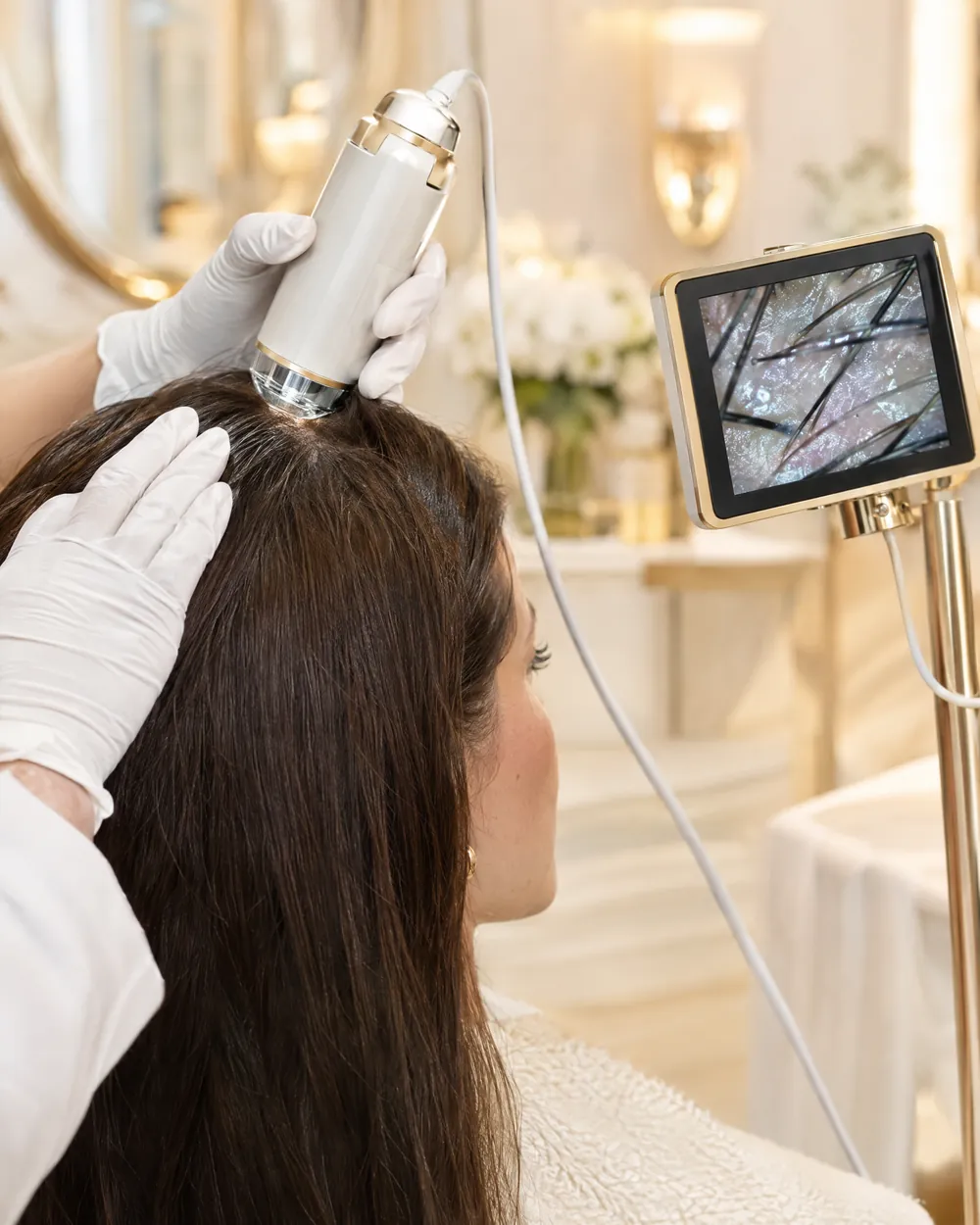
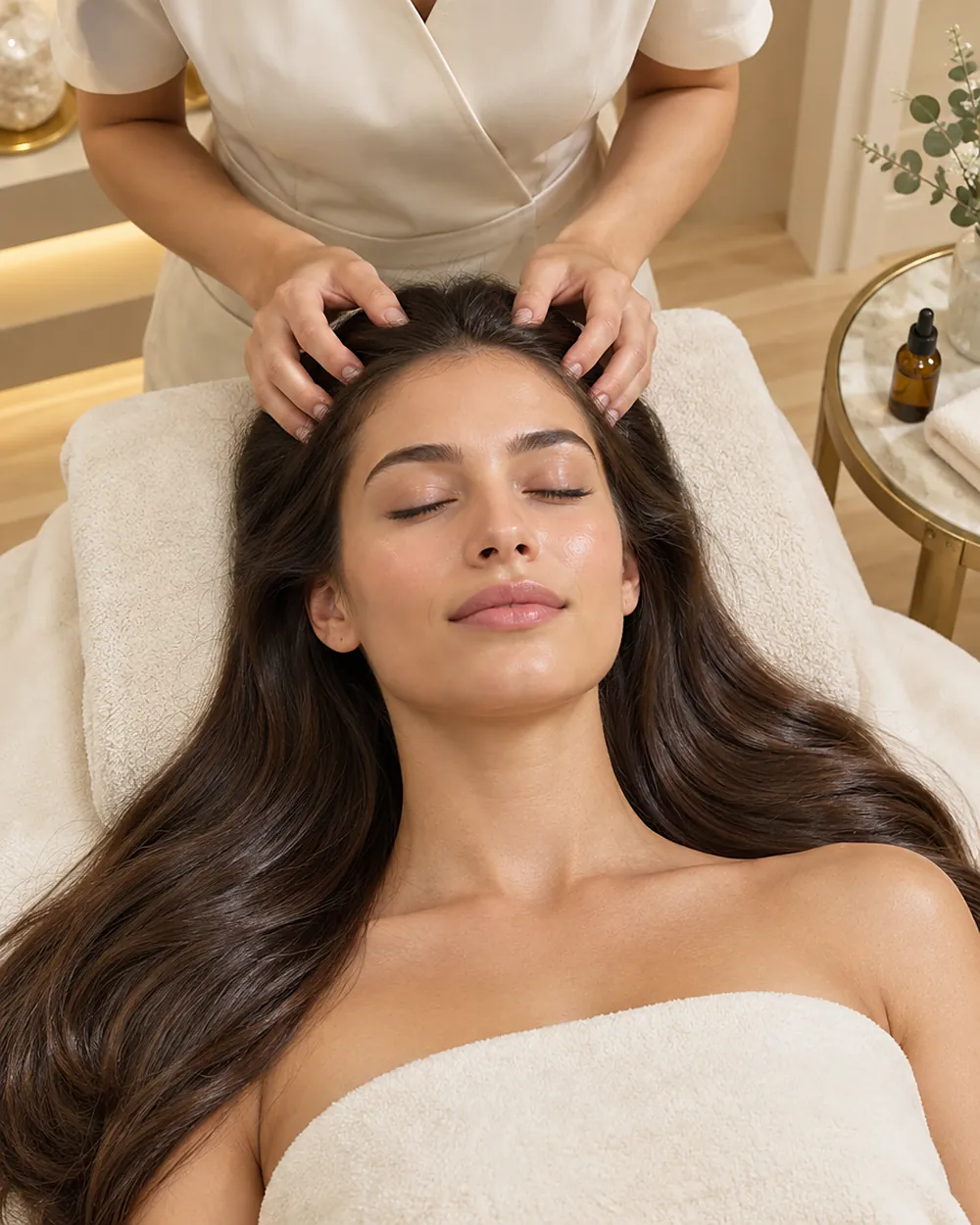
- Scalp Care: Starts with an analysis using a magnifying camera. A purifying peel clears away built-up sebum and flakes, followed by a balancing serum and massage. It takes 45–60 minutes and is usually planned every 2–4 weeks. On a dry, sensitive scalp, the cleansing step is kept gentler.
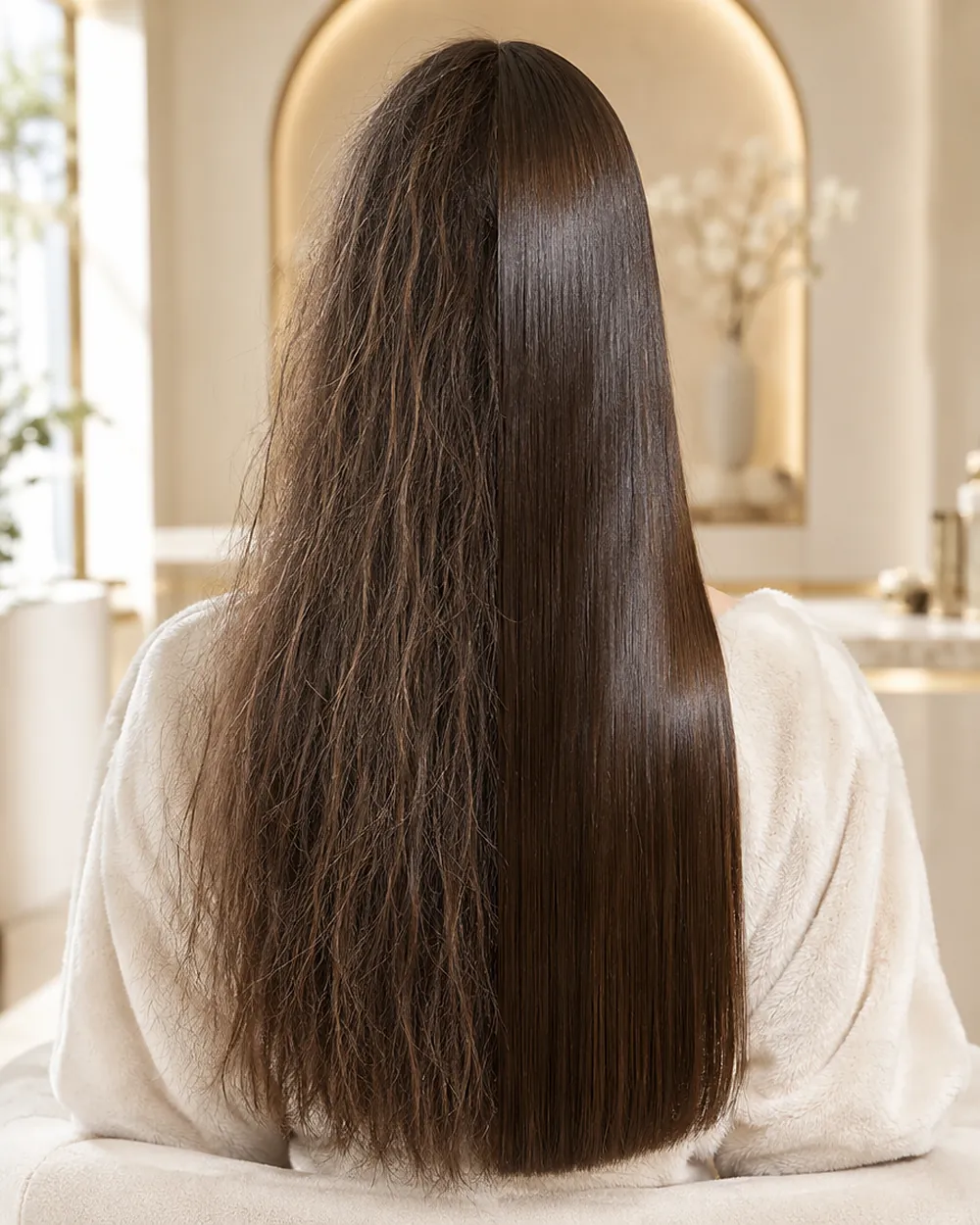
- Hair Care: Focuses on hair left dry and full of static by heating and hats, using mask, serum, and moisture steps. It takes 45–60 minutes and is planned 1–2 times a month.
- Hair Revitalizing Care: For hair flattened under a hat and heavy at the roots, it combines cleansing, a light nourishing mask, and scalp massage. The goal is a lighter, fuller, shinier look. It is planned 1–2 times a month.
If you have significant redness or an open wound on your scalp, we postpone the session and recommend seeing a dermatologist first.
What are common myths about the winter scalp?
- “An itchy scalp in winter is a dry scalp, so a little oil will fix it.” If the flakes are large, oily, and yellowish, you are closer to the look of dandruff, and oil on the scalp can make it worse.
- “An itchy scalp should be washed less often.” This can work for a dry scalp, but with the look of dandruff, washing less increases buildup. What matters is the type of flake and the water temperature.
- “Anti-dandruff shampoo works faster if you use it every day.” These shampoos are made to be used according to the directions on the package, and using them more often than needed can increase dryness on some scalps. If you aren't sure which product suits you, ask your doctor.
- “Dandruff is contagious.” The look of dandruff is linked to sebum and the balance of microorganisms on a person's own scalp. It is not considered contagious.
- “Your scalp doesn't sweat in winter.” On a warm metro or in a store, the scalp under a hat does sweat, and sweat with no air can increase itching.
When should you see a doctor?
Most winter itching settles with better care habits. But if you notice any of the signs below, we recommend seeing a dermatologist before any care.
- Marked redness, oozing, sores, or thick crusting on the scalp.
- Flaking that spreads to the eyebrows, the sides of the nose, behind the ears, or past the hairline.
- Patchy hair loss or bare spots on the scalp.
- Severe itching that disturbs your sleep or that you can't stop scratching.
- Burning, swelling, or intense redness that starts after a new shampoo or hair dye.
- A complaint that lasts for weeks even after you have adjusted your care habits.
These signs may point to conditions that need a doctor's assessment, such as seborrheic dermatitis or psoriasis, and telling them apart is a doctor's job.
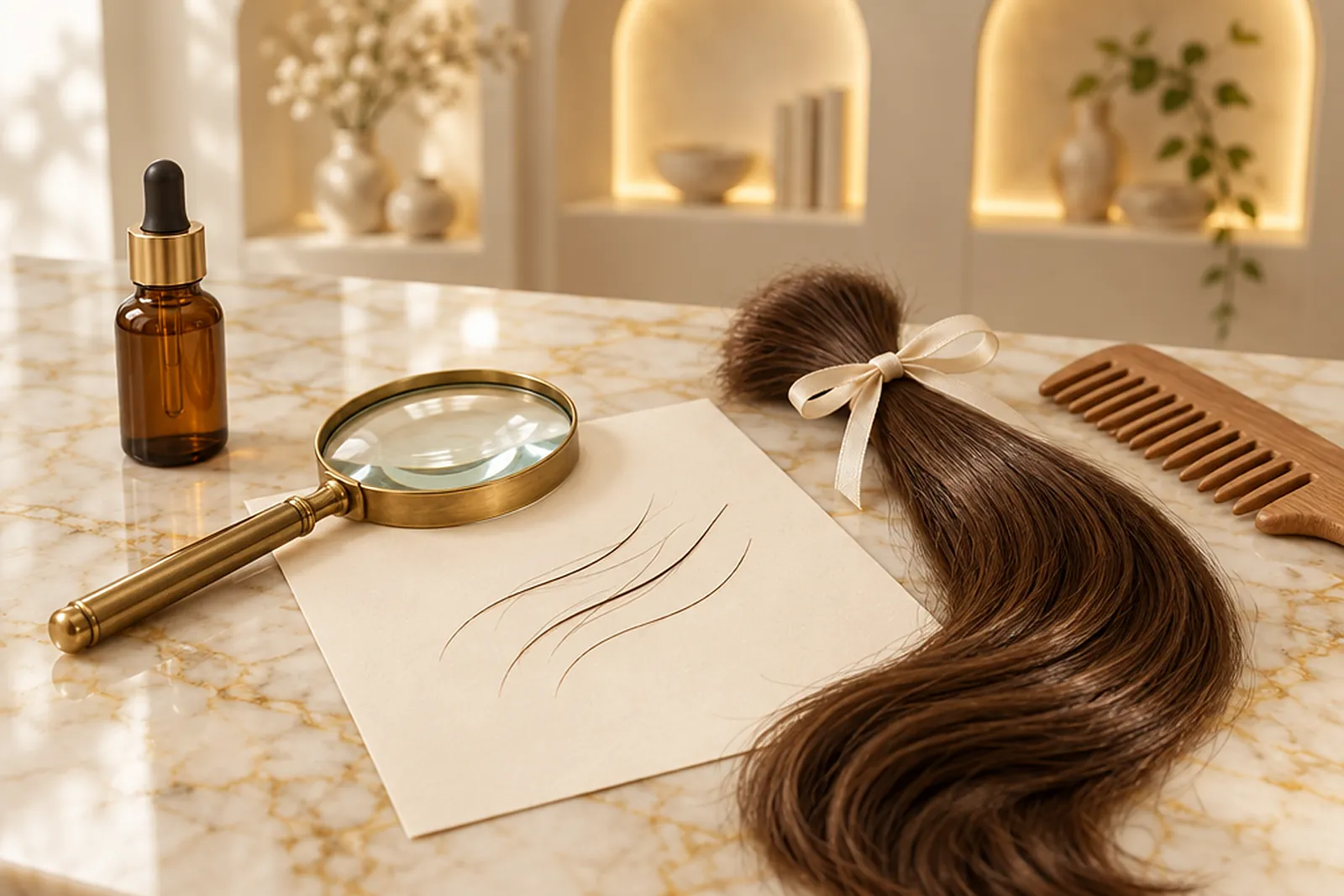
At our center in Nişantaşı, winter scalp care also begins with a consultation and a scalp analysis using a magnifying camera. We look at the image together to decide whether your itching is closer to dryness or buildup. Vega Beauty is a beauty and care center. If we see a sign on your scalp that needs a medical assessment, we refer you to a dermatologist before starting any care.
Frequently asked questions
My scalp itches but I don't see any flakes. What could be causing it?
Itching can happen without flakes. Common causes include dry indoor air, sweat trapped under a hat, wool or synthetic fabric rubbing the back of your neck, and product residue at the roots. Simplifying your routine for a few weeks and watching what happens is a good start. If the itching doesn't ease, see a doctor.
Does putting conditioner on my roots help with dryness?
Generally, that isn't recommended. Conditioner is made for the hair strand, and it can leave residue at the roots that contributes to a heavy feeling and itching. If your scalp is dry, switching to lukewarm water, a gentler shampoo, and shorter showers is a more balanced approach. We can look at whether you need a scalp-specific product during your analysis.
Why does the look of dandruff come back every winter?
Many people notice that the look of dandruff rises and falls with the seasons. Longer gaps between washes, sweat and sebum building up under a hat, and long hours indoors can all contribute in winter. If it returns every winter and doesn't improve with care, it is wise to have a dermatologist assess it.
Does hair dye make scalp itching worse in winter?
Dyes and lighteners can increase stinging and itching on a scalp that is already dry and sensitive. In the winter months, it helps to tell your hairdresser about the state of your scalp before coloring. If burning, swelling, or marked redness begins after coloring, we recommend seeing a doctor without delay.
When does it make sense to start winter scalp care?
The point when the heating comes on is a good time to check the state of your scalp, before any itching becomes noticeable. The analysis looks at oiliness, dryness, and buildup together, and the type and frequency of care are planned from there. If you are already itchy, there's no need to wait: just tell us about it at your consultation.
Published: · Vega Beauty editorial team. This article is general information and does not replace a medical diagnosis or advice; whether a service suits you is assessed at your consultation.