Skin Care
If your skin reacts to every product: sensitive or sensitized?
In short
Skin that reacts to every product can point to two different situations. Inherently sensitive skin has usually been quick to react for years. Sensitized skin used to be trouble-free and became reactive later, under the load of layered active ingredients, frequent peels, harsh cleansers, hot water, or climate stress. The symptoms look alike: stinging, burning, and redness. What sets them apart is how the problem started and how it behaves over time. Inherent sensitivity is managed over the long term, while sensitized skin usually recovers through a 2–4 week reset, not through a new product. Reactions that continue despite the reset, or that come with itching, swelling, or blisters, are a matter for a doctor.
Your new serum burns, a cream you've used for years suddenly stings, and even water may feel uncomfortable. At this point most people label themselves “sensitive” and add one more calming product to the shelf. But skin that reacts to everything isn't always sensitive by nature; sometimes it's simply worn out. This article explains how to tell the two apart and how a reset period works.
What does sensitive skin mean?
Sensitive skin responds with stinging, burning, redness, or tightness to products and environmental changes that most people tolerate without trouble. It's a description, not a diagnosis. As we explained in our blog post on skin types, sensitivity can show up in any skin type. Common signs include:
- A stinging or burning feeling when you apply a product.
- Redness that appears easily on the cheeks and around the nose.
- Tightness that lingers after washing, sometimes with patches of flaking.
- Makeup that looks rough and won't sit well on your face.
- Every new product, sometimes even a moisturizer, seems to “burn.”
What's the difference between inherent sensitivity and sensitized skin?
The difference lies less in the symptoms than in how they began and how they progress. Inherent sensitivity is a long-known trait of your skin. Sensitized skin starts during a particular period and often settles once the load eases. It belongs to the person who says, “I used to be able to put anything on my face.” The last column of the table shows situations that fall outside the scope of skin care.
| Topic | Inherently sensitive skin | Sensitized (overworked) skin | What a doctor should assess |
|---|---|---|---|
| Onset | Long-standing, often since your younger years | Tied to a specific period: a new routine, a series of peels, a harsh winter | Sudden, or with a new medication, product, or procedure |
| Triggers | Hot-to-cold shifts, wind, heavy fragrance | Layered actives, frequent peels, harsh cleansers, hot water | May continue even without an obvious trigger |
| Course | Up and down, with calm and flare-up periods | Usually settles within a few weeks once the load eases | Continues despite a reset; itching, swelling, or blisters may appear |
| What should you do? | Long-term management with a short, consistent routine | A reset, then adding products back one at a time, with gaps between them | See a dermatologist before planning any care |
This distinction changes your care decisions. Inherent sensitivity doesn't go away; it's managed. Sensitized skin usually recovers by taking things out, not by adding something new.
How can you tell your skin has become sensitized?
Timing is the strongest clue. If the reactions began during a particular period and your routine got more crowded around then, your skin may be sensitized. These questions can help:
- Has a product you've used without trouble for years started to sting in recent months?
- In the months before the reactions, did you add an acid, a retinoid, or a peel to your routine?
- Are you applying more products each day than you were a year ago?
“Yes” answers point toward a reset. If you answer “no” to all of them and the reactions started on their own, take a look at the doctor list at the end of this article.
Which habits strain the skin?
Usually it isn't a single product but well-meant habits stacked on top of one another. We explained how the moisture barrier works in our blog post on dehydrated skin. The most common examples:
- Using more than one acid, or an acid with a retinoid, on the same evening.
- Peeling several times a week, then scrubbing with grainy products on top of that.
- Washing with harsh, high-foaming cleansers and hot water, then rubbing dry with a towel.
- Trying a new serum every few weeks and layering heavily fragranced products.
- Skipping sunscreen; skin strained by active ingredients can become even more sensitive to the sun.
Pushing through the burn belongs on this list too. Stinging and burning don't mean a product is “working.” They mean your skin can't tolerate it at that moment. Burning that comes back with every use or leaves redness behind is a warning.
Your surroundings add to the load as well. Air dried out by radiators and air conditioning as winter approaches, shifts between hot and cold, wind, and friction from scarves or masks can all intensify the reactions of sensitized skin. Adding a cotton layer under a wool scarf may help.
The first answer to skin that reacts to every product isn't a new product. It's a shorter routine.
How does a reset period work?
A reset means cutting your routine down to three basic steps for 2–4 weeks and giving your skin time to recover: a gentle cleanse, a fragrance-free moisturizer, and sunscreen. This is a care suggestion, not a medical protocol.
- Before you start, take photos of all your products; this list will guide you when you add them back.
- Stop acids, retinoids, peels, and grainy products. Don't stop anything your doctor recommended on your own, though.
- Use lukewarm water and a gentle, low-foaming cleanser, and press your skin dry with a towel instead of rubbing.
- Stay on this routine for 2–4 weeks. It's normal not to see a clear change in the first week.
- Once your skin has calmed down, add products back one at a time, every other day at first, and wait at least a week or two before moving on to the next one.
- Each time you add something back, write down the product, the date, and how your skin responded.
If reactions continue despite the reset, your routine may not be the only cause. See a dermatologist.
How can you safely try a new product?
Testing a new product on a small area, on its own, for a few days means you'll know the source if a reaction happens. Apply a small amount behind your ear or under your jaw and repeat on the same spot for a few days. If there's no problem, move to a small section of your face, then the whole face. Don't start more than one new product at a time. A trouble-free test doesn't mean your whole face won't react; it's only a first screening.
What should you look for on a product label?
Pay less attention to the promises on the front and more to the ingredient list on the back. Your skin responds to what's inside, not to the wording on the package. Ingredients linked to reactions in some sensitive skin include:
- Heavy fragrance: shown in the ingredient list as “parfum” or “fragrance.”
- Essential oils: such as lavender, mint, eucalyptus, and citrus oils. These are often part of where a pleasant scent comes from.
- High levels of alcohol: if “alcohol denat.” is near the top of the list, the product may be drying and stinging on some skin.
Words like “for sensitive skin” or “natural” on the front describe the manufacturer's intent, not the result on your skin. Some products labeled “unscented” may also contain ingredients that mask scent.
Can sensitive skin have professional facials?
Yes. Professional care is usually possible for sensitive skin, but the protocol is adapted to your skin, and sometimes the right decision is to wait a few weeks. If your skin is stinging or noticeably red that day, we wait for it to calm down with a reset first.
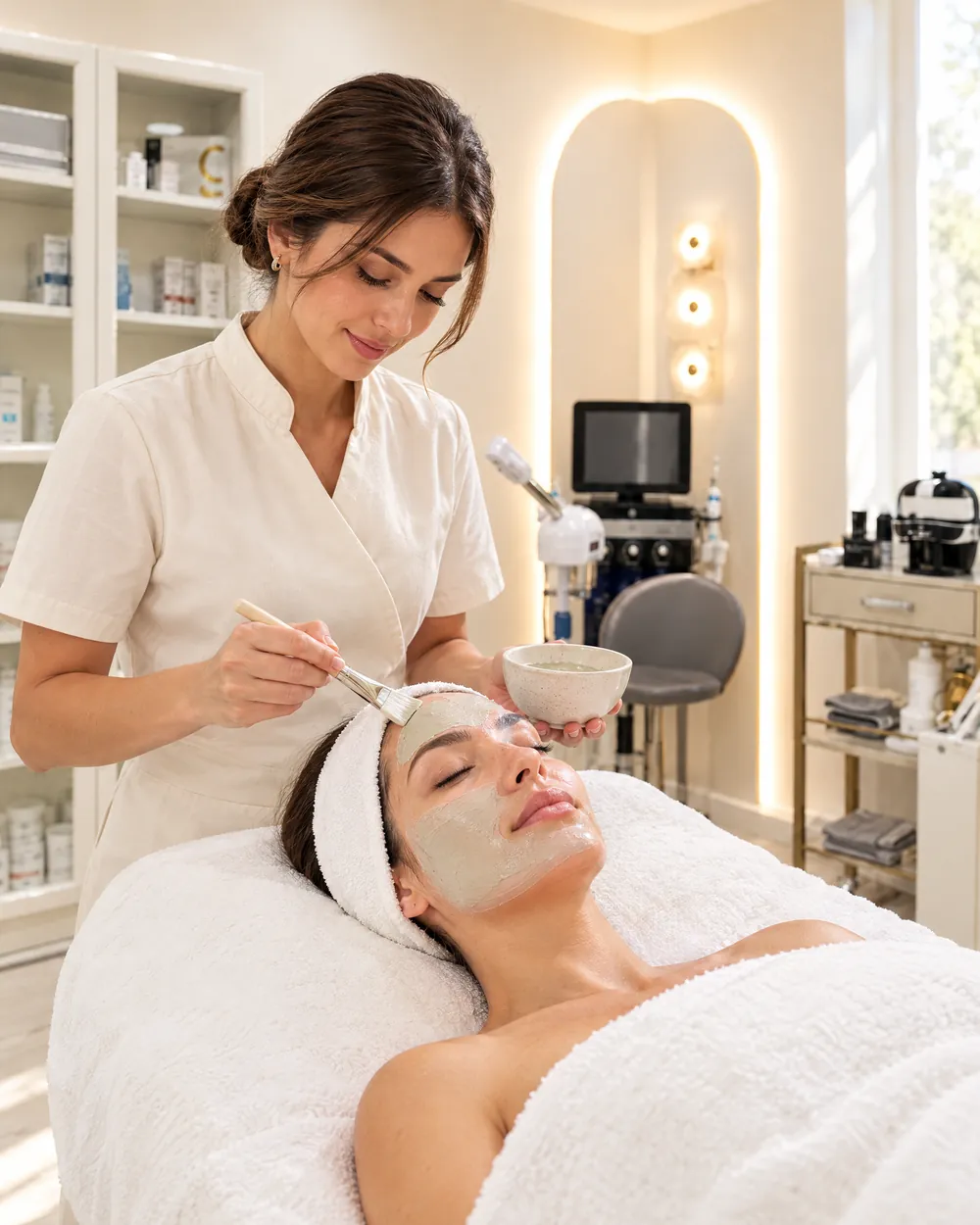
- Moisture Facial: with calming, barrier-supporting steps, this is the facial we turn to most often for sensitized skin.
- Professional Facial: starts with an analysis; peel strength and steps are chosen based on how your skin is that day.
- Classic Facial: the steam and extraction steps can be hard on sensitive, redness-prone skin, so in that case we suggest a gentler protocol.
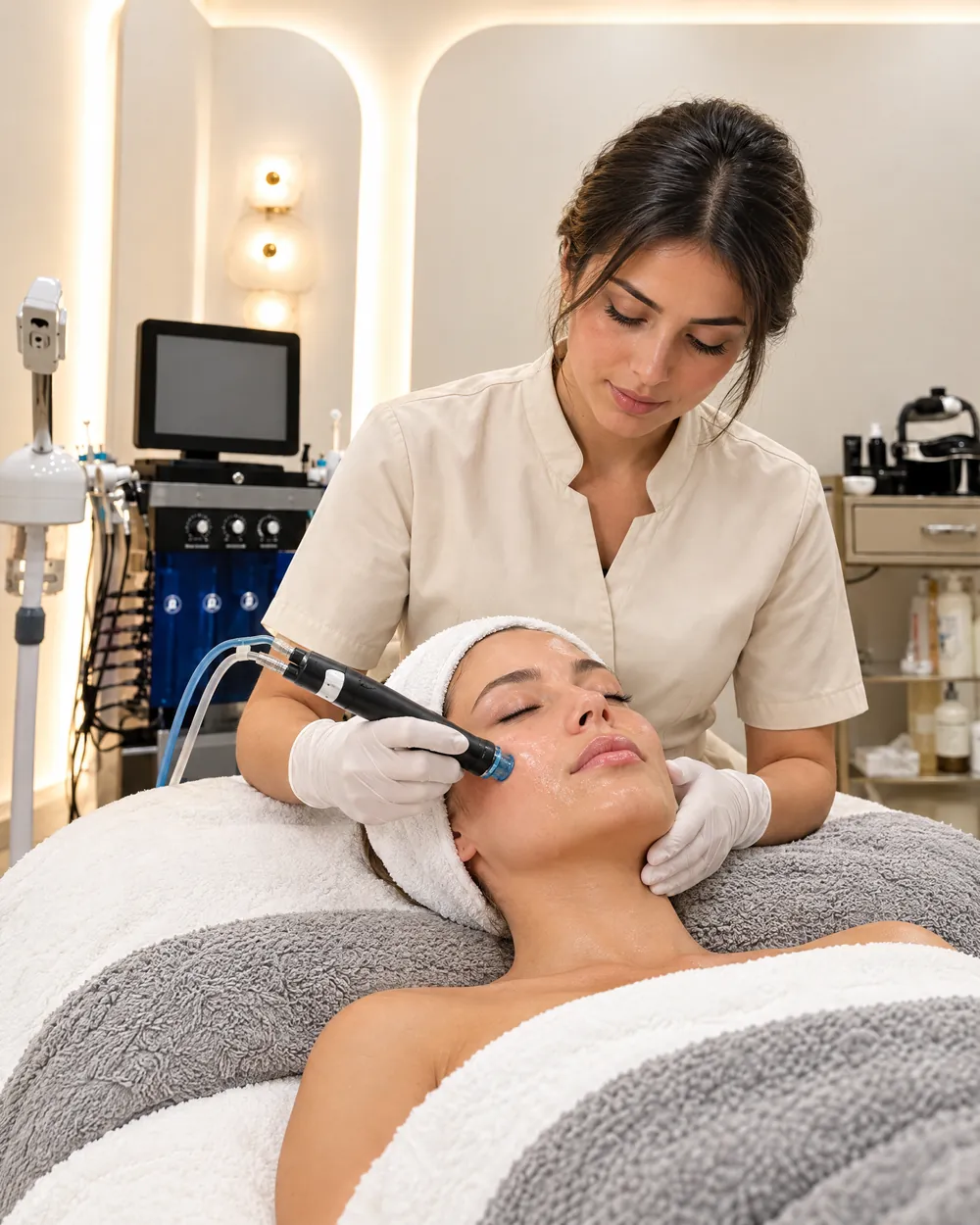
- Hydrafacial and Oxygeneo Facial: we decide whether they suit you during your skin analysis; for skin with constant redness, we ask for a doctor's opinion first.
Depending on the type of facial, retinol and acid products are paused 3–5 days beforehand.
Laser hair removal on sensitive skin
Sensitive skin alone doesn't rule out laser hair removal. The cooled head of the Soprano Ice Platinum keeps the skin's surface cool, and if needed, we do a test shot on a small area first. After the session, a fragrance-free moisturizer supports your skin's comfort.
What should you prepare for your consultation?
The most helpful thing you can do is come to your initial consultation with photos of all your products, with the ingredient lists readable. We also talk about:
- When you started each product and which ones sting.
- Services you've had in recent months and any devices you use at home.
- Medications and supplements you take; some can affect your skin's sensitivity and how it responds to the sun.
Our specialist then examines your skin under a magnifying light. Sometimes what we suggest at the end of the visit isn't a facial but a few weeks of resetting at home, and we'll tell you that plainly.
What are the common myths about sensitive skin?
The most common myth is that sensitivity is a fixed fate. Here's what we hear most often:
- “Once skin becomes sensitive, it stays that way.” Sensitized skin usually recovers when the load eases, and inherently sensitive skin can be kept calm with a consistent routine.
- “If you have sensitive skin, professional facials aren't for you.” What changes is the steps, not the care itself; a suitable protocol can be built by taking out the harsher steps.
- “Sensitive skin can't use sunscreen.” Stinging usually comes from a particular formula; fragrance-free options with mineral filters are more comfortable on a lot of sensitive skin.
- “The more calming products, the better.” Whatever the label says, every new product means a new ingredient list. For sensitized skin, two or three simple products do more.
When should you see a doctor?
The signs below are for a doctor, not a facial. They may point to conditions such as rosacea or eczema that need a doctor's evaluation. If you notice any of them, see a dermatologist before trying a new product or facial.
- Redness that becomes persistent in the center of the face, on the nose and cheeks, along with more visible fine blood vessels.
- Pimple-like bumps along with the redness.
- An itchy rash, oozing, or crusting.
- Swelling of the eyelids or lips; if it comes with shortness of breath, get emergency help right away.
- A reaction that lasts for weeks or gets worse despite a reset.
- A skin change that appears along with a new medication; talk to your doctor and don't stop the medication on your own.
At our center in Nişantaşı, the process starts with a consultation and skin analysis, and based on that assessment we decide together whether a facial or a reset comes first. Vega Beauty is a beauty and care center; if we see a sign during the analysis that calls for medical evaluation, we'll refer you to a dermatologist.
Frequently asked questions
Why should a reset last at least two weeks?
The skin's surface renews itself over a cycle of several weeks, and a strained surface needs time to settle too. You may feel relief in the first few days, but balance often takes weeks to return. Bringing actives back too early can send your recovery back to the start, so we suggest sticking to the schedule and not rushing.
Should I also stop a cream my doctor recommended during a reset?
No. Products you use by prescription or on a doctor's advice aren't part of a reset, and any change to them is your doctor's decision. If you have a reaction while using them, tell the doctor who recommended the product. Be sure to mention it at your consultation too, so we can plan your care at the center and your home routine around it together.
Can I wear makeup during a reset?
Yes, but using fewer products during this period makes things easier on your skin. Choose fragrance-free products with short ingredient lists, and take your makeup off at the end of the day with a gentle cleanser, without rubbing. Washing your brushes and sponges regularly also helps reduce the load that touches your skin every day.
Can my sensitivity change with my menstrual cycle or stress?
Some people notice their skin reacts more easily in the days before a period, or during times of heavy stress or poor sleep. To see this pattern, it helps to keep notes on dates, products, and reactions for a few weeks. If a pattern repeats, you can plan new product trials for calmer days.
What should I do if my skin turns red after a facial?
Some sensitive skin looks slightly pink after a facial, and this usually settles quickly. In the meantime, keep your skin cool, use only moisturizer and sunscreen, and pause active products for a few days. If the redness lasts or burning and swelling appear, contact us without delay.
Published: · Vega Beauty editorial team. This article is general information and does not replace a medical diagnosis or advice; whether a service suits you is assessed at your consultation.