Skin Care
Hydrafacial or Oxygeneo? Choosing the right one for your skin
In short
Both are professional facials that cleanse and refresh the skin, but their methods differ. Hydrafacial focuses on pores and hydration through vacuum-assisted cleansing, while Oxygeneo emphasizes gentle exfoliation, oxygenation, and radiance. If pores and hydration are your priority, Hydrafacial is a more suitable starting point for most people; if dullness and rough texture are, Oxygeneo is. A skin analysis makes the final call.
What is a Hydrafacial, and how does it work?
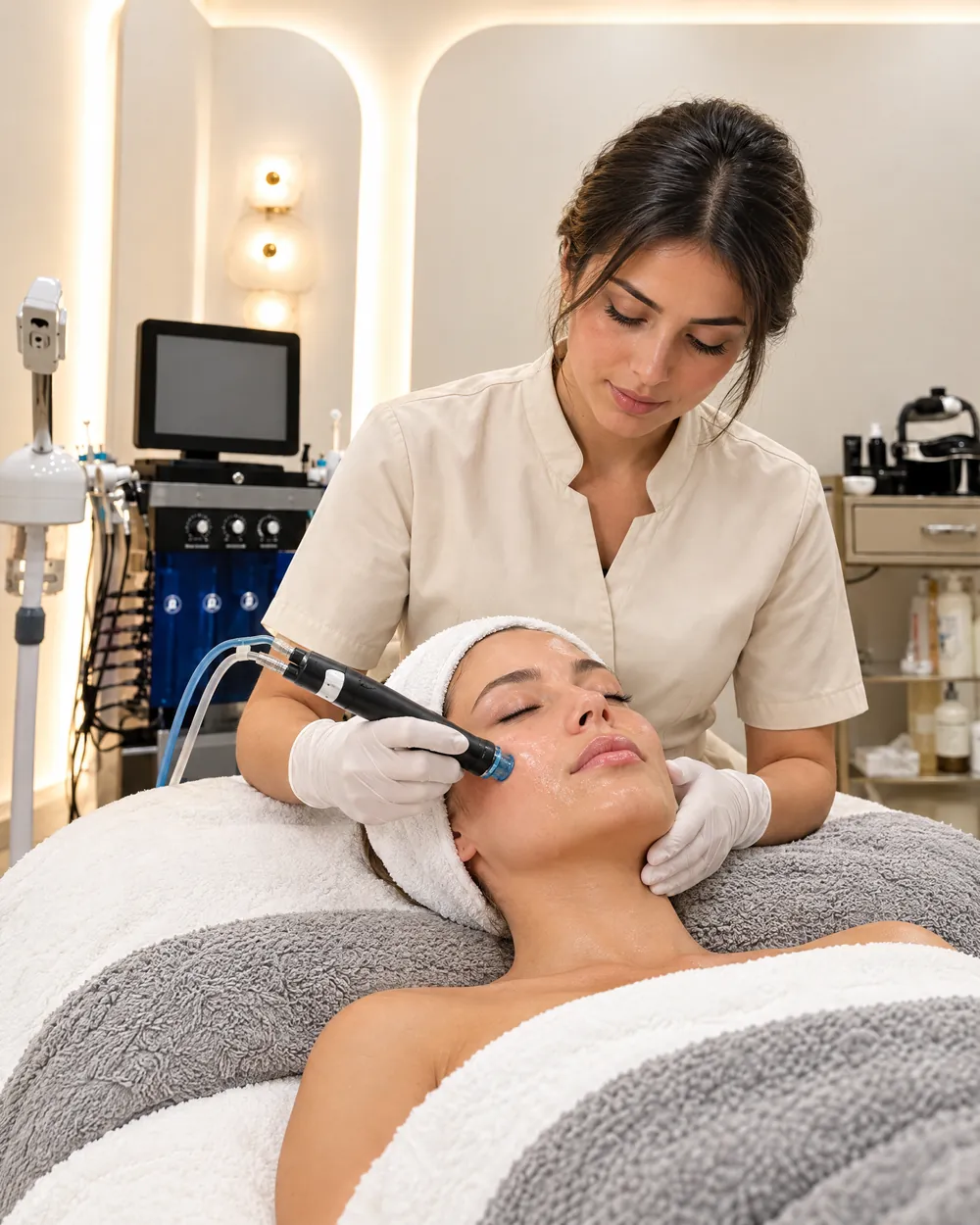
A Hydrafacial is a multi-step professional facial that uses a vacuum-assisted spiral tip to cleanse, purify, and hydrate the skin. First, dead cells are gently removed. Then sebum and blackhead buildup in the pores is vacuumed out without squeezing. In the final stage, the same tip delivers serums with hydrating and antioxidant ingredients to the skin.
- Cleansing and gentle exfoliation: dead cells and dirt are removed from the skin's surface.
- Pore softening: a gentle acid solution loosens the contents of the pores.
- Vacuum extraction: blackheads and sebum buildup are removed without squeezing.
- Hydration and antioxidant infusion: serums selected for your skin's needs are delivered.
- Protection: the facial finishes with moisturizer and sunscreen.
During the session, most people describe a cool feeling and a slight pulling sensation. Because there is no squeezing, any redness afterward is usually mild and brief.
What is Oxygeneo, and how does it work?
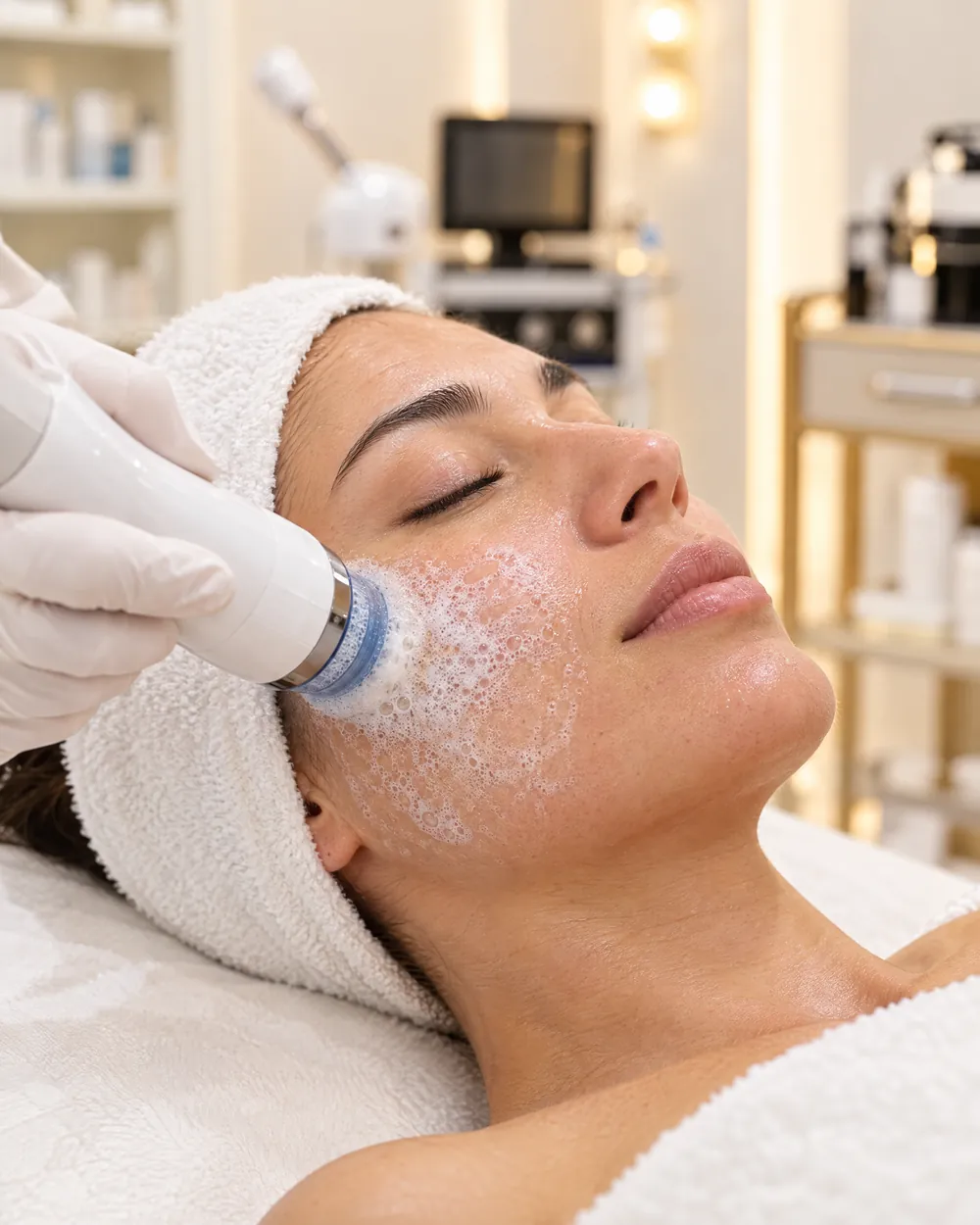
Oxygeneo is a three-stage facial that gently exfoliates the skin, creates a foam that supports oxygenation at the surface, and then improves serum penetration. When the gel surface, called a capsule, touches the skin, a fine foam forms. This foam supports the skin's own oxygenation process.
- Stage 1, gentle exfoliation and oxygenation: the capsule smooths the skin's surface and the foam forms.
- Stage 2, serum infusion: ultrasound helps active serums penetrate the skin.
- Stage 3, massage and a firming feel: gentle massage heads finish the facial.
You may feel a slight tingling during the session. Afterward, skin usually looks pinker, livelier, and more radiant, and this look settles within a few hours.
What are the differences between Hydrafacial and Oxygeneo?
The main difference is focus: Hydrafacial stands out for pore cleansing and hydration, Oxygeneo for renewal and radiance. The table below makes it easy to see the two facials side by side.
| Feature | Hydrafacial | Oxygeneo |
|---|---|---|
| Main focus | Pore cleansing and hydration | Renewal, radiance, and smoother texture |
| Method | Vacuum-assisted spiral tip | Capsule exfoliation, foam, and ultrasound |
| Sensation during the session | Cool, with a slight pulling feel | Mild tingling and foam |
| Duration | Usually 45–60 minutes | Usually 45–60 minutes |
| Afterward | You can usually get back to social plans the same day | You can usually get back to social plans the same day; brief pinkness is possible |
| Needs it suits | Blackheads, visible pores, dehydration | Dullness, rough texture, a tired look |
Which one suits which skin need?
If your pores are visible and your need for hydration is high, Hydrafacial is generally the more sensible starting point; if your skin is dull and rough, Oxygeneo is. Still, skin doesn't fit into a single category, and the same person can have different needs from one season to the next.
When Hydrafacial stands out
- Skin with visible pores that tends toward blackheads
- Dehydrated, tight, matte-looking skin
- Combination or oily skin that needs regular purifying
- Anyone who wants a quick refresh before an important day
Combination skin is a little more complicated: the T-zone can get oily while the cheeks look dry and matte. On this kind of skin, Hydrafacial's purifying effect helps the T-zone, and the hydrating infusion helps the cheeks. For dry, thin skin, gentler settings and hydration-focused serums are preferred.
When Oxygeneo stands out
- Skin that has lost its radiance and looks dull and tired
- Skin with rough texture and a slightly uneven tone
- Anyone looking for a renewed feeling at the end of winter or after a busy period
Who are these facials not suitable for?
If you have active, inflamed breakouts, an open wound, or a recent intense peel or other procedure that left your skin sensitive, the facial is usually postponed. If you suspect a condition such as acne, rosacea, or eczema, see a dermatologist first; assessing these conditions is outside the scope of a beauty and care center.
- An open wound, cold sore, or sign of active infection in the area
- A sunburn or deep tan in recent weeks
- Strong active ingredients recommended by a doctor that can thin the skin
- Certain serums and current-based services during pregnancy (assessed at your consultation)
How often should you have these facials?
A common plan is a few sessions 3–4 weeks apart to start, then maintenance sessions once a month or at the change of seasons. Your home care, sun protection habits, and how your skin responds can change this frequency. Because the skin's renewal cycle takes a few weeks, having sessions too often adds no extra benefit; regularity matters more than frequency.
A sample yearly facial plan
As a general example of what a rotating plan can look like: at the end of summer, when sun and sweat have made pores more visible, you might focus on purifying with a few Hydrafacial sessions. In the winter months, when indoor air and cold weather bring dullness to the fore, Oxygeneo can support a feeling of renewal. In spring, one of the two is chosen according to the state of your skin at the time. This is only an example; the real plan is always shaped by your skin analysis and how your skin responds.
What should you watch for before and after a facial?
Staying away from products that strain your skin for a few days beforehand, and paying attention to moisture and sun protection afterward, supports the result.
- Pause retinol and strong acid products for 3–5 days beforehand.
- Try not to wear heavy makeup on the day of your facial.
- Skip makeup for the first few hours afterward so your skin can absorb the serums.
- Avoid saunas, hammams, and heavy sweating for the first 48 hours.
- Use sunscreen every day, and don't skip your moisturizer.
How does the facial process work at Vega Beauty?
At Vega Beauty, every facial process begins with an initial consultation and skin analysis to get to know your skin and your expectations. We talk about your skin type, sensitivities, the products you use, your lifestyle, and any procedures you've had before. Whether the answer is Hydrafacial, Oxygeneo, or a rotating plan of both becomes clear in this conversation.
- Consultation: we talk through your skin history, routine, and expectations.
- Skin analysis: we assess hydration, oiliness, pore visibility, texture, and sensitivity.
- Personal plan: we decide together which facial to have and how often.
- Session: the facial takes place in a private room, with settings suited to your skin.
- Follow-up: at your next session we assess how your skin responded and update the plan if needed.
At our center in Nişantaşı, you also receive a simple home care recommendation after your session to use until your next facial. What really extends the effect of a professional facial is the care you give your skin in the days between sessions. Pricing is shared at your consultation, based on your personal plan.
Which one should you choose before an important day?
Before an important day such as a wedding, party, or photo shoot, Hydrafacial is generally preferred because any redness afterward is very mild and brief for most people. Planning the facial a few days before the event gives your skin time to recover from any small reactions. If you've never tried these facials, we recommend booking your first session at least a week or two before the big day.
How do you support it with home care?
After either facial, keeping your skin's moisture balance and protecting it from the sun helps the result last longer. A gentle cleanser, a moisturizer suited to your skin, and a broad-spectrum sunscreen used every day are the three pillars of a basic home routine. If you'd like to add active ingredients, bring it up at your consultation so it's easier to plan around your facial schedule. Because your skin's needs change with the seasons, it's also a good idea to review your home routine in fall and spring.
What are the common misconceptions about these facials?
The most common misconception we hear is expecting a lasting change from one session. Professional facials support the look of your skin; home care and regularity determine how long it lasts.
- “The more often I do it, the better.” Skin needs time to renew itself.
- “These facials can't be done on sensitive skin.” With gentle settings, a session can be planned for most sensitive skin.
- “The popular facial suits everyone.” The right facial is chosen according to what your skin needs at the time.
The right facial isn't the most popular one; it's the one your skin needs today.
At our center in Nişantaşı, every facial takes place in a private room and begins with a skin analysis. If you're wondering which one suits you, we can look at it together at your consultation.
Frequently asked questions
Can Hydrafacial and Oxygeneo be done on the same day?
This is generally not recommended. Both have an exfoliating effect on the skin's surface, so having them back to back can strain your skin more than necessary. To see how your skin responds, it's better to leave a few weeks between them; a rotating plan gives a more balanced result for most people.
Which is preferred for sensitive skin?
For sensitive skin, Hydrafacial on gentler settings is usually preferred because the session is cool and controlled. But the cause of sensitivity varies from person to person. The final decision comes from the skin analysis at your consultation, and if redness is constant, we recommend seeing a dermatologist first.
Can I wear makeup after a facial?
We recommend skipping makeup for the first few hours so your skin can absorb the serums. Since skin usually looks lively and radiant after a facial, most people don't feel the need for makeup anyway. From the next day, you can go back to your normal routine if your skin isn't sensitive.
How soon will I see results?
Many people notice cleaner, more hydrated, livelier-looking skin right after the first session. More noticeable changes in the look of pores and texture usually appear after several regular sessions. How long the result holds depends on your home care and sun protection.
Can men have these facials?
Of course. Needs related to shaving, oiliness, and visible pores are common in men's skin, which is why Hydrafacial is an especially popular choice. Shaving at least a day before your facial helps keep your skin more comfortable during the session.
Do these facials help with acne?
Hydrafacial supports pore cleansing, but pimples and acne are conditions that may need medical evaluation. With active, inflamed breakouts, the facial is usually postponed and we recommend seeing a dermatologist. With a doctor's approval, we can build a supportive care plan together at a suitable time.
Will my skin be red after a facial?
After a Hydrafacial, most people have either no redness or very mild, brief redness. After Oxygeneo, skin may look pink and lively for a few hours; this is an expected response linked to increased blood circulation. If redness lasts more than a day or comes with a burning feeling, contact us.
Published: · Vega Beauty editorial team. This article is general information and does not replace a medical diagnosis or advice; whether a service suits you is assessed at your consultation.