Body & Contouring
How does EMS body contouring work, and who is it for?

In short
EMS body contouring is a service that uses high-intensity electromagnetic energy to create involuntary, intense muscle contractions. It is planned for the abdomen, buttocks, arms, and legs, in sessions of about 30 minutes, usually twice a week for a total of 4 to 8 sessions. It supports muscle tone and a firmer look in the area. It doesn't replace exercise and balanced nutrition; it complements them.
People who exercise regularly but don't see the firmness they want around the abdomen or buttocks, people whose busy work schedules keep them from training, and people who want to support their muscles after giving birth often look into EMS. In this guide, we explain how EMS body contouring works, who it suits, how it relates to exercise, and how to set realistic expectations.
What is EMS body contouring?
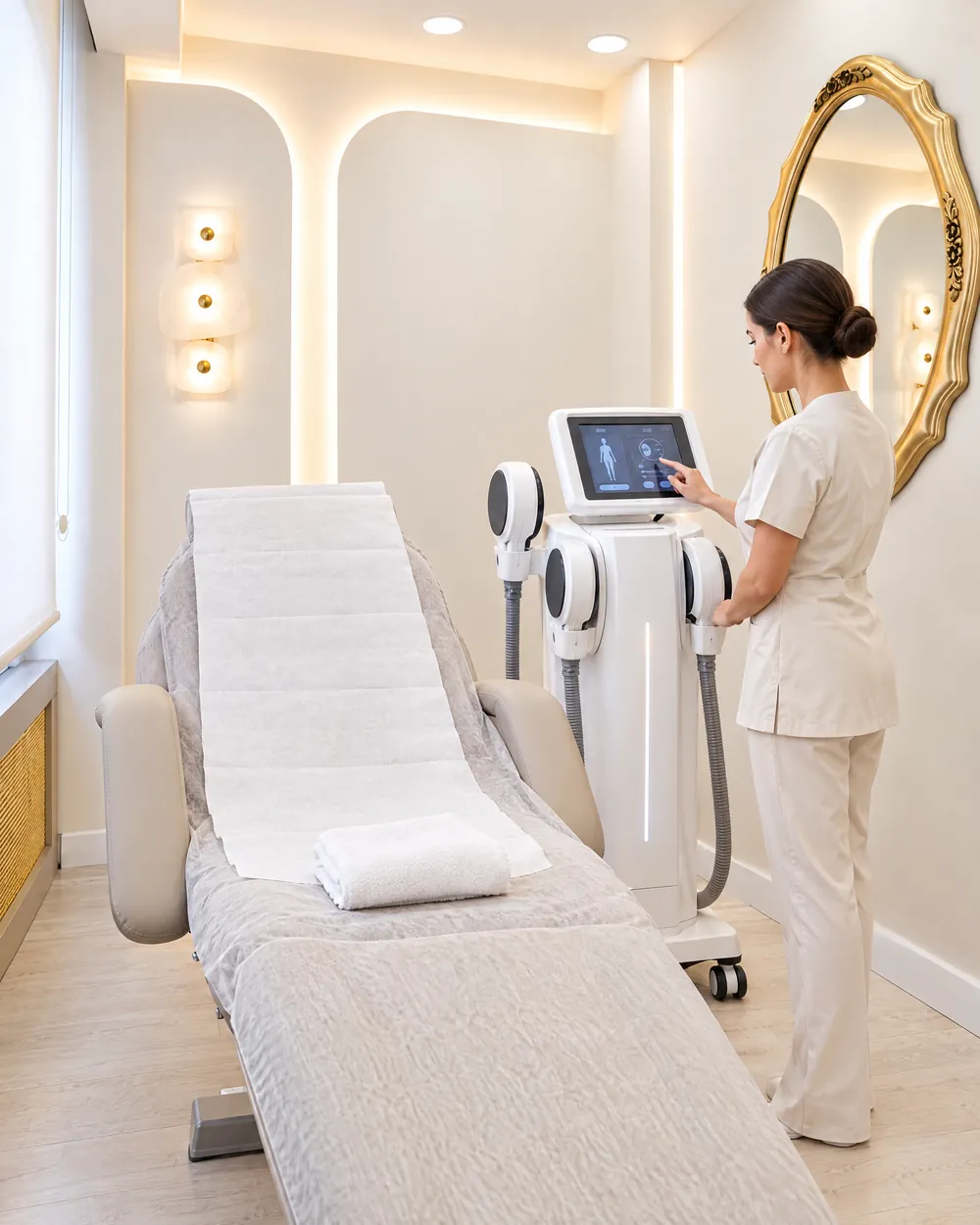
EMS body contouring works the muscles with externally delivered energy, aiming to support muscle tone and a firmer look in a specific area. The system used at Vega Beauty runs on high-intensity electromagnetic energy (HI-EMT). While you lie down, the muscles in the target area contract intensely and relax at short intervals.
The service is non-surgical and involves no needles, and you can return to daily life the same day. It is most often planned for the abdomen, buttocks, arms, and legs. The aim is to work the muscles through a regular program so the area looks firmer and more toned.
How does EMS work?
Using an electromagnetic field, EMS stimulates muscle fibers and creates contractions at an intensity and frequency that are hard to reach with voluntary exercise. In a normal workout, the brain doesn't send contraction signals to the muscles beyond a certain limit. EMS provides contractions beyond that limit, repeated at short intervals.
This intense work encourages the muscles to adapt to a new load. Over regular sessions, the goal is to support muscle tone and give the area a firmer look. You feel strong, rhythmic contractions during the session, and the intensity is raised gradually from the first minutes, according to your comfort.
- Energy: high-intensity electromagnetic energy (HI-EMT).
- Area of effect: large muscle groups in the target area.
- Sensation: strong, rhythmic contractions and tiredness similar to lifting weights.
- Session length: about 30 minutes.
- Afterward: daily life the same day; you may have muscle fatigue the next day, similar to after a workout.
Who is EMS suited to?
Among healthy adults, EMS suits people who want to support muscle tone, especially in specific areas. The ideal candidate is someone who has reached or is close to their weight goal but wants extra support for a firmer look in a particular area.
- People who exercise regularly and want a firmer look in the abdomen, buttocks, or legs
- People looking for a service to support their training around a busy work schedule
- People who want to support the abdominal area after giving birth, provided they have their doctor's approval
- People looking to firm up specific areas after losing weight
- People who want to add muscle tone support to a cellulite program
How does EMS relate to exercise?
EMS is a complement to exercise, not an alternative. Exercise supports heart and blood vessel health, endurance, flexibility, balance, and overall energy expenditure. EMS only works the muscles in the target area intensely. So the two don't replace each other; they work side by side.
| Feature | EMS session | Regular exercise |
|---|---|---|
| Area worked | Specific muscle groups in the target area | Whole body, heart, and blood vessels |
| Contraction intensity | Beyond voluntary exercise, intense and frequent | Depends on your fitness level |
| Fitness and endurance | Doesn't directly improve them | Improves them |
| Energy expenditure | Limited | Varies with the type and length of exercise |
| Time | About 30 minutes, lying down | Varies with the type of exercise |
| What supports the result | Exercise and balanced nutrition | Balanced nutrition and enough rest |
During an EMS program, keeping up your exercise, eating a balanced, protein-rich diet, getting enough sleep, and paying attention to your water intake all support your results. Instead of scheduling a heavy workout and EMS for the same area on the same day, it's better to set a calendar that gives your muscles time to recover.
How often are EMS sessions, and how many do you need?
An EMS program is usually planned as two sessions a week, for a total of 4 to 8 sessions. For most people, at least 2 to 3 days are left between sessions on the same area so the muscles can recover. The number of sessions varies with the area, the goal, and your starting point.
- Consultation: We review the target area, your expectations, and your health history, and discuss any contraindications.
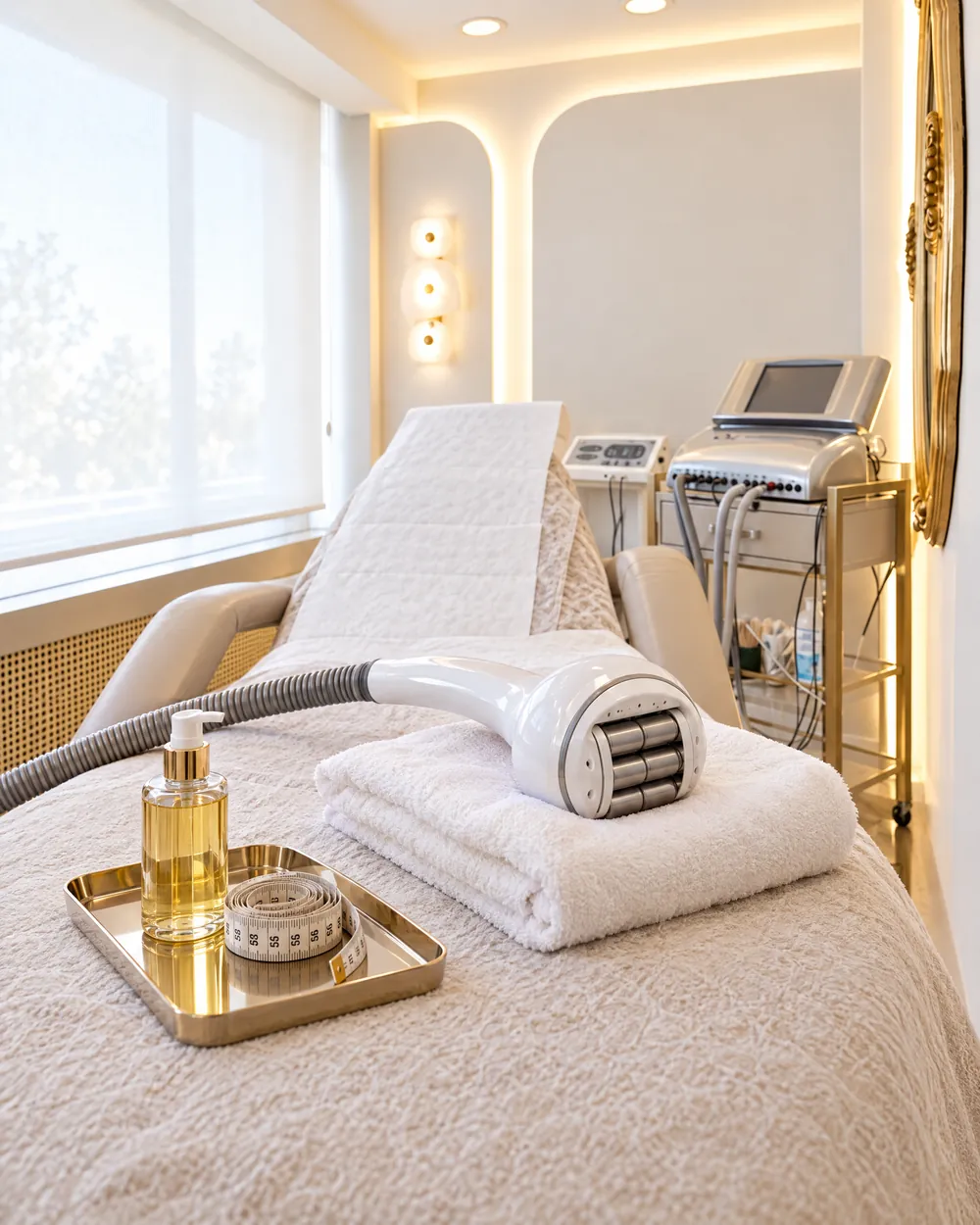
- Measurement: Measurements of the area and starting notes are recorded.
- Placement: The applicators are secured to the target area.
- Session: The intensity is raised gradually according to your comfort. The session lasts about 30 minutes.
- Follow-up: Notes are updated at each session, and we review your progress together at the end of the program.
After finishing the program, some people choose to schedule maintenance sessions at set intervals to support the look they've achieved. We make this decision together, based on the end-of-program review and your lifestyle.
What does an EMS session feel like?
What you feel in an EMS session is the muscles in the target area contracting strongly on their own and then relaxing. The intensity is kept low in the first minutes and raised gradually as your body gets used to the sensation. Most people compare it to working a muscle to its limit in a hard workout.
You lie down throughout the session and can talk and breathe comfortably. The intensity is never raised above your comfort limit, and you only need to say so the moment you feel any discomfort. When the session ends, you may feel warmth and tiredness in the area, but you can go back to your daily activities right away.
- First minutes: low-intensity, rhythmic contractions to get you used to the sensation
- Mid-session: intensity raised according to your comfort, with stronger contractions
- Final minutes: a lighter rhythm that relaxes the muscles
- After the session: warmth and mild tiredness in the area, and a post-workout feeling the next day
Who should not have EMS?
EMS uses intense energy, so it isn't done in some situations. If any of the following applies to you, be sure to mention it at your consultation and talk to your doctor. Vega Beauty is a beauty and care center, and when a situation calls for medical evaluation, we refer you to a doctor.
- People who are pregnant
- People with a pacemaker or another electronic medical device
- People with a metal implant, IUD, screw, or plate in the area
- People who have recently had surgery
- People with a history of epilepsy
- People with active cancer or a history of cancer
- People with a hernia, open wound, or active infection in the area
What are the common misconceptions about EMS?
Many of the expectations around EMS come from unrealistic marketing. These are the misconceptions we run into most often:
- “EMS makes you lose weight.” False. EMS works the muscles; weight management comes from nutrition and movement.
- “EMS burns fat.” Incomplete. EMS supports muscle tone, but it doesn't burn fat on its own.
- “You won't need to exercise anymore.” False. EMS doesn't replace exercise for fitness, endurance, and heart health.
- “The more often, the better.” False. Muscles need rest between sessions to recover.
- “You'll see a difference after one session.” False. You may feel some firmness in the first sessions, but changes in appearance depend on keeping up the program.
Why do nutrition and lifestyle matter during an EMS program?
EMS puts a new load on your muscles, and to adapt to it they need enough protein, water, and rest. That makes your nutrition and sleep during the program as important as the sessions themselves. An unbalanced diet or too little sleep can make it harder for your muscles to recover and lower the program's efficiency.
During the program, including a source of protein at every meal, eating more vegetables and fiber, limiting processed food and sugar, and aiming for 7 to 8 hours of sleep a night is a good start for most people. If you need a specific nutrition plan, we recommend seeing a dietitian. Regular walks and resistance exercise a few days a week also round out the local effect of EMS with general physical activity. Keep in mind that EMS sessions add up to only about an hour a week. What you do in the rest of the week is the main factor in your results.
What can you realistically expect from EMS?
What you can realistically expect from EMS is support for muscle tone and a firmer look in the target area by the end of a regular program. Weight loss, a smaller clothing size, and fast or dramatic changes are not among the goals of EMS. Results vary from person to person and are directly tied to your habits.
EMS gives your muscles strong support; it's your everyday choices that make the results last.
At Vega Beauty, we clarify your expectations together before you start the program. We listen to what you want for the target area, your daily pace, and your training routine, and prepare a personal calendar for your sessions in our private rooms in Nişantaşı. Pricing is also shared at the consultation, based on your personal plan.
Frequently asked questions
How does EMS body contouring work?
EMS uses high-intensity electromagnetic energy to stimulate muscle fibers and create contractions at an intensity that's hard to reach with voluntary exercise. While you lie down, the muscles in the target area contract intensely and relax at short intervals. Over regular sessions, the goal is to support muscle tone and a firmer look in the area.
Can EMS help me lose weight?
No, EMS is not a weight-loss method. It works the muscles intensely to support muscle tone and a firmer look in the area. Weight management comes from balanced nutrition and regular movement, and EMS sits alongside those habits as support for a specific area. It's important to clarify your expectations with us at the consultation.
How long is an EMS session, and how many do I need?
An EMS session takes about 30 minutes. A program is usually planned as two sessions a week, for a total of 4 to 8 sessions. For most people, at least 2 to 3 days are left between sessions on the same area so the muscles can recover. The number of sessions varies from person to person, depending on the area and goal.
Who should not have EMS?
EMS is not done for people who are pregnant, have a pacemaker, have a metal implant in the area, have recently had surgery, have a history of epilepsy, or have active cancer or a history of cancer. It also isn't done on areas with a hernia, open wound, or active infection. If you're unsure, talk to your doctor first.
Will my muscles be sore after EMS?
The next day, you may feel mild muscle fatigue similar to what you'd feel after a hard workout. This is normal and usually passes within 1 to 2 days. Drinking plenty of water, taking a light walk, and getting enough sleep support recovery. If you have unexpected or prolonged discomfort, get in touch with us.
Can I do EMS and exercise on the same day?
You can, but combining EMS with a heavy workout for the same area on the same day can overtire your muscles. For most people, it's better to schedule EMS sessions on different days from heavy workouts. If you share your training routine at the consultation, we can plan your session calendar around it together.
Can I have EMS after giving birth?
After giving birth, EMS can only be planned once your doctor has approved it. Recovery times differ after vaginal birth and cesarean delivery, and breastfeeding should also be taken into account. With your doctor's approval, we can prepare a personal program to support muscle tone in the abdominal area.
Published: · Vega Beauty editorial team. This article is general information and does not replace a medical diagnosis or advice; whether a service suits you is assessed at your consultation. Cover photo: Matt Moloney / StockSnap (CC0).