Body & Contouring
What causes cellulite? Types, myths, and care options
In short
Cellulite is the orange-peel look that forms when fat beneath the skin pushes up between bands of connective tissue. The main causes are hormones, genetic predisposition, slower circulation and lymph flow, and lifestyle. It appears in the great majority of women and isn't limited to people who are overweight. With regular care and daily habits, the goal is to reduce how it looks.
That rippled, uneven look you notice on your hips or legs in the mirror worries many people. Yet cellulite is extremely common and doesn't come down to a single cause. In this post, we look closely at why cellulite forms, the different types of appearance, the myths people often take as fact, and the care options that aim to reduce its look.
What is cellulite?
Cellulite is the look created when fat cells just under the skin push upward between the bands of connective tissue that anchor the skin to the tissue below. As the bands pull the skin down, the fat presses up, leaving a dimpled surface that resembles orange peel. It appears most often on the buttocks, hips, thighs, abdomen, and backs of the arms.
Medically speaking, cellulite is not a disease but a matter of how skin and tissue look. It shouldn't be confused with cellulitis, a bacterial skin infection with a similar name. If an area shows redness, warmth, pain, and swelling along with fever, it is not a beauty concern, and you need to see a doctor without delay.
What causes cellulite?
Cellulite forms through a combination of hormones, genetics, circulation, and lifestyle. How much each factor contributes varies from person to person, which is why cellulite can look quite different on two people.
Hormones
Female hormones, estrogen above all, affect how fat is stored and how connective tissue is structured. Cellulite often becomes more visible during times of hormonal change, such as puberty, pregnancy, the postpartum period, and menopause. In women, connective tissue bands also run vertically, which is one reason cellulite is far more common in women.
Genetics
People whose mother or older sister has noticeable cellulite tend to have a similar look more often. Skin thickness, connective tissue elasticity, fat distribution, and circulation are largely inherited. We can't change a genetic predisposition, but lifestyle and care can influence how visible cellulite becomes.
Circulation and lymph flow
Slower circulation and fluid collecting between tissues can make the look of cellulite more visible. Sitting for long periods, standing still, and long flights can leave your legs feeling heavy and puffy. The lymphatic system has no central pump of its own, so its flow depends largely on muscle movement.
Lifestyle
Inactivity, a diet high in salt and processed food, not drinking enough water, smoking, irregular sleep, and stress are lifestyle factors that can worsen the look of cellulite. Rapid weight gain and loss can also strain connective tissue and make it more visible. These are the factors we can change and work on.
- Times of hormonal change: puberty, pregnancy, the postpartum period, menopause
- Genetic predisposition: connective tissue structure and fat distribution
- Slower circulation and lymph flow: inactivity, long hours of sitting
- Diet: high salt, sugar, and processed food
- Other factors: smoking, too little water, lack of sleep, stress, and rapid weight change
What are the types of cellulite?
Cellulite doesn't always look the same, and the dominant type matters when planning a care program. In the beauty world, cellulite is generally divided into three types by appearance: edematous, soft, and hard. Most people have more than one type at the same time.
| Type | How it looks and feels | Common care approach |
|---|---|---|
| Edematous cellulite | Puffiness and heaviness in the legs; pressing with a finger may leave a mark; more visible by the end of the day | Lymphatic Drainage Massage, movement, less salt, and more water |
| Soft cellulite | Loose tissue that ripples with movement; linked to weight change and inactivity | G5 Massage, with firming support from Micro Plus or EMS |
| Hard cellulite | Firm, dense tissue; visible even when standing; may feel tender when pressed | Regular G5 Massage and combined programs that support circulation |
The approaches in the table are only a general roadmap. At Vega Beauty, we assess the area at your initial consultation, talk through the dominant type and your lifestyle, and prepare a personalized program based on what we learn.
What are the common myths about cellulite?
Much of what people commonly hear about cellulite isn't accurate. Misinformation creates both needless worry and expectations that lead to disappointment.
- “Only overweight people get cellulite.” False. Slim and athletic people get cellulite too. The deciding factors aren't only weight but also connective tissue structure and hormones.
- “Cellulite can be gotten rid of completely.” False. Because it has hormonal and genetic sides, the goal is to reduce its look and help skin appear smoother.
- “Drinking lots of water makes cellulite disappear.” Incomplete. Drinking enough water supports circulation, but it won't make the look of cellulite disappear on its own.
- “Applying cream is enough.” Incomplete. Creams can support skin moisture and elasticity, but their effect on the deeper structure is limited.
- “Men don't get cellulite.” False. It is less common, but men can get it too, especially around the abdomen and waist.
Cellulite is not a flaw but a natural feature of the body. The aim of care is not to deny it but to soften how it looks.
What care programs are there for the look of cellulite?
For the look of cellulite, programs in which different services complement each other aim for a more balanced result than any single method. Cellulite Protocols at Vega Beauty combine the following services according to the type of cellulite.
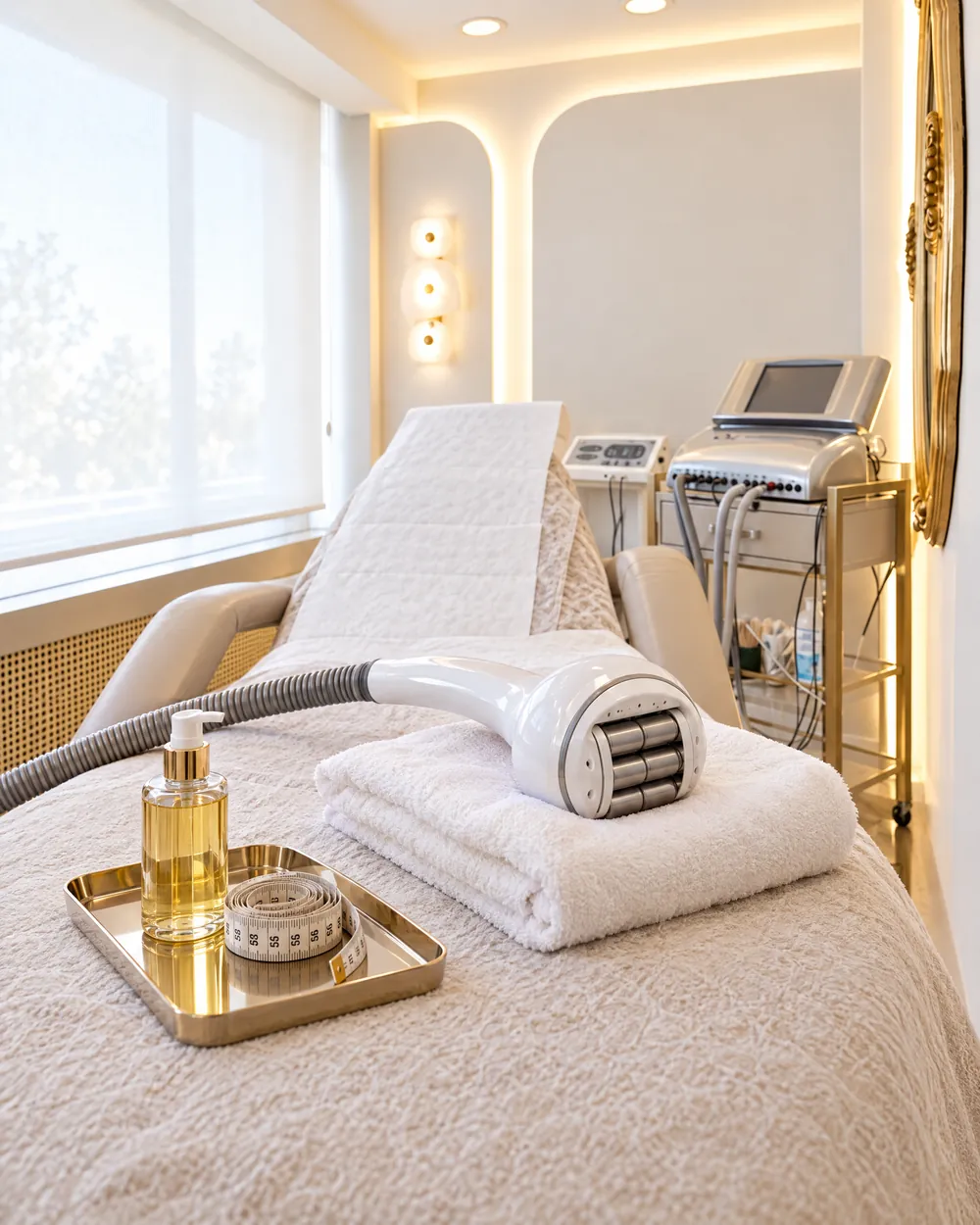
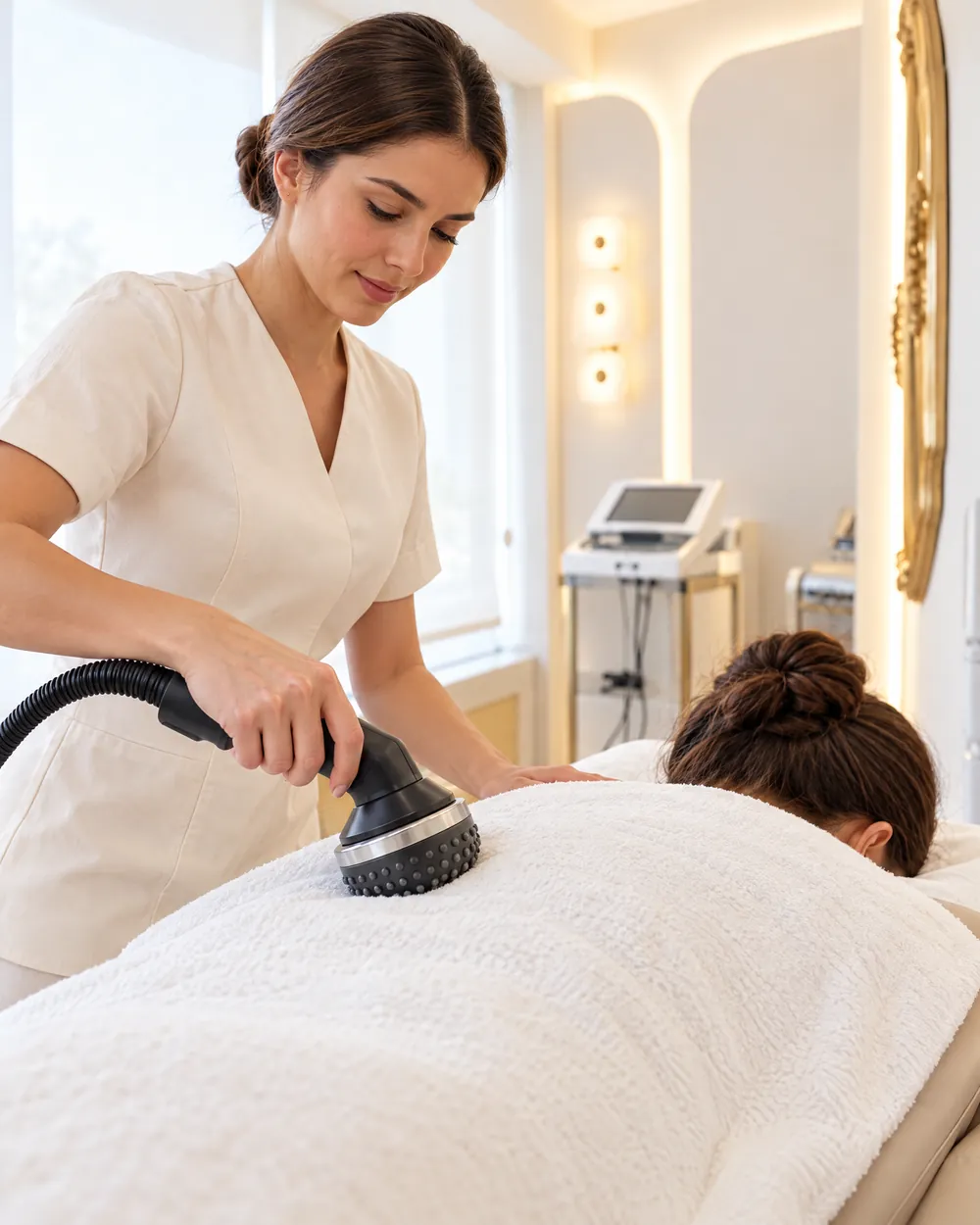
- G5 Massage: A deep tissue massage with vibrating heads that aims to soften the look of cellulite by stimulating circulation.
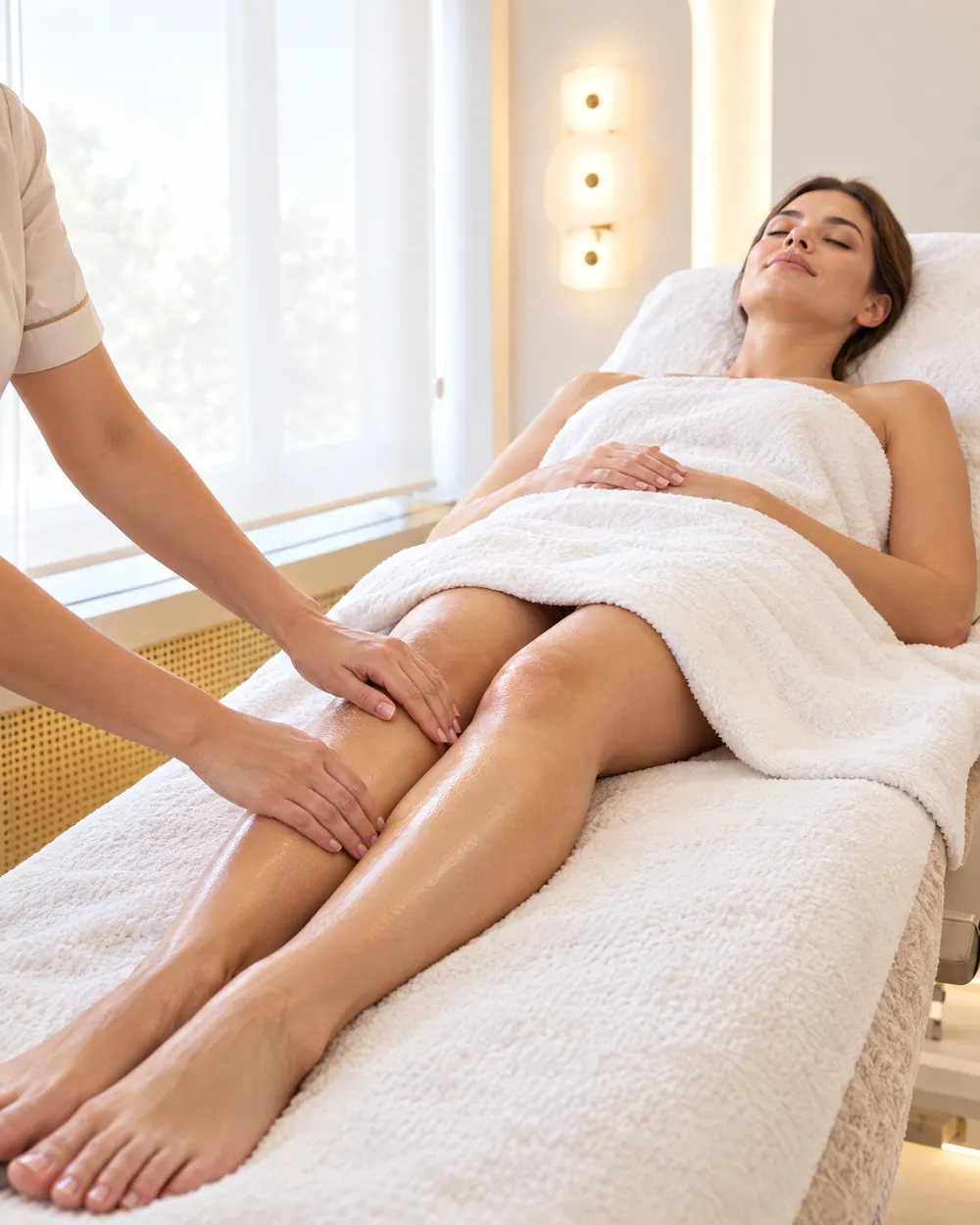
- Lymphatic Drainage Massage: Light, rhythmic touch supports lymph flow. It stands out especially for edematous cellulite.
- Micro Plus: Works the muscles with micro and galvanic currents and contributes to a firmer look in targeted areas.
- EMS Body Contouring: Supports muscle tone through intense muscle contractions and can be added to the program for cellulite that comes with looseness.
Programs generally last 6–10 weeks with 1–2 sessions a week. The length and methods depend on the type and intensity of your cellulite, the area, and your daily pace. We track your progress through session notes and measurements kept with you, and we update the program when needed.
How do daily habits affect the look of cellulite?
Daily habits are the most important and most controllable factor in how cellulite looks. However regular your sessions at our center are, what you keep up at home either supports the program's effect or weakens it.
- Move: Get up and walk for a few minutes every hour, take the stairs, and make room for regular walking and resistance exercise.
- Drink water: Regular water intake spread through the day supports circulation.
- Cut back on salt and processed food: Too much salt can increase fluid retention and a feeling of puffiness.
- Eat a balanced diet: Build your meals around vegetables, fruit, protein, and fiber, and avoid rapid weight gain and loss.
- Moisturize your skin: Regular moisture helps skin look smoother.
- Manage sleep and stress: Regular sleep and stress management support hormonal balance.
- Quit smoking: Smoking harms circulation and the quality of connective tissue.
What can you do at home to help with the look of cellulite?
Simple routines at home support the effect of your program at the center and make the time between sessions count. The aim here isn't to expect big, fast changes but to support circulation and skin quality with small daily steps.
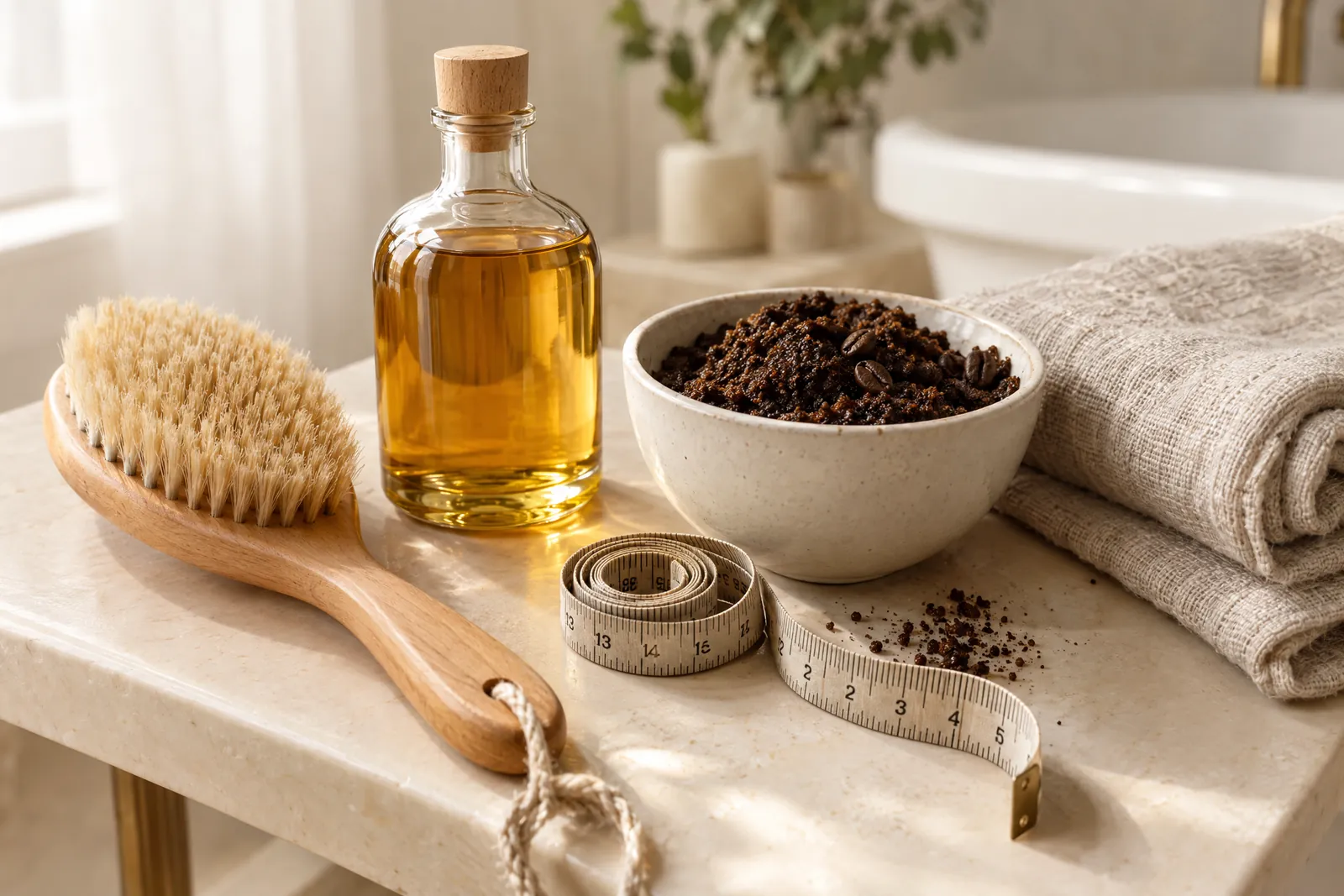
- Dry brushing: Before showering, use a soft brush with light strokes from your legs upward, toward your heart, to stimulate circulation.
- Cool and warm shower: Finishing your shower by switching the water on your legs between lukewarm and cool a few times leaves a fresh feeling.
- Elevating your legs: Lying down with your legs up the wall for 10–15 minutes at the end of the day can ease a feeling of heaviness.
- Moisturizing and light massage: Applying moisturizer after showering in upward circular motions supports skin elasticity.
- Comfortable clothes: Very tight clothes worn for long hours can strain circulation.
Adding these habits one at a time, rather than all at once, makes them easier to keep up. If you share what you are doing at home during your program, we will review it alongside your session notes and update our suggestions if needed. Changes in the look of cellulite are shaped less by the hours you spend at our center than by the choices you make the rest of the time.
When should you talk to a doctor?
The look of cellulite is generally not a health problem, but some signs can point to something else. In the situations below, we recommend talking to your doctor before starting a care program. Vega Beauty is a beauty and care center, not a medical practice. We do not diagnose, and when a situation calls for a medical evaluation, we refer you to a doctor.
- Redness, warmth, pain, and swelling together in one area, or fever
- Sudden, marked swelling, pain, or color change in one leg
- A history of varicose veins, vascular disease, or thrombosis
- Unexplained weight gain in a short time or widespread swelling
- Pregnancy and the early postpartum period
In Istanbul's busy pace, long hours of desk work leave many people with legs that feel heavy. At our center in Nişantaşı, we care about building a sustainable program that fits this pace and guiding you with realistic expectations.
Frequently asked questions
What causes cellulite?
Cellulite forms through a combination of hormones, genetic predisposition, slower circulation and lymph flow, and lifestyle. Fat tissue pushes upward between the bands of connective tissue that anchor the skin to the tissue below, creating an orange-peel look. How much each factor contributes varies from person to person, so the look varies too.
Do only overweight people get cellulite?
No. Cellulite is also common in slim and athletic people. The deciding factors aren't only weight but also connective tissue structure, hormones, genetics, and circulation. Weight gain can make it more visible, but losing weight doesn't mean the look of cellulite will disappear completely.
Does cellulite go away completely?
Because cellulite is linked to hormonal and genetic factors, it isn't expected to disappear completely. Regular care programs, movement, balanced eating, and enough water aim to reduce its look and help skin appear smoother. Results vary from person to person and depend on keeping up your habits.
What are the types of cellulite?
In the beauty world, cellulite is generally divided into three types by appearance. Edematous cellulite comes with puffiness and a feeling of heaviness. Soft cellulite has loose tissue that ripples with movement. Hard cellulite is firm and dense, and it is visible even when standing. Most people have more than one type at the same time.
Which care services are used for cellulite?
Depending on the type, services such as G5 Massage, Lymphatic Drainage Massage, Micro Plus, and EMS can be combined in one program. Lymphatic drainage may stand out for edematous cellulite, and Micro Plus and EMS for cellulite that comes with looseness. At Vega Beauty, we decide on the methods together, based on the evaluation at your consultation.
Are cellulite and cellulitis the same thing?
No. The cellulite we talk about in beauty care is an orange-peel look. Cellulitis is a bacterial condition of the skin that comes with redness, warmth, pain, swelling, and sometimes fever. If you have these symptoms, a beauty session is not an option to consider, and you need to see a doctor without delay.
Published: · Vega Beauty editorial team. This article is general information and does not replace a medical diagnosis or advice; whether a service suits you is assessed at your consultation.